Drug submarine with Starlink and autopilot found off Colombia
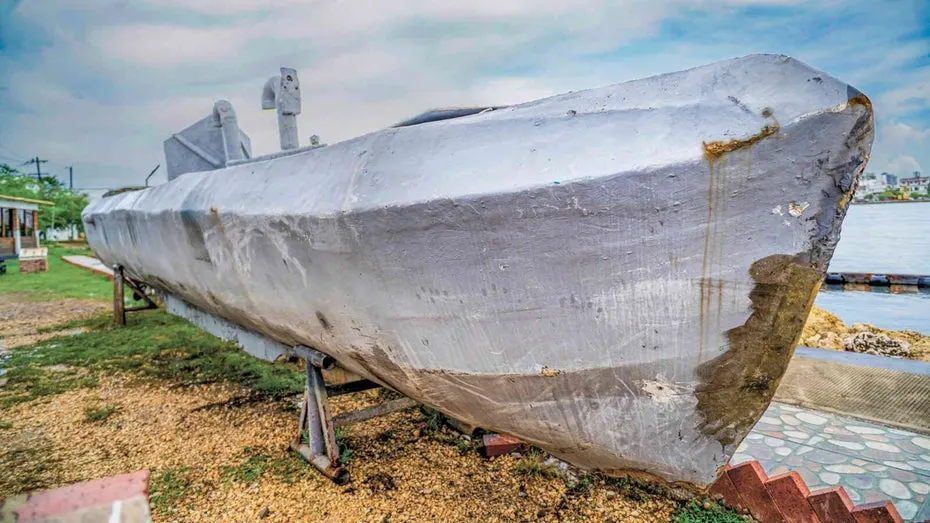
Colombia's coast guard boarded a shark-shaped drug submarine and found no crew, no cocaine and no steering wheel, only Starlink antennas, an autopilot and cameras.
 SUMO· the number puzzle
 Dialo· learn languages by speaking
 ediviewer· read EDI files like documents
 giftdetect· the right gift in minutes
The coast guard did what it always does with a suspected drug submarine: chase it, board it, break open the hatch. This time nobody was inside. No crew, no cocaine, not even a steering wheel.
Last April, a Colombian military surveillance plane spotted a 12-metre, shark-like shape drifting off Tayrona National Park. It looked like a classic narco sub: a camouflaged fibreglass boat with its hull almost entirely underwater, used by cartels to move cocaine north. Coast guard boats were ordered to intercept.
Captain Jaime González Zamudio, who commands the regional coast guard, followed the operation from his desk in Cartagena, about 250 kilometres away. He expected the usual outcome: two to four exhausted men close to suffocating on diesel fumes, and several tonnes of cocaine in the hold. Colombia is the world's largest cocaine producer, and its navy has been seizing smuggling subs for decades.
The first part went as planned. The boats caught up, a team boarded and forced the hatch. Then the radio reports turned strange. Inside the crew found a fuel tank, an autopilot system, control electronics and a remote-controlled surveillance camera. There was not enough room for a person to lie down. Photos sent back to Cartagena showed another camera on the hull and two rectangular plastic panels, each about the size of a baking tray. They were antennas for Starlink satellite internet.
What did investigators find on the unmanned drug submarine?
The vessel was towed to Cartagena, where military technicians took it apart. Weeks later they reported the unsettling result: this was Colombia's first unmanned drug submarine. It could be steered remotely and, to a degree, drive itself.
The technicians concluded it was probably a prototype built by the Clan del Golfo, a powerful criminal group operating on the Caribbean coast.
The worry is easy to see. Without a crew, a smuggling sub no longer risks lives, and the story's framing is that autonomous boats could carry tonnes of cocaine and pose serious problems for drug enforcement worldwide.
Apps worth a look
SUMO: the number puzzleTap the right tiles, add them up, hit the target. Easy to learn, hard to master. Free, for all ages.
Dialo: learn languages by speakingTalk to an AI conversation partner; every sentence comes back corrected and explained in your language. 9 languages, A1 to C2.
ediviewer: read EDI files like documentsOpen EDIFACT and X12 messages, see every segment explained, convert to JSON/XML, export PDF and Excel. Runs locally, no upload.
giftdetect: the right gift in minutesPick who it is for, the occasion and their personality. The search engine reads product descriptions from local shops and ranks what fits. Free, no sign-up.
More from this day
See all →
ARTEX AI hacking tool now used by Salt Typhoon, Microsoft says

iPhone ads in notifications and Live Activities are piling up
Nuclear bomb in space: one blast could wipe out most satellites