Neura Robotics CEO David Reger Wants Robots to Rival Autos
David Reger, a former model maker with no degree, leads Neura Robotics after a record $1.4 billion round. He wants robotics to become as big for Germany as cars once were.
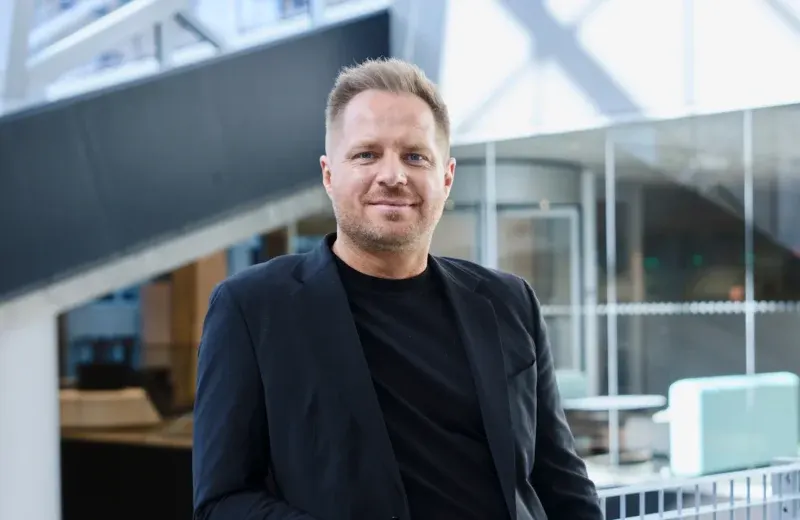
David Reger, founder of the Stuttgart-area robotics company Neura, has set a goal that sounds almost audacious: he wants robotics to become as important to Germany's economy as the car industry once was. "I want to build the pillar that carries the future of the German economy," he says.
In June, Neura announced the largest funding round in Germany to date: $1.4 billion, or roughly 1.2 billion euros. Investors include Amazon and Nvidia as well as the German automotive suppliers Bosch and Schaeffler. They are betting that Neura will train millions of cognitive robots for industry, meaning AI-based machines that perceive their surroundings with sensors, learn from experience and make decisions on their own.
From foundry apprentice to tech hope
Reger, 38, has no university degree. He grew up with ten siblings in Metzingen, Swabia, completed a apprenticeship as a model maker at a foundry after secondary school, and later worked as a social worker in San Francisco. After returning, he landed an engineering job in Switzerland following a nine-hour interview and taught himself the rest day and night.
Two years ago Neura had 180 employees; today it has more than 1,800. Investors value the company at over seven billion euros. In a demo, Reger scanned a chair with a camera to create a 3D model, showing how entire production lines can be captured as digital twins where robots practice before entering real factories.
The cost to workers
Neura plans to build millions of robots by 2030. One unit, currently priced at around 60,000 euros, can replace several skilled workers because it works around the clock. Reger points to a wave of retirements and a shortage of skilled trades, but admits it is hard to say what all the displaced people will do long term.
His answer is to have robot labor pay into the welfare system: "Why not pay pension and health insurance contributions on robot work?" he asks. He also says he wants to become Europe's largest taxpayer.
An analysis by the FERI Cognitive Finance Institute and Fraunhofer IPA sees Germany as well positioned with firms like Neura, but warns that China's speed and scaling give it growing advantages. Public acceptance, the researchers say, will be decisive for AI-based robotics in Germany.
Apps worth a look
 SUMO: the number puzzle
Tap the right tiles, add them up, hit the target. Easy to learn, hard to master. Free, for all ages.
 Dialo: learn languages by speaking
Talk to an AI conversation partner; every sentence comes back corrected and explained in your language. 9 languages, A1 to C2.
 ediviewer: read EDI files like documents
Open EDIFACT and X12 messages, see every segment explained, convert to JSON/XML, export PDF and Excel. Runs locally, no upload.