Nancy Grace Roman telescope: adopt a pixel of its first image
NASA will show the first public images from the Roman telescope on 7 December, and anyone can adopt a pixel of the first picture for free.
 SUMO· the number puzzle
 Dialo· learn languages by speaking
 ediviewer· read EDI files like documents
 giftdetect· the right gift in minutes
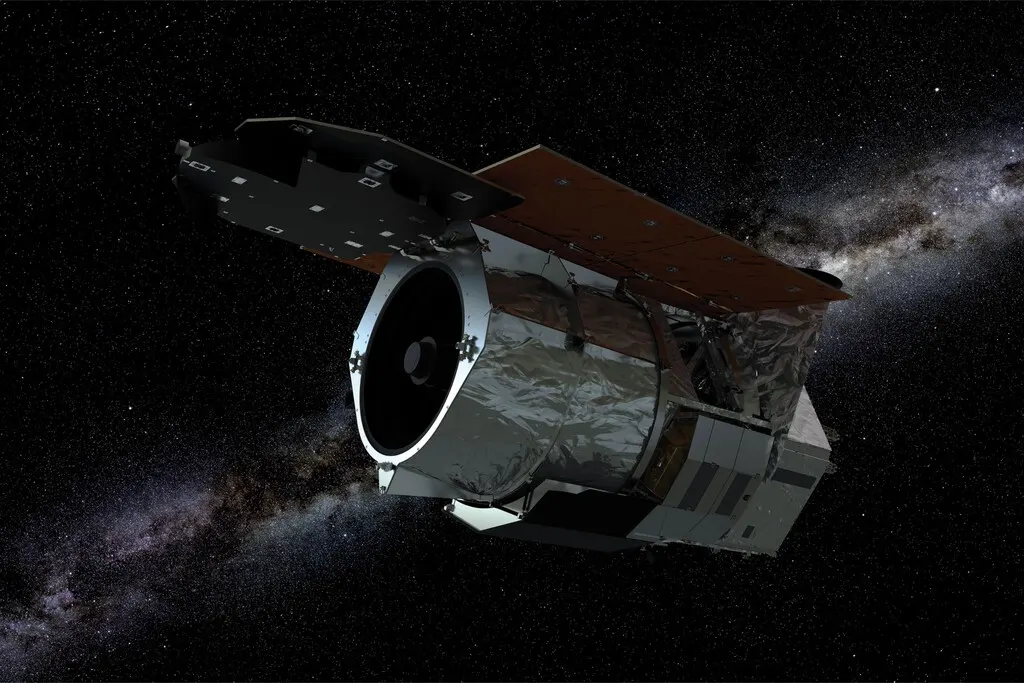
You can own a tiny piece of the first picture from NASA's Nancy Grace Roman Space Telescope. It costs nothing, and the Roman telescope's first public images arrive on 7 December.
NASA launched the telescope on 30 August. Since then it has mostly delivered good news. According to the source material, every manoeuvre was more precise than even the best-case plan, which saved enough fuel for an extra 12 years of operation. Early test images, taken while it calibrated its instruments, looked very good, even though not all its mirrors were aligned yet. The Roman is meant to act as a detective for dark matter.
When can you watch the Roman telescope's first images?
NASA will present them on 7 December at the American Geophysical Union (AGU) annual meeting in San Francisco. The broadcast starts at 15:30 US Eastern time (21:30 in Spain) and will stream on NASA's online platforms and AGU's channels. Afterwards the images will be posted permanently on NASA's website. A media briefing the next day will add detail.
NASA also encourages planetariums, science museums and anyone else to host their own viewing events.
How do you adopt a pixel?
On the adoption page you enter your name, surname and email. You immediately get an adoption certificate, and the email is later used to find your pixel in the image. One pixel per email address. Symbolically, you then own a speck of the light the telescope captured.
How is Roman different from Hubble?
Roman has a much wider field of view than Hubble, so it can map a far larger patch of sky in one go and spot interesting targets more easily. That doesn't make Hubble obsolete. Its narrower view can zoom in on a specific spot and observe in wavelengths Roman doesn't cover, such as ultraviolet. If Roman finds, say, an interesting gravitational lens, scientists can point Hubble or the James Webb telescope at the same coordinates for a closer look.
Apps worth a look
SUMO: the number puzzleTap the right tiles, add them up, hit the target. Easy to learn, hard to master. Free, for all ages.
Dialo: learn languages by speakingTalk to an AI conversation partner; every sentence comes back corrected and explained in your language. 9 languages, A1 to C2.
ediviewer: read EDI files like documentsOpen EDIFACT and X12 messages, see every segment explained, convert to JSON/XML, export PDF and Excel. Runs locally, no upload.
giftdetect: the right gift in minutesPick who it is for, the occasion and their personality. The search engine reads product descriptions from local shops and ranks what fits. Free, no sign-up.
More from this day
See all →
Milky Way weighed at 1.19 trillion suns, with 11% uncertainty

DAZN refund: court rules price hikes were unlawful

Uber robotaxi in Munich: how to ride a self-driving car now
Windows UserAssist tracks every app you open: how to turn it off
More in: Space
See all →
Shenlong spaceplane photographed in orbit with its cargo bay open
Voyager 1 hits one light-day from Earth; Voyager 2 trails to 2035
Starship V4: Musk Plans a Rocket Close to 150 Metres Tall