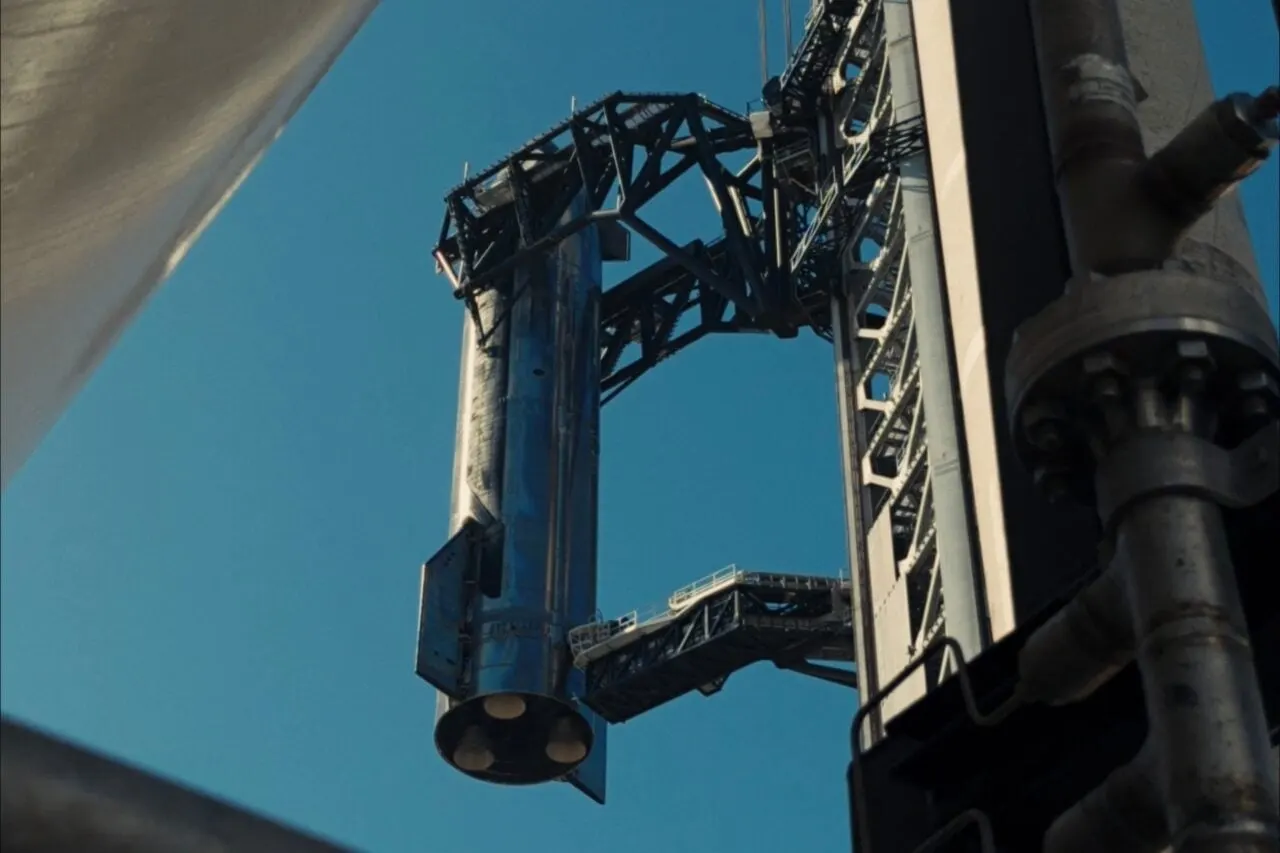
SpaceX Starship catch: the upper stage caught by tower arms
SpaceX caught a Starship upper stage with the Mechazilla tower arms after 22 hours in orbit. The Super Heavy booster, though, blew up in the Gulf.
 SUMO· the number puzzle
 Dialo· learn languages by speaking
 ediviewer· read EDI files like documents
 giftdetect· the right gift in minutes
SpaceX has caught a Starship coming back from orbit. After more than 22 hours in space, the upper stage fell belly-first through the atmosphere, flipped upright, lit its Raptor engines and slid between the two "chopstick" arms of the Mechazilla tower at Starbase. The arms closed around it and held on.
"That was the holy grail of spaceflight, plummeting through fire to be snatched out of the air by steel," said SpaceX communications manager Dan Huot during the livestream. It is the first time anyone has caught the upper stage of an orbital rocket.
The day was only a partial success, though. Starship Flight 15 was meant to be the first full recovery of the whole system, and the booster didn't make it back.
What went wrong with the Super Heavy booster?
Super Heavy pushed Starship to space, separated and flipped around as planned. It relit 32 of its 33 Raptor engines for the boostback burn, which turns it back toward the launch site. That burn ended early because of low fuel mass, so the booster's guidance system triggered an automatic abort and sent it to a water landing in the Gulf of Mexico.
The landing burn worked. Then the flight termination system fired and the booster exploded in a fireball. SpaceX says the root cause is still under investigation. It would have been the first catch of this newest booster, which carries Raptor 3 engines. SpaceX has caught Super Heavy three times before.
What happens next for Starship?
SpaceX still has to catch both booster and ship on one mission. That is the only way to inspect and refly them quickly. The company has reflown two boosters already, but each needed several months of refurbishment. Elon Musk wants 10,000 Starship launches a year by 2030, which would mean turnarounds of days.
First, a recovered Starship has to fly again. On the Q3 earnings call in October, President and COO Gwynne Shotwell said SpaceX aims to "refly the second stage by early next year." Before any new booster catch, the company also has to explain that low-fuel alarm.
Apps worth a look
SUMO: the number puzzleTap the right tiles, add them up, hit the target. Easy to learn, hard to master. Free, for all ages.
Dialo: learn languages by speakingTalk to an AI conversation partner; every sentence comes back corrected and explained in your language. 9 languages, A1 to C2.
ediviewer: read EDI files like documentsOpen EDIFACT and X12 messages, see every segment explained, convert to JSON/XML, export PDF and Excel. Runs locally, no upload.
giftdetect: the right gift in minutesPick who it is for, the occasion and their personality. The search engine reads product descriptions from local shops and ranks what fits. Free, no sign-up.
More from this day
See all →



More in: Space
See all →
Vulcan Centaur failure: 40 Amazon Leo satellites lost at launch
NASA Moon Base Student Challenge: $1 Million for Lunar Base Ideas

Elon Musk says he warned early SpaceX hires they could die