MarinaTex: the plastic bag made from fish waste and algae
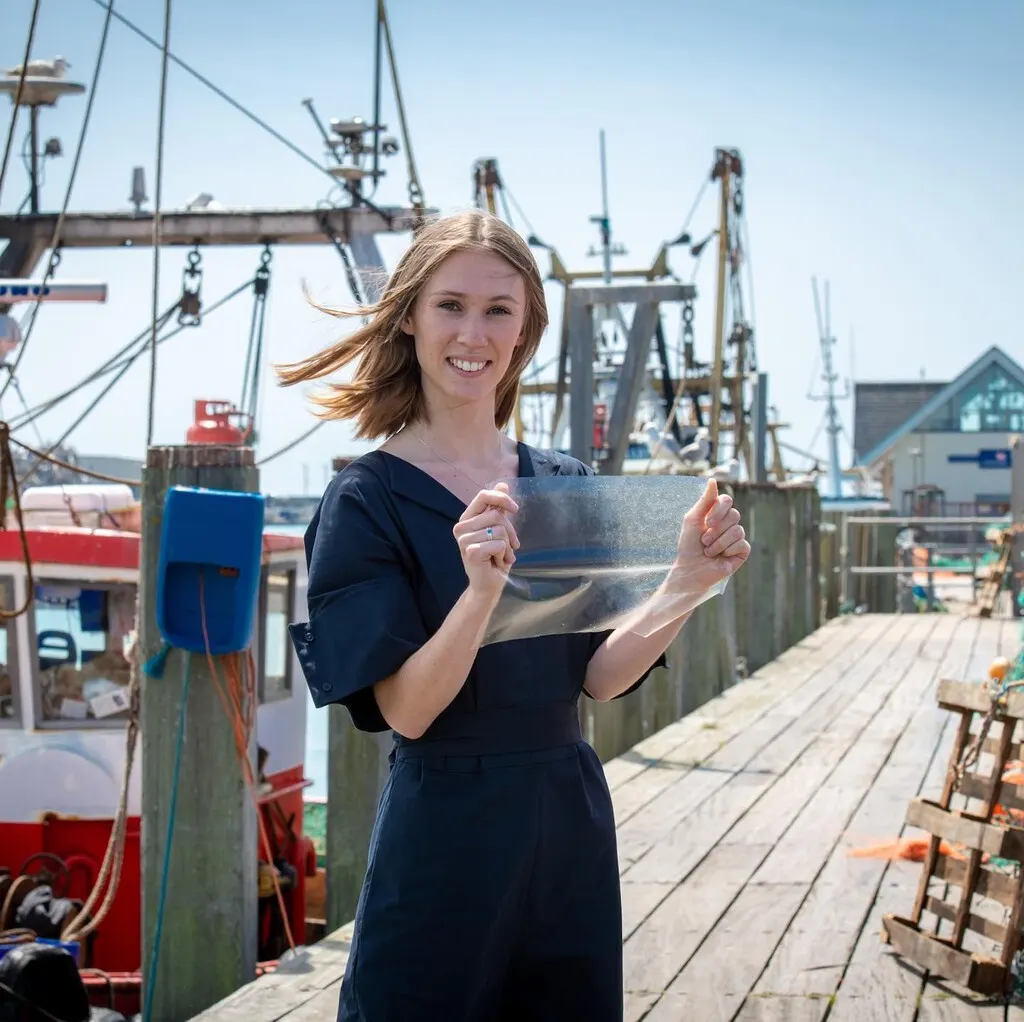
A UK student cooked up MarinaTex in her halls kitchen after more than 100 experiments: a clear, bag-like film made from fish waste and red algae.
 SUMO· the number puzzle
 Dialo· learn languages by speaking
 ediviewer· read EDI files like documents
 giftdetect· the right gift in minutes
Lucy Hughes did not set out to invent a plastic. She wanted to find a use for fish waste, and ended up with MarinaTex, a see-through bag material made from fish scraps and red algae that is designed to break down in weeks.
In 2019, Hughes was a 24-year-old product design student at the University of Sussex. It took her more than 100 experiments to land on the recipe, many of them on the hob in her student accommodation. The result is a transparent, flexible and tough film that can be turned into bags or food wrappers.
What is MarinaTex made of?
Hughes looked at what the fishing industry normally sends to landfill or incinerators: guts, blood, skin and scales. She found that skin and scales hold proteins with strong, flexible structures. What she needed was something to bind them, and the sea provided that too: agar, a substance taken from red algae.
Making it takes relatively little energy and temperatures below 100 °C. By her calculations, the usable waste from a single Atlantic cod could supply enough raw material for up to 1,400 bags.
Does MarinaTex really biodegrade in a month?
Under home composting conditions, the film should break down in an estimated four to six weeks, according to Hughes. She says it releases no toxic substances along the way and can go in with food waste. There is a catch: that timeline applies to specific composting conditions. A bag dropped in the sea or left in the countryside will not necessarily vanish in a month.
The idea targets single-use packaging. According to the figures cited in 2019, about 40% of plastic made for packaging was used just once before being thrown away.
The project won the 2019 James Dyson Award, beating 1,078 entries from 28 countries. Hughes received £30,000 to keep developing the material, the University of Sussex got £5,000, and she also won six months of workspace and advice at Plus X in Brighton.
When she won, MarinaTex was still early-stage. The open questions were how to make it at scale and whether it can work as a commercial product. So no, plastic pollution is not solved. But a pile of fish scraps did turn into a usable wrapper that can disappear again.
Apps worth a look
SUMO: the number puzzleTap the right tiles, add them up, hit the target. Easy to learn, hard to master. Free, for all ages.
Dialo: learn languages by speakingTalk to an AI conversation partner; every sentence comes back corrected and explained in your language. 9 languages, A1 to C2.
ediviewer: read EDI files like documentsOpen EDIFACT and X12 messages, see every segment explained, convert to JSON/XML, export PDF and Excel. Runs locally, no upload.
giftdetect: the right gift in minutesPick who it is for, the occasion and their personality. The search engine reads product descriptions from local shops and ranks what fits. Free, no sign-up.
More from this day
See all →
Google AI Mode temporary threads: incognito-style search
Arcom rules YouTubers must give all 2027 candidates equal time

Kerch Bridge strike: Ukraine steered missiles without Starlink

OVHcloud Olala mini: a free AI model that runs in 8 GB of RAM
More in: Science
See all →
Poland's 2.5 m Cerro Murphy telescope sees first light in Chile

Grand Canyon's missing billion years: Great Unconformity explained

US data center electricity use: 403 sites, 28 million tonnes of CO2