Lightning and climate change: AI predicts up to 140% more strikes
Scientists disagreed for years on whether a warmer planet means more lightning. A machine learning model trained on real strikes now points to a big increase.
 SUMO· the number puzzle
 Dialo· learn languages by speaking
 ediviewer· read EDI files like documents
 giftdetect· the right gift in minutes
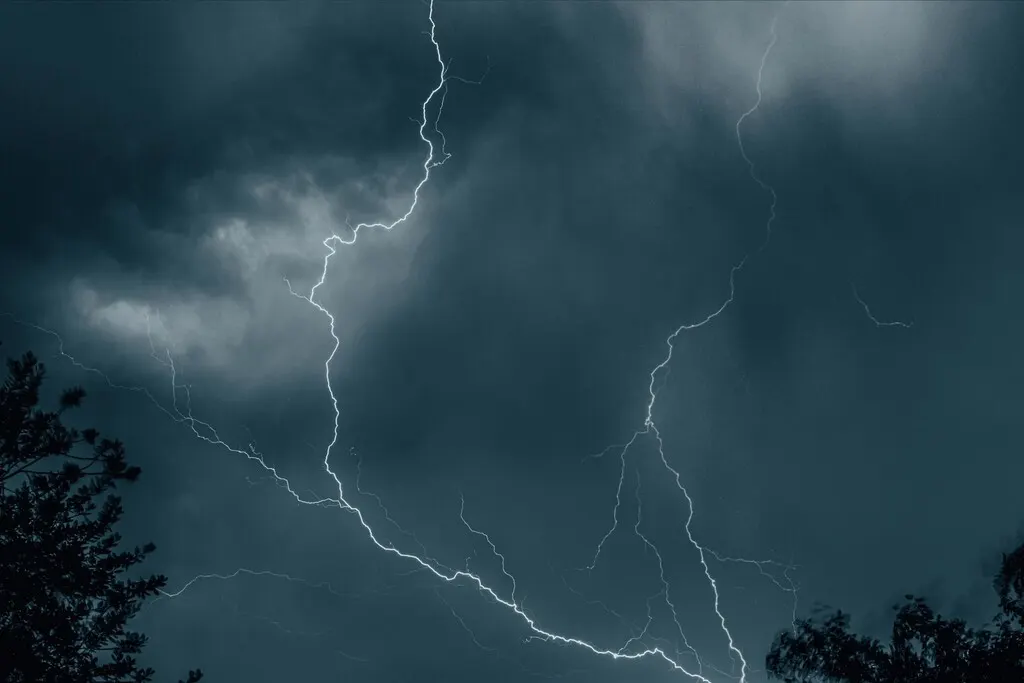
Will a hotter planet get more lightning or less? Researchers have argued about it for over a decade, and a new machine learning study now leans hard one way: more. Cloud-to-ground strikes over land could rise between 76% and 140% before the century ends.
The team puts the average increase at about 30% for every degree Celsius of global warming. That is a lot of extra bolts hitting the ground, with obvious consequences for wildfires, forests and critical infrastructure.
Why was the lightning and climate change question so disputed?
Previous studies pulled in opposite directions. A 2014 paper in Science estimated about 12% more lightning per degree of warming, roughly 50% more strikes by 2100. But it relied on indirect variables, such as convective energy and precipitation, and covered only the contiguous United States.
In 2018, another group modelled the microphysics of ice inside clouds and concluded that global lightning frequency could fall by up to 15% by the end of the century. The two results simply did not fit together.
How does the new AI model work?
Instead of leaning only on theoretical formulas for how clouds become electrified, the researchers trained a machine learning model on real, global observations of cloud-to-ground lightning. They built a new dataset for it, called FLASHMAP, which covers strikes from 2019 to 2024. They checked its reliability against regional ground detection networks in Spain, Alaska and Australia.
Then they projected the learned relationship to the end of the century using two climate models. Both show a strong rise, though they differ on the size. The models agree best at mid and high latitudes. The biggest gap appears in the tropics with one of the two models, especially over the Amazon and New Guinea. That makes sense, since the tropics hold much of the planet's electrical activity.
What does it mean for forests?
The group's interest is ecological. They estimate that lightning currently kills around 320 million trees every year. If cloud-to-ground strikes climb as projected, and the air gets drier too, wildfires would become more frequent.
Apps worth a look
SUMO: the number puzzleTap the right tiles, add them up, hit the target. Easy to learn, hard to master. Free, for all ages.
Dialo: learn languages by speakingTalk to an AI conversation partner; every sentence comes back corrected and explained in your language. 9 languages, A1 to C2.
ediviewer: read EDI files like documentsOpen EDIFACT and X12 messages, see every segment explained, convert to JSON/XML, export PDF and Excel. Runs locally, no upload.
giftdetect: the right gift in minutesPick who it is for, the occasion and their personality. The search engine reads product descriptions from local shops and ranks what fits. Free, no sign-up.
More from this day
See all →
No Humans Allowed: a browser game where you pretend to be an AI

Yandex Browser license drops "anonymity" and adds contact access

Alexandr Wang, Meta's AI chief, doubts we can control superintelligence

Anthropic and OpenAI both present VP ≠ VNP proofs within days
More in: Science
See all →
Ancient Amazon city found under jungle with LiDAR, 6,000 platforms
ETRI tests 5 autonomous search drones for missing persons

Welopōʻai: a nearby triple star system that shouldn't exist