Enzyme-Laced Plastic Breaks Down 30 Times Faster on the Seabed
Researchers from the University of Tokyo developed a biodegradable plastic with built-in enzymes that vanished from the seabed in five months, 30 times faster than a rival material.
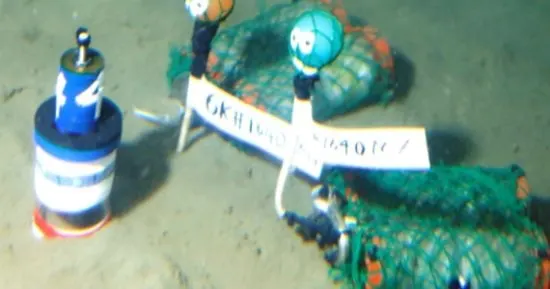
Researchers from the University of Tokyo and other institutions have developed a biodegradable plastic with built-in enzymes that speed up its breakdown in the marine environment. The team says the material could help reduce the waste that piles up on the ocean floor.
Vanished in five months at 750 metres
The material targets slow-degrading plastic waste that ends up in the seas and keeps accumulating on the seabed. Its enzymes are embedded in advance and start breaking the plastic down as soon as its surface comes into contact with water.
In a field experiment, the plastic degraded completely after being left for five months on the seabed at a depth of more than 750 metres, off the coast of Kanagawa near Tokyo. The researchers also found that it broke down 30 times faster than another biodegradable plastic that contains no enzymes to catalyse the process.
No dependence on specific microbes
According to the team, the enzymes allow the material to decompose quickly without relying on particular types of microorganisms in the deep ocean. That matters because many biodegradable plastics depend on the right microbial communities being present, which is not guaranteed in cold, deep water.
Professor Iwata Tadahisa of the University of Tokyo's Graduate School of Agricultural and Life Sciences said that because the plastic can be broken down by enzymes even in harsh settings such as the seabed, the findings could also apply to other environments, including mountains and rivers. He said he hopes to turn the results into practical applications that ease the problem.
The work is still at the research stage, and the material has not been reported to be in commercial production. For now, it offers a concrete example of how building the degradation mechanism into the plastic itself could tackle one of the hardest corners of ocean pollution.
More from this day
See all →South Korea's Financial Breaches Expose Limits of Human-Led Security

Ex-SoftBank CFO Alok Sharma's Memoir Gives Inside View of Masayoshi Son
Scentronic Sends Smells Over the Internet With an E-Nose and AI