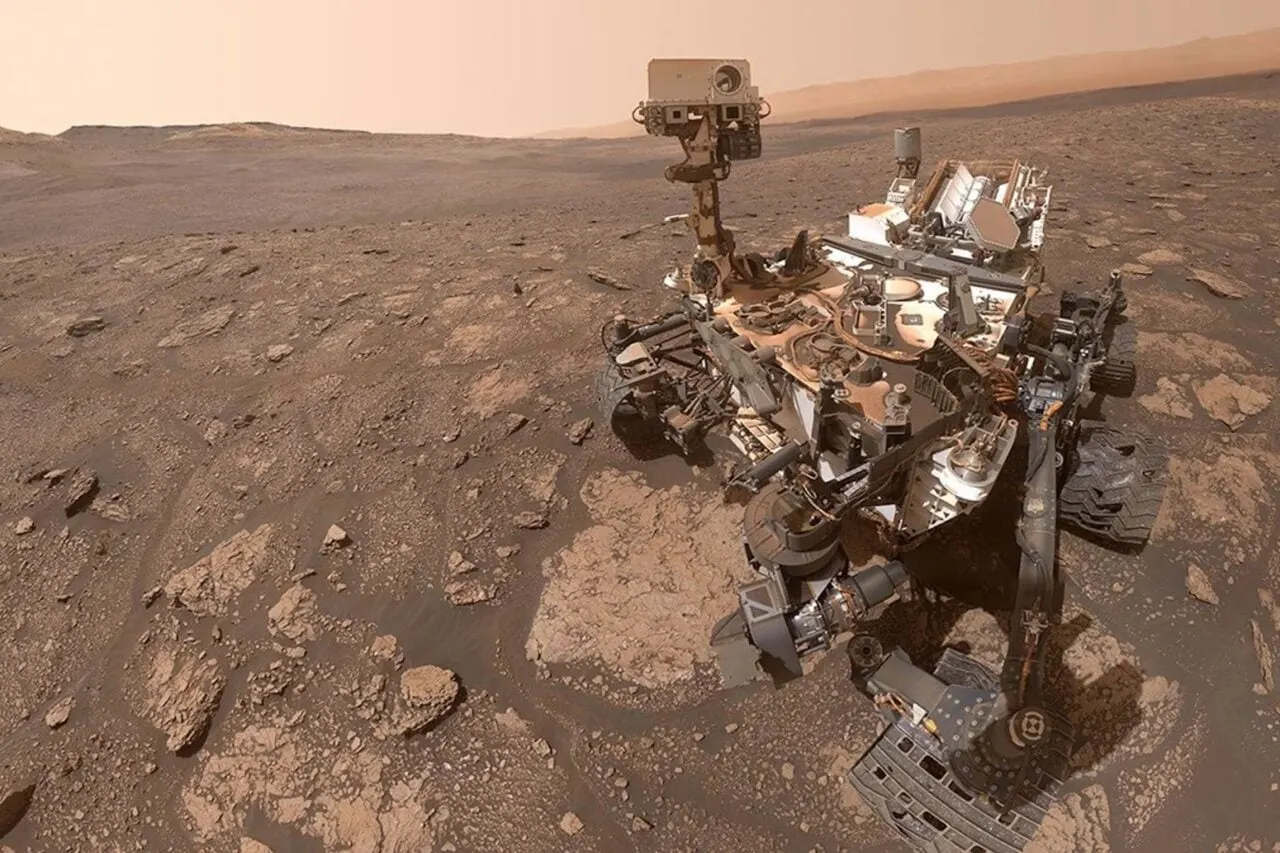
Curiosity rover finds hints of liquid water films on Mars
Thirteen years of Curiosity data show Mars' air changing every spring and summer. The best explanation is tiny films of liquid-like water at Gale crater.
 SUMO· the number puzzle
 Dialo· learn languages by speaking
 ediviewer· read EDI files like documents
 giftdetect· the right gift in minutes
After nearly 15 years on Mars, NASA's Curiosity rover has turned up a quiet sign of liquid water at its landing site. Not lakes or puddles. Films of water so thin they may be only a few molecules thick.
The study, published in the journal Proceedings of the National Academy of Sciences, looked at carbon dioxide (CO2) in the air of Gale crater, a big impact basin just south of the Martian equator. Curiosity measured it from 2012 to 2025 with its Sample Analysis at Mars (SAM) instruments. The authors say it is the first long-term record of the isotopic makeup of CO2 in Mars' atmosphere. Isotopes are versions of an element with slightly different weights, and their ratios can hint at where water is hiding.
What did Curiosity find in Mars' atmosphere?
The team checked for changes by season and by day versus night. Day and night looked the same. The seasons did not: the share of oxygen-18 in the CO2 rose in spring and summer.
The researchers ran computer models of several possible causes. Only one reproduced the rise: CO2 swapping oxygen isotopes with extremely thin, liquid-like water films, either on the surface or clinging to soil grains underground. "Exchange of oxygen isotopes between CO2 and water is the only one that our models found capable of producing the level of oxygen-18 enrichment seen in the atmosphere at the Gale Crater," lead author Heather Franz of NASA's Goddard Space Flight Center said.
Is there liquid water on Mars today?
The evidence is indirect, so not quite. It points to water that can interact with the atmosphere in the warmest part of the Martian year. That means it is not locked up in ice, like the water in the polar caps or underground reservoirs. Curiosity had already found plenty of evidence that Gale crater once held liquid water. This suggests a trace of it is still active.
"This is not what anyone expected when we began these measurements at the start of the mission," Franz said.
The measurement was only possible because Curiosity has kept working for so long. Franz and her colleagues hope future missions will take similar readings elsewhere on Mars. That would show how widespread the CO2-water exchange is, and what subsurface water looks like in other regions.
Apps worth a look
SUMO: the number puzzleTap the right tiles, add them up, hit the target. Easy to learn, hard to master. Free, for all ages.
Dialo: learn languages by speakingTalk to an AI conversation partner; every sentence comes back corrected and explained in your language. 9 languages, A1 to C2.
ediviewer: read EDI files like documentsOpen EDIFACT and X12 messages, see every segment explained, convert to JSON/XML, export PDF and Excel. Runs locally, no upload.
giftdetect: the right gift in minutesPick who it is for, the occasion and their personality. The search engine reads product descriptions from local shops and ranks what fits. Free, no sign-up.
More from this day
See all →
Satya Nadella: Claude Code caught Microsoft off guard, IDE faded

United Airlines outage delays departures, days after FAA stop

Outlook outage blamed after chlorine incident at German hotel

Trezor Skladon data leak exposes addresses of 27,000 orders
More in: Science
See all →
Vitamin B12 battery: Spanish team builds a rechargeable zinc-air cell
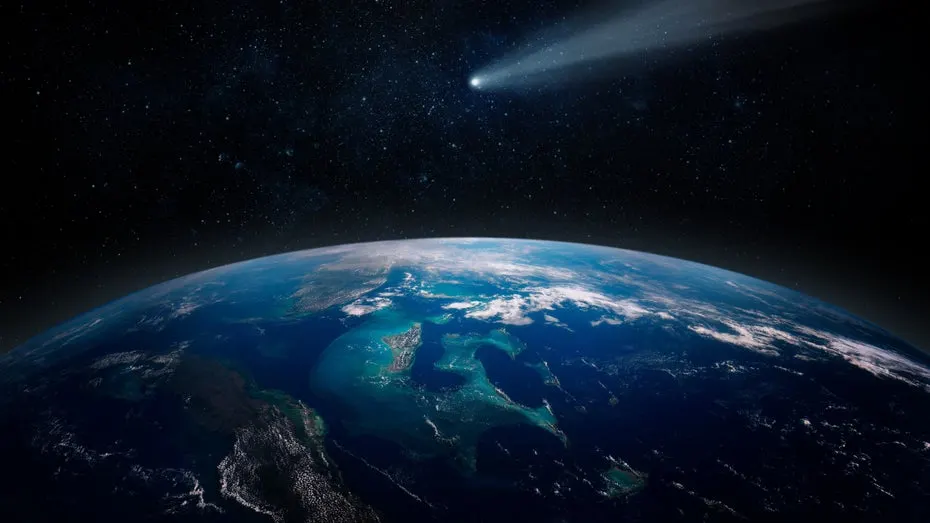
Comet 220P/McNaught suddenly got 1,000 times brighter. Here's why
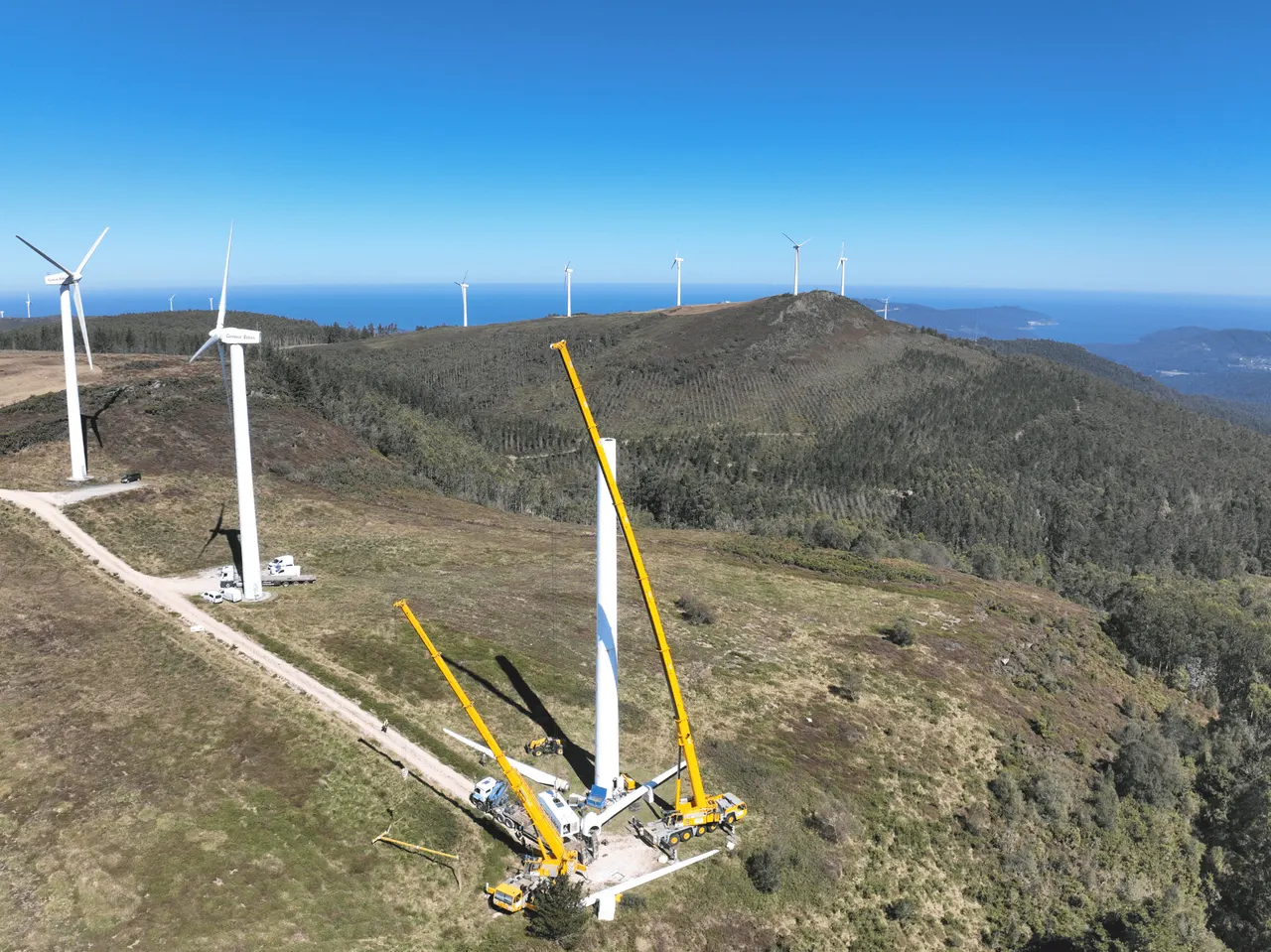
Coriscada wind farm: 4 turbines replace 40 and make 78% more power