Cape Cod Meteor Traced Back to an Orbit Near Jupiter
Astronomers reconstructed the path of the superbolide that fell in Cape Cod Bay on 30 May 2026, finding its orbit reached out toward Jupiter.
 SUMO· the number puzzle
 Dialo· learn languages by speaking
 ediviewer· read EDI files like documents
 giftdetect· the right gift in minutes
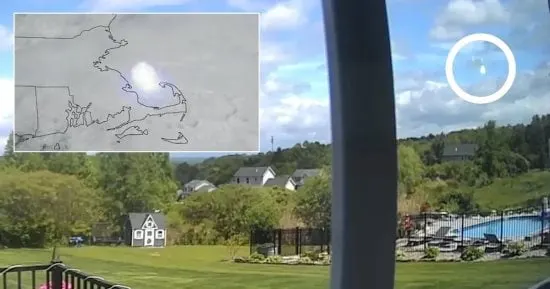
An international team of researchers has traced the meteor that fell into Cape Cod Bay, Massachusetts, in May 2026 to a distant region of the solar system near Jupiter's orbit. The group reconstructed the object's path before it hit the atmosphere using radar data, acoustic sensors and footage from surveillance cameras.
The event took place on 30 May 2026, when a very bright flash lit up the sky and several residents saw it. Others heard a loud sonic boom as the object tore through the atmosphere. Such an event is classed as a superbolide, a fireball produced when a relatively large body is heated by friction and breaks apart.
Size, energy and composition
Scientists estimate the object was about one metre across before entering the atmosphere. Its breakup released energy equivalent to 1.1 kilotons of TNT, or roughly 1,100 tons. Measurements suggest it was very hard and possibly rich in iron, which would explain why fragments survived and fell into the waters of the bay.
The team was led by space physicist Juha Vierinen of the Arctic University of Norway. It combined data from meteor-detection radars, weather radars, low-frequency acoustic stations and dashcam and security recordings. MIT's SIMONe network was a key source, picking up radar signals from the ionised air around the meteor. Four weather radar stations tracked the cloud of fragments, while acoustic data helped estimate the energy released.
An orbit shaped by Jupiter
The calculations show an elongated elliptical orbit around the Sun stretching out toward Jupiter, similar to those of Jupiter-family comets. The researchers stressed that the object was not a comet. It is more likely a piece of a small asteroid from the main belt between Mars and Jupiter. The meteor was not linked to any known meteor shower.
Jupiter's gravity may have nudged it onto a new path that crosses Earth's orbit. Researcher Mark Fries said the aphelion, the farthest point from the Sun, lies near Jupiter's orbit, supporting that scenario.
Objects only a few metres across are hard to spot before they enter the atmosphere and fall too rarely for easy study. Rebuilding their orbits helps explain where meteorites and near-Earth asteroids come from and could improve estimates of potentially hazardous bodies. The study also shows that combining radar, acoustic and optical data can characterise such objects even when they fall in daylight.
Apps worth a look
SUMO: the number puzzleTap the right tiles, add them up, hit the target. Easy to learn, hard to master. Free, for all ages.
Dialo: learn languages by speakingTalk to an AI conversation partner; every sentence comes back corrected and explained in your language. 9 languages, A1 to C2.
ediviewer: read EDI files like documentsOpen EDIFACT and X12 messages, see every segment explained, convert to JSON/XML, export PDF and Excel. Runs locally, no upload.
giftdetect: the right gift in minutesPick who it is for, the occasion and their personality. The search engine reads product descriptions from local shops and ranks what fits. Free, no sign-up.
More from this day
See all →

More in: Space
See all →
Rakuten and AST SpaceMobile Launch Rakuten AST for Japan Satellites
Starfish Space Loses Contact With Otter 24C Spacecraft in Orbit
NASA Announces Contracts Worth Up to $10 Billion for Moon Base