Can AI break encryption? Experts weigh math proofs by OpenAI
After OpenAI and Anthropic claimed AI proofs of old maths problems, computer scientists ask whether a quiet crypto breakthrough is already sitting in a lab.

 SUMO· the number puzzle
 Dialo· learn languages by speaking
 ediviewer· read EDI files like documents
 giftdetect· the right gift in minutes
Can AI break encryption? Nobody has shown that it can. But some computer scientists now suspect that leading AI labs may be sitting on cryptography results they haven't published, and that has banks and governments paying attention.
Scott Aaronson, a professor at the University of Texas at Austin, says several credible sources have told him AI labs have reached a major result in cryptography. He thinks OpenAI and Anthropic probably hold unpublished work. Some experts worry the global security system could face big changes within months.
The worry comes from recent maths claims. On 23 November Anthropic said its Claude model proved that VP does not equal VNP, a problem posed in 1979 about which calculations computers can handle efficiently. OpenAI published a proof reaching the same conclusion around the same time. In October it also said AI had disproved the Exponential Time Hypothesis, a conjecture about how long hard computations take, which is tied to cryptography. Both companies checked their proofs with the Lean verification tool, but mathematicians haven't fully reviewed them yet.
Why does this matter for online security?
Banks, governments and companies protect data on the assumption that certain maths problems can't be solved quickly. That covers online payments, diplomatic cables and personal email. If AI found a much faster way to solve the underlying problems, hackers could read protected data and institutions might have to swap their systems in a hurry.
Is encryption already broken?
No evidence says so. Experts raise two possibilities: AI found a fast way to crack codes, or it proved that no such way exists. Solving a maths problem also isn't the same as breaking real-world encryption, which relies on several methods, so one result wouldn't topple everything at once.
Governments were already preparing for quantum computers by moving to quantum-resistant cryptography. Stephen Murdoch of UCL says the old target was around 2032 and preparation is behind. The Bank of England warned on 26 November, in its Financial Stability Report, that advanced AI and quantum computing could create new risks for encryption.
Alan Woodward of the University of Surrey says institutions that can react fast will be fine, while slow ones may suffer.
Apps worth a look
SUMO: the number puzzleTap the right tiles, add them up, hit the target. Easy to learn, hard to master. Free, for all ages.
Dialo: learn languages by speakingTalk to an AI conversation partner; every sentence comes back corrected and explained in your language. 9 languages, A1 to C2.
ediviewer: read EDI files like documentsOpen EDIFACT and X12 messages, see every segment explained, convert to JSON/XML, export PDF and Excel. Runs locally, no upload.
giftdetect: the right gift in minutesPick who it is for, the occasion and their personality. The search engine reads product descriptions from local shops and ranks what fits. Free, no sign-up.
More from this day
See all →


More in: Security
See all →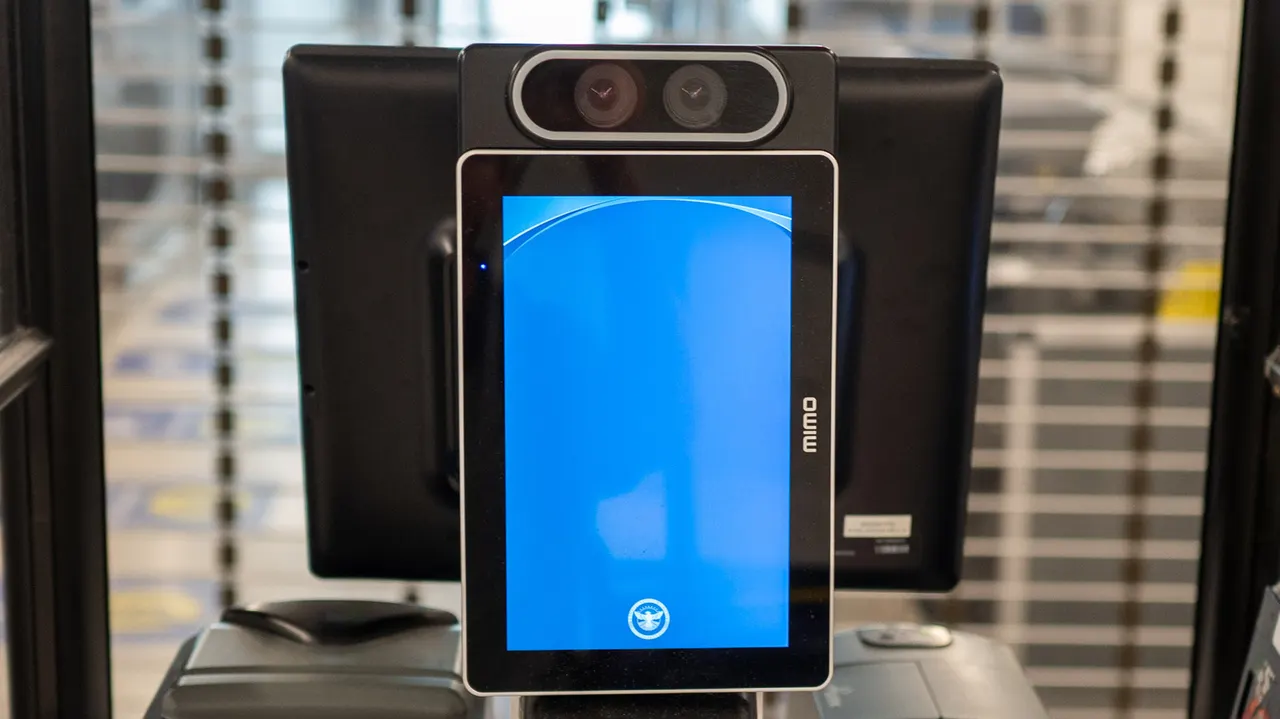
TSA face scan opt out: you can say no at airport security

RuneScape breach: change your password after Jagex hack
Fake Claude Code skills on GitHub install MopsStealer on Windows