Bidirectional Charging Could Cut Freight Energy Costs by 10%
A three-year field trial in Regensburg suggests haulage firms could cut energy costs by around ten percent by using electric trucks as storage for the depot and the grid.
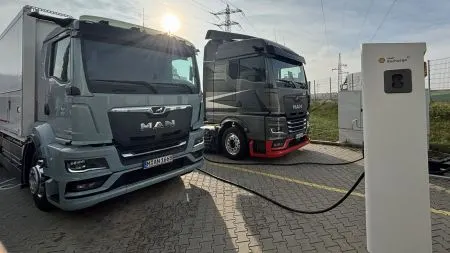
Electric trucks could do more than haul freight: used as mobile batteries, they could lower a haulier's energy bill by about ten percent. That is the early finding of the SPIRIT-E research project, led by the Technical University of Munich (TUM), which has analysed three years of real-world data.
Trial at Spedition Schmid
The test ran from August 2023 to October 2026 at the Regensburg depot of Spedition Schmid. An electric MAN eTGX tractor unit with 480 kWh of usable battery capacity served as a buffer store for the yard. Through a bidirectional DC charger rated at up to 350 kilowatts, it fed power into the depot's local grid and back into the public grid. It also charged other vehicles.
According to the evaluation, hauliers could reduce energy costs by roughly ten percent under realistic conditions. In the best case, savings of up to 20 percent are possible. The researchers stress that bidirectional charging pays off only under certain conditions.
Who is behind the project
SPIRIT-E stands for "Shared Private Charging Infrastructure and Reservation for Bidirectionally Integrated Truck Electrification". TUM led a consortium that also included Fraunhofer IEE, the Forschungsstelle für Energiewirtschaft (FfE), SBRS (Shell), grid operator TenneT, Hubject, Consolinno Energy and MAN Truck & Bus.
One discrepancy appears in the published material: the consortium's project page cites a feed-in power of up to 375 kilowatts, while TUM and MAN both give 350 kilowatts for the specific eTGX test. The figure of 350 kilowatts is used here.
Why it matters
For logistics companies investing in electric fleets, the findings point to a possible second revenue or savings stream from hardware they already need. Trucks idle at the depot for long periods, and their large batteries could absorb cheap power and release it when prices or demand peak. Whether the model scales will depend on charger costs, vehicle availability and grid rules, which the full results should help clarify.
More from this day
See all →
LG Electronics Starts Building Its Cloid Humanoid In-House

Matsuya Foods Confirms Breach of 2.38 Million App Records
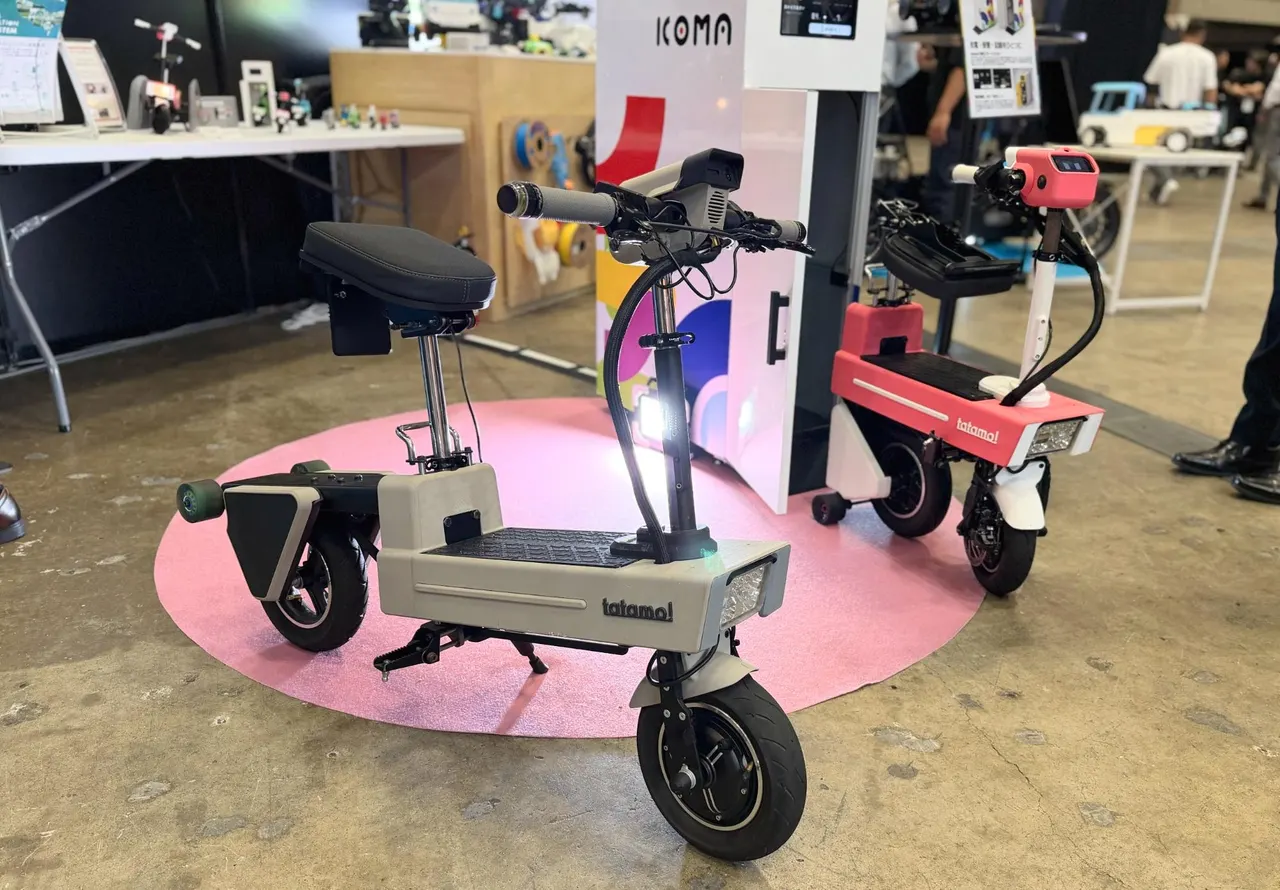
ICOMA tatamo!: A Foldable Robotic E-Bike With a Face and a Home