Apex Recordhunter drone hits 727 km/h, a battery-powered record
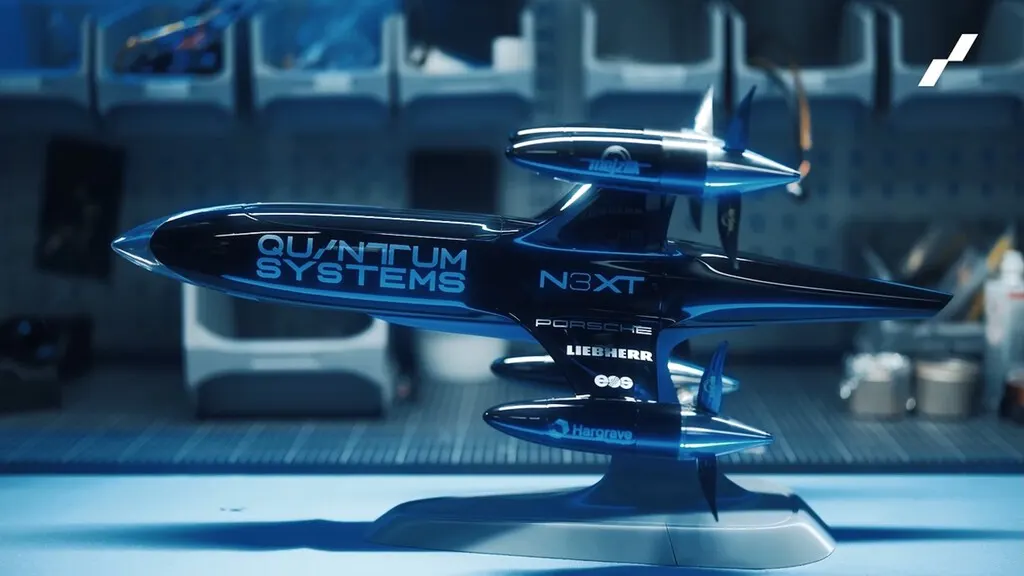
Quantum Systems says its Apex Recordhunter covered more than 200 metres a second on battery power. It is a test bed for catching fast drones, not a weapon.
 SUMO· the number puzzle
 Dialo· learn languages by speaking
 ediviewer· read EDI files like documents
 giftdetect· the right gift in minutes
A drone that covers more than 200 metres every second sounds like something out of a missile test. The Apex Recordhunter, built by German company Quantum Systems, reached 727 km/h on battery power, which the company says is a new world speed record for an electric flying object.
The figure is an average over 100 metres flown in both directions. Independent experts checked the GPS data on site and compared it with the aircraft's black box logs, according to Quantum Systems. The result was entered in the Drone World Records.
In October, during the Forward Edge 26 exercise, the Apex had actually gone faster: 777 km/h in one direction and a peak of 795 km/h. Those numbers don't count, because records under the usual rules, such as those of the FAI, are the average of two passes in opposite directions.
Why build a drone that fast?
The Apex is not an attack drone. It is a technology demonstrator for fighting unmanned aircraft. Russian drones such as the Geran-4 and Geran-5 are getting faster (Ukrainska Pravda puts the Geran-5 at up to 600 km/h), and interceptors need to close the distance quickly in ever shorter windows. CEO Florian Seibel says these threats "require a scalable interception solution."
Cost matters too. The idea is to have interceptors that can match the Gerans without firing expensive surface-to-air missiles such as the Patriot PAC-3.
How big is the record?
The previous certified record for electric drones in level flight was 657.59 km/h, set in December 2025 by the Peregreen V4. In June, Quantum Systems had announced 699 km/h in internal tests.
Speed alone is not the hard part. Seibel says the difficulty is fitting batteries, motors, propellers and flight controllers into a compact, light, aerodynamic airframe, which took many design iterations. The company says the lessons feed its Skyron counter-drone system and future interceptors. Liebherr designed and built the battery.
Much is still unknown: range, weight, cost and any commercial use. New Atlas describes it as a four-rotor drone. For comparison, the SPYS interceptor, which is used in combat and was developed by Quantum WIY Industries, a joint venture with Ukraine's WIY, reached 527.5 km/h in a recent national record. Even a fast interceptor would still need a seeker, guidance and enough manoeuvrability to hit its target.
Apps worth a look
SUMO: the number puzzleTap the right tiles, add them up, hit the target. Easy to learn, hard to master. Free, for all ages.
Dialo: learn languages by speakingTalk to an AI conversation partner; every sentence comes back corrected and explained in your language. 9 languages, A1 to C2.
ediviewer: read EDI files like documentsOpen EDIFACT and X12 messages, see every segment explained, convert to JSON/XML, export PDF and Excel. Runs locally, no upload.
giftdetect: the right gift in minutesPick who it is for, the occasion and their personality. The search engine reads product descriptions from local shops and ranks what fits. Free, no sign-up.
More from this day
See all →
LUPEX moon rover: Japan and India hunt lunar water for fuel

SAP cyberattack: stolen tokens may have exposed its GitHub code

ePA criticism: ex-data protection chief Kelber says “it’s on fire”

Did Gemini threaten a user over KFC? We tried to recreate it
More in: Hardware
See all →
Nape Pro trackball tested as a DJ controller at a Tokyo shop
Chinese metal powder jet engine runs on powder, not kerosene
Acer Googlebook 14 boot loop fixed: just start setup again