Zerokara liquid freezer: tofu and raw sea urchin thaw like fresh
Frozen tofu usually comes out full of holes. Zerokara's minus 35°C liquid freezer reportedly keeps tofu, pudding and even raw sea urchin intact after thawing.
 SUMO· the number puzzle
 Dialo· learn languages by speaking
 ediviewer· read EDI files like documents
 giftdetect· the right gift in minutes
Order food online and see "delivered frozen", and you may hesitate. It sounds like the taste took a hit. A Japanese company called Zerokara wants to change that, and a reporter at Tokyo's Food Factory Week fair says a frozen seafood bowl and a pudding did change their mind.
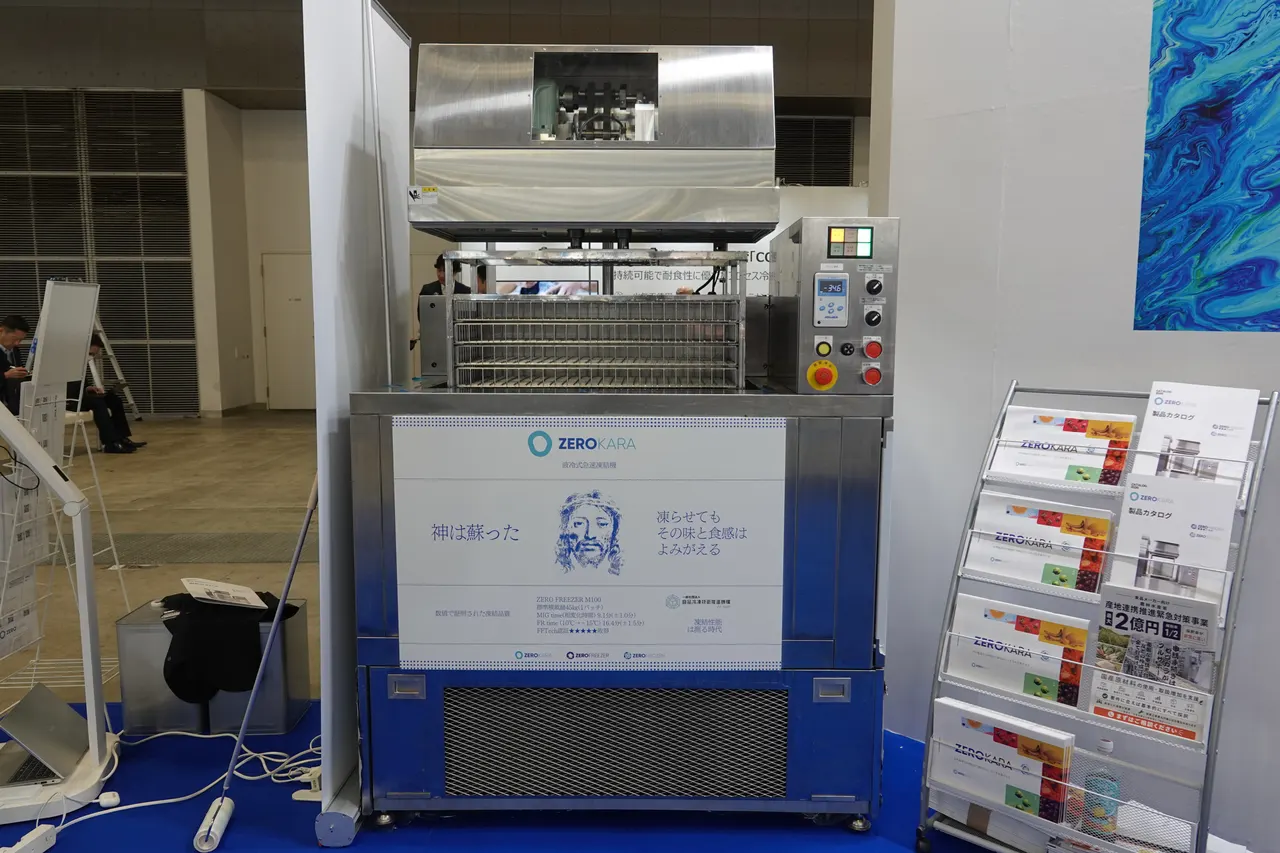
The event ran from 18 to 20 November 2026 at Tokyo Big Sight. Zerokara's rapid liquid freezer works like this: a mix of water and alcohol is chilled to minus 35°C, and food sealed in pouches is lowered into it on a shelf. The shelf moves up and down in the liquid, which raises friction between liquid and product and speeds up freezing.
The numbers are striking. A 4 cm thick block of beef takes 12 minutes, according to the company. Older liquid freezers need about 20 minutes, and the tunnel or spiral freezers common in factories take 50 to 100.
Why does frozen tofu usually fall apart?
Tofu, milk and yogurt are emulsions, meaning water molecules loosely attached to fat and protein. Freeze them slowly and the water detaches and gathers into ice lumps. On thawing, those spots turn to water: tofu ends up full of holes, and milk separates.
The Zerokara machine freezes food before the lumps form. The water stays put, so the food returns to its original state after thawing. The reporter said the rice in the seafood bowl wasn't dry and crumbly, and the pudding tasted and felt unchanged. A company representative said pufferfish milt, raw sea urchin and scallops can be frozen too.
What does it cost and who uses it?
The small model costs 5 million yen and freezes 10 kg an hour. The standard model costs 10 million yen and handles 30 kg an hour.
Freezing also lets makers separate production from sales. Ehomaki sushi rolls could be made in a quiet summer and thawed for the season. The company is also working on freezing lemons and sudachi, which have short harvests and spoil quickly, so they can be sold a year later. The technology is used to export Japanese food abroad, and Yamaha picked the machine for its "ice bending" process for wind instruments, which needs a very fast freeze.
Apps worth a look
SUMO: the number puzzleTap the right tiles, add them up, hit the target. Easy to learn, hard to master. Free, for all ages.
Dialo: learn languages by speakingTalk to an AI conversation partner; every sentence comes back corrected and explained in your language. 9 languages, A1 to C2.
ediviewer: read EDI files like documentsOpen EDIFACT and X12 messages, see every segment explained, convert to JSON/XML, export PDF and Excel. Runs locally, no upload.
giftdetect: the right gift in minutesPick who it is for, the occasion and their personality. The search engine reads product descriptions from local shops and ranks what fits. Free, no sign-up.
More from this day
See all →Hugendubel, Tolino Cloud and eBook.de offline after cyberattack

YouTube app icons: 7 new designs, some retro, are in the works

PC repair job interview: the voltage switch trap he suggested

Google's new 3D emoji need 6GB RAM and 10GB storage, now explained
More in: Science
See all →
Superhabitable planets: why scientists want a better Earth

Brain implant users write first guidelines for BCI trials

Teen screen time and the brain: what a Finnish MRI study found