Vibecoding lets users build the apps developers never made
AI chatbots now let anyone build tailor-made apps by typing a request. It shifts power from app developers to AI model providers, with trade-offs in support and security.
For years, an app did only what its developer decided. To compete, developers kept adding features until many apps became bloated, and users had little recourse beyond the suggestion box. AI-assisted "vibecoding" is now changing that balance.
The logic is simple: an app usually takes off by solving one specific need, such as reminding you to drink water, switching on a flashlight or sharing photos. Once dozens of rivals do the same, the only way to stand out is to add more. And no developer can tailor software to every individual user. With a large language model acting as a bespoke tailor, users can now request the exact button they want.
Not new, but far easier
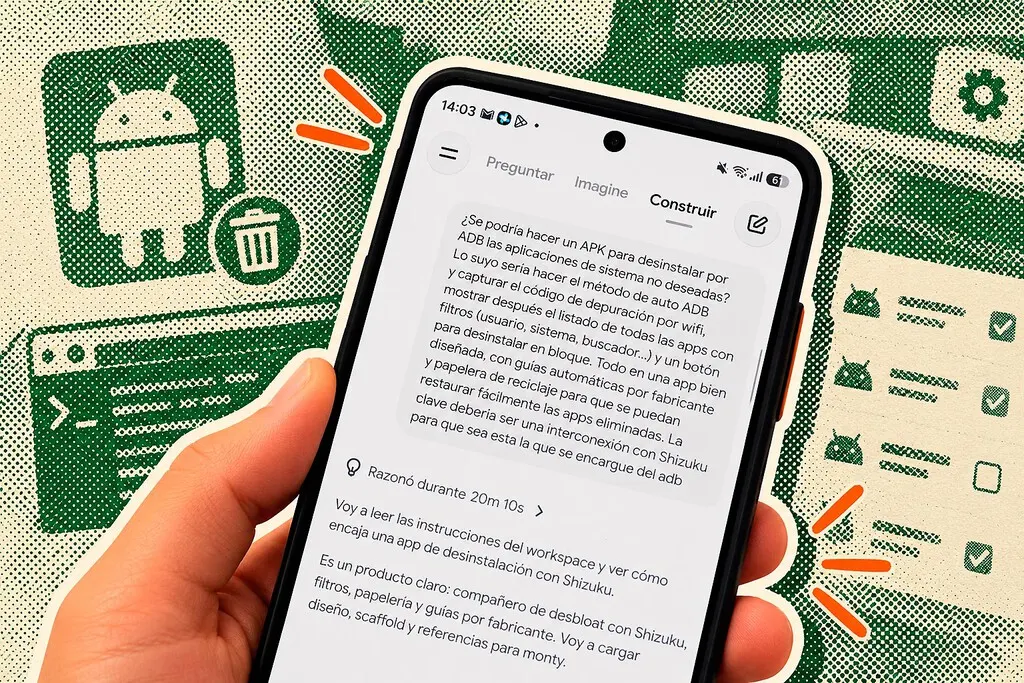
The author of the analysis says he has already built several apps this way: one that controls home automation without data leaving his network, one that removes bloatware from Android phones, and a family task app backed by a database on his own server.
Custom automation is almost as old as software itself, from Excel macros to IFTTT, Tasker on Android and Shortcuts on iOS. What changes is that nothing needs to be learned first: you write what you want in plain language.
Power moves to the model makers
The developer's "dictatorship" fades, but freedom is only partial. Power now sits with the providers of AI models, namely OpenAI, Anthropic, Google, xAI and others. What looks like a commodity can become a dependency, and dependencies eventually get billed. A good vibecoded app calls for a good model, so the subscription does not vanish. It moves from the developer's app to the AI plan.
There are practical limits too. A personal app may work without its owner fully understanding why. There is no support, bug fixing depends on the model, and nothing guarantees it won't break something sensitive.
The author does not expect vibecoding to replace developers, just as image and text generation haven't replaced designers and writers. It gives you an app that works for you, not one that scales to thousands of users, stays secure or gets maintained over time. In the short term, mainstream apps will keep covering what most people need, while vibecoding fills the gaps no developer can reach.
Apps worth a look
 SUMO: the number puzzle
Tap the right tiles, add them up, hit the target. Easy to learn, hard to master. Free, for all ages.
 Dialo: learn languages by speaking
Talk to an AI conversation partner; every sentence comes back corrected and explained in your language. 9 languages, A1 to C2.
 ediviewer: read EDI files like documents
Open EDIFACT and X12 messages, see every segment explained, convert to JSON/XML, export PDF and Excel. Runs locally, no upload.
More from this day
See all →
Microsoft AI chief Mustafa Suleyman: AI has no rights or feelings

Thara Connect Forum in Ajman Sets Five-Year Startup Targets
BLIK Code Scam: Police Warn of Hijacked Friend Accounts