Van Allen belts: Earth briefly had four radiation belts in 2024
After the May 2024 solar storm, Earth briefly had four Van Allen radiation belts instead of two. Nobody had seen that before, and extra belts are showing up more often.
 SUMO· the number puzzle
 Dialo· learn languages by speaking
 ediviewer· read EDI files like documents
 giftdetect· the right gift in minutes
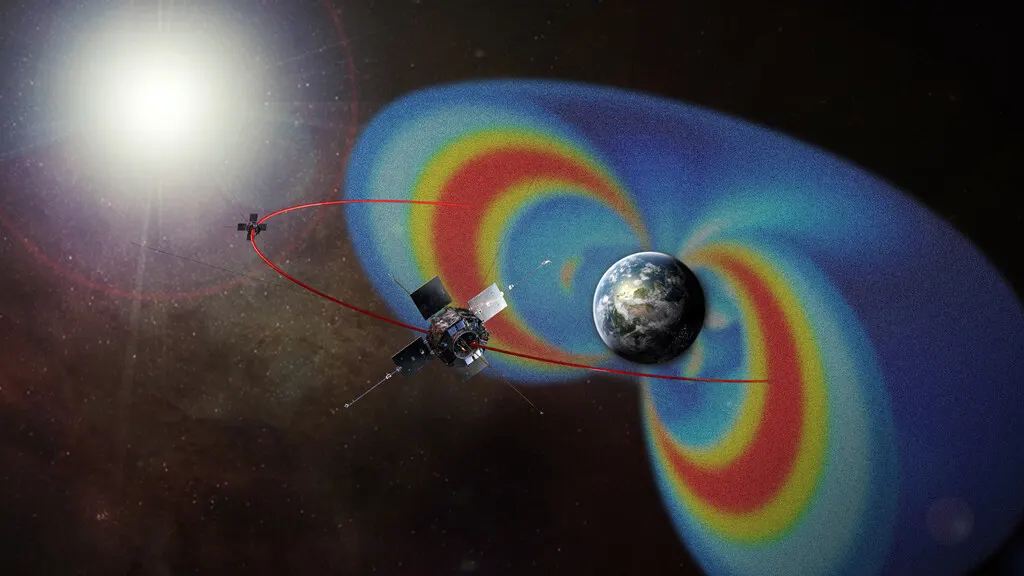
Earth normally wraps itself in two doughnut-shaped rings of trapped radiation, the Van Allen belts. After a huge solar storm in May 2024, it briefly had four. Scientists at the Royal Belgian Institute for Space Aeronomy say nothing like it had ever been detected.
The inner belt is packed mostly with protons, the outer one mostly with electrons. Between them sits the slot, a gap with very few charged particles, because electromagnetic waves scatter electrons there down into the atmosphere. A third belt was seen briefly in 2012, and again several times between 2024 and 2026.
How did Earth get four Van Allen belts?
The trigger was the intense geomagnetic storm of 10 May 2024, the so-called Mother's Day event. According to the study, it flung a huge number of charged particles close to Earth, and the magnetic field weakened enough for them to get in much closer than usual.
By 17 May the slot itself had filled with electrons, so for a while there was effectively a single belt. Then waves generated by the storm cleared electrons out again, opening three slots: the usual one, plus one above and one below. By around 22 May there were four electron belts. The fourth disappeared on 28 June, and by 30 August only two remained. The team followed all this with the EPT instrument on ESA's PROBA-V satellite, orbiting at 820 km.
Why does it matter?
Lead author Viviane Pierrard says some mechanism must be producing more and more extra belts. Solar activity is clearly involved: every time a third belt appeared, a big geomagnetic storm came with it, and the Sun has been in a very active stretch of its 11-year cycle. Whether something else is going on still needs study.
The particles trapped in the belts can damage satellites and spacecraft that aren't built for them, and can cause health problems for astronauts who stray too close. Operators are used to dodging two belts. Predicting when a third or fourth might form is the next job.
Apps worth a look
SUMO: the number puzzleTap the right tiles, add them up, hit the target. Easy to learn, hard to master. Free, for all ages.
Dialo: learn languages by speakingTalk to an AI conversation partner; every sentence comes back corrected and explained in your language. 9 languages, A1 to C2.
ediviewer: read EDI files like documentsOpen EDIFACT and X12 messages, see every segment explained, convert to JSON/XML, export PDF and Excel. Runs locally, no upload.
giftdetect: the right gift in minutesPick who it is for, the occasion and their personality. The search engine reads product descriptions from local shops and ranks what fits. Free, no sign-up.
More from this day
See all →Hugendubel, Tolino Cloud and eBook.de offline after cyberattack

YouTube app icons: 7 new designs, some retro, are in the works

PC repair job interview: the voltage switch trap he suggested

Google's new 3D emoji need 6GB RAM and 10GB storage, now explained
More in: Science
See all →
Superhabitable planets: why scientists want a better Earth
Brain implant users write first guidelines for BCI trials

Teen screen time and the brain: what a Finnish MRI study found