USC stress-detecting smart ring reads sweat with infrared light
A USC team built a smart ring that spots stress by shining near-infrared light at the sweat under your skin. After 12 hours it beat a gel sensor in early tests.
 SUMO· the number puzzle
 Dialo· learn languages by speaking
 ediviewer· read EDI files like documents
 giftdetect· the right gift in minutes
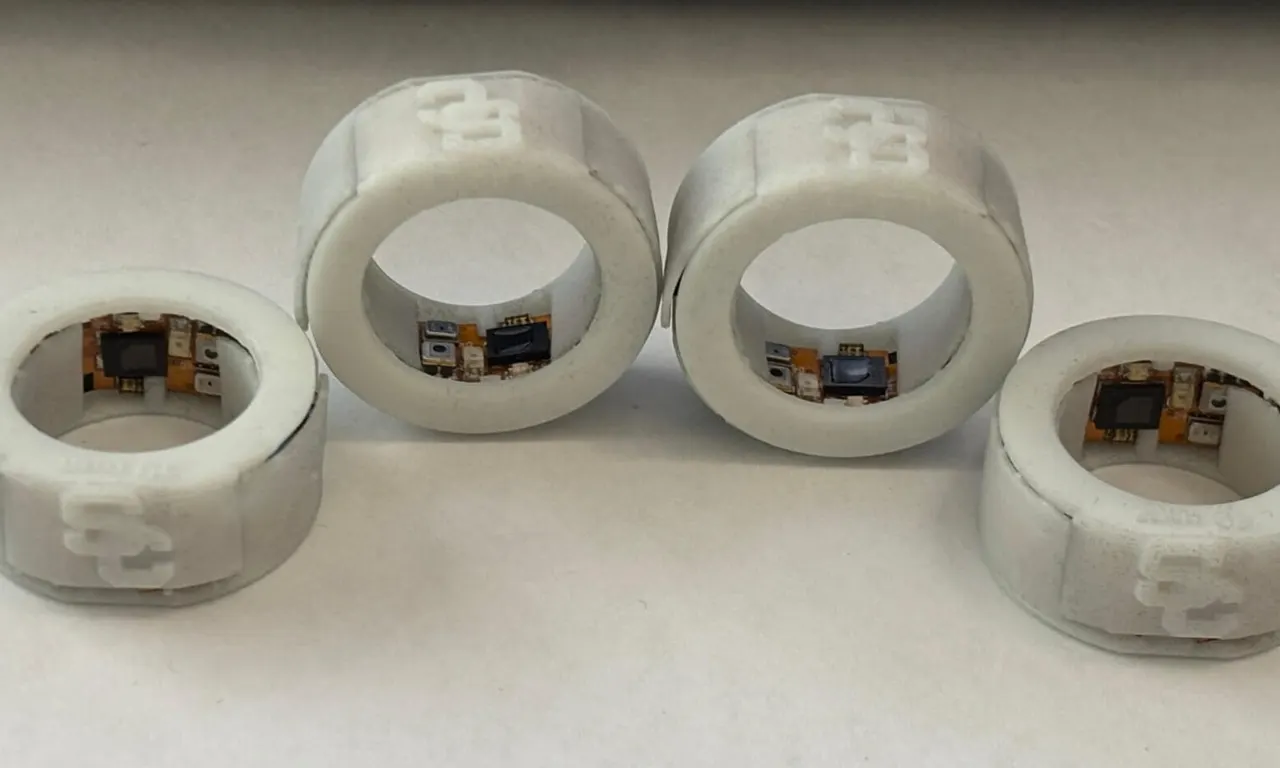
Most wearables that claim to track stress rely on a sensor that needs gel and a firm grip on your skin. A team at the University of Southern California has built a smart ring that detects stress with light instead, and in early tests it held up better than the gel.
The ring was developed by assistant professor Yasser Khan and his PhD student Farhad Hassan, and the work appeared in Science Advances. It uses two near-infrared LEDs. One shines at 960 nanometers and reacts to changes in water content linked to sweat. The other, at 1,250 nanometers, acts as a stable reference. The team calls the method optodermal activity, or ODA. "Our idea is very simple. We want to look at this small sweat under the skin with light," Khan said.
How does a stress-detecting smart ring work?
Stress switches on your sweat glands, and small changes show up under the skin before any visible sweat. Devices like the Fitbit Sense measure this through electrodermal activity (EDA), which tracks skin conductance. That needs electrodes in steady contact, conductive gels can dry out, and movement can disturb the readings.
The ring's optical system also records heart rate and heart rate variability. A temperature sensor and an accelerometer help it separate psychological stress from movement or heat-induced sweating. The machine-learning model runs on the ring itself, so raw biometric data doesn't have to go to an outside server, according to USC.
How accurate is it?
With four participants, the optical signals agreed 86 percent of the time, on average, with a commercial gel-based EDA sensor. In short tests with six people, the ring told stress from relaxation 92.3 percent of the time, against 77.95 percent for the gel sensor. In a test with four conditions, including physical movement and heat-induced sweating, the ring reached 100 percent versus 74.58 percent for EDA.
Over 12 hours of wear, tested with two participants, the gel sensor fell to 57.35 percent accuracy. The ring stayed at 79.55 percent. The samples are tiny, so these are early numbers.
Khan plans a yearlong follow-up with 40 participants in an office. The team is also working on interference from heavy surface sweat and on a wider range of stressors. The technology is in the patent process and may be licensed commercially through USC's Stevens Center for Innovation.
Apps worth a look
SUMO: the number puzzleTap the right tiles, add them up, hit the target. Easy to learn, hard to master. Free, for all ages.
Dialo: learn languages by speakingTalk to an AI conversation partner; every sentence comes back corrected and explained in your language. 9 languages, A1 to C2.
ediviewer: read EDI files like documentsOpen EDIFACT and X12 messages, see every segment explained, convert to JSON/XML, export PDF and Excel. Runs locally, no upload.
giftdetect: the right gift in minutesPick who it is for, the occasion and their personality. The search engine reads product descriptions from local shops and ranks what fits. Free, no sign-up.
More from this day
See all →
Windows UserAssist tracks every app you open: how to turn it off

GTA 6 sales: $3.79 billion on day one as Rockstar staff vote on a union

SpaceX Project Saturn: Lenders Don't Want Nvidia Chips in Orbit

California subpoenas Nvidia over Jensen Huang's China ties
More in: Hardware
See all →
OpenAI phone: Foxconn unit FIH Mobile reportedly assembling it
Smartphone prices: flagships up 30% as memory costs soar
Xteink X3 e-ink reader turned into a Mac-compatible printer