UMV robot bike rides a rocky mountain trail with no rider
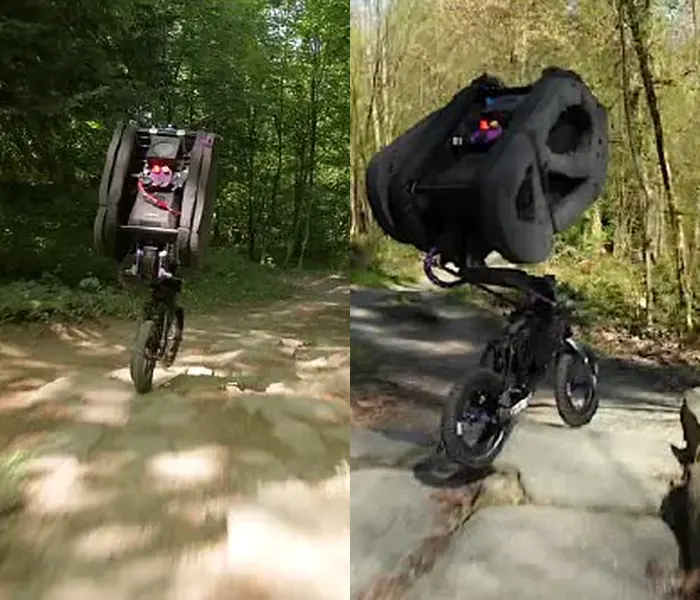
A bicycle robot called UMV from ETH Zurich and the RAI Institute balanced itself over rocks and roots on a mountain bike trail, reaching 18.7 km/h.
 SUMO· the number puzzle
 Dialo· learn languages by speaking
 ediviewer· read EDI files like documents
 giftdetect· the right gift in minutes
A bicycle with nobody on it just rode down a mountain bike trail, over rocks and tree roots, and stayed upright. The UMV robot bike comes from researchers at ETH Zurich and the robotics and AI lab RAI Institute, who have now published results from its trail tests.
The robot reads the terrain with cameras and a lidar sensor, which measures distance by bouncing laser light off its surroundings. An AI system then does two jobs at once: it picks a path and it keeps the bike balanced. The trail it handled had rocks, roots and sharp turns.
How well did the autonomous bike actually do?
The team took a mountain bike course of about 1 km and split it into six sections. Across those sections the bike drove itself for a total of 946 m. Its average speed was about 11.7 km/h and its top speed about 18.7 km/h.
There was a comparison, too. On some sections the autonomous bike was 2.3 times faster than the same bike when a person steered it by remote control.
What is still missing?
The bike is not ready for any trail you like. The researchers say they plan to improve how it recognises obstacles, and to make it work on more complicated terrain with forks in the path, where it would have to choose a route.
Balance is the hard part of a bike robot. A four-wheeled machine stands still on its own, while a bicycle falls over the moment it stops correcting itself. Doing that on loose rock and roots, at a brisk jogging-to-cycling pace, is the point of this experiment.
Apps worth a look
SUMO: the number puzzleTap the right tiles, add them up, hit the target. Easy to learn, hard to master. Free, for all ages.
Dialo: learn languages by speakingTalk to an AI conversation partner; every sentence comes back corrected and explained in your language. 9 languages, A1 to C2.
ediviewer: read EDI files like documentsOpen EDIFACT and X12 messages, see every segment explained, convert to JSON/XML, export PDF and Excel. Runs locally, no upload.
giftdetect: the right gift in minutesPick who it is for, the occasion and their personality. The search engine reads product descriptions from local shops and ranks what fits. Free, no sign-up.
More from this day
See all →Hugendubel, Tolino Cloud and eBook.de offline after cyberattack

YouTube app icons: 7 new designs, some retro, are in the works

PC repair job interview: the voltage switch trap he suggested

Google's new 3D emoji need 6GB RAM and 10GB storage, now explained
More in: Science
See all →
Superhabitable planets: why scientists want a better Earth

Brain implant users write first guidelines for BCI trials

Teen screen time and the brain: what a Finnish MRI study found