TÜVIT Attacks Chips on Purpose to Test Their Hardware Security
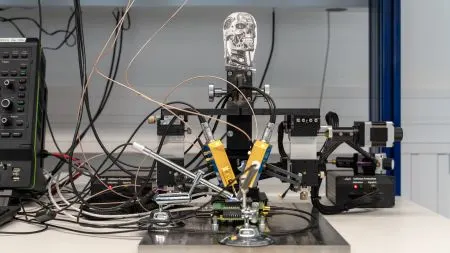
The testing body TÜVIT deliberately attacks processors to check their protections. Part of the toolkit is a laser system that costs around 500,000 euros.
 SUMO· the number puzzle
 Dialo· learn languages by speaking
 ediviewer· read EDI files like documents
 giftdetect· the right gift in minutes
The German testing organization TÜVIT deliberately attacks chips to find out how well their protective mechanisms hold up. Among the tools used in this work are lasers, and the equipment involved can cost as much as 500,000 euros.
Attacking hardware to prove it is secure
The approach turns the usual logic of security around: instead of trusting a manufacturer's claims, testers try to break the processor itself. If a chip withstands such attempts, its protection is better documented. If it does not, weaknesses become visible before criminals can exploit them.
The price tag of the laser equipment shows that this kind of testing is a specialized, capital-intensive discipline. Attacks on hardware differ from software exploits because they target the physical component rather than the code running on it.
Why it matters
Chips sit at the core of payment cards, identity documents, connected devices and many other products whose security depends on the silicon underneath. Independent testing of that layer gives manufacturers and buyers a basis for judging how resilient a component really is.
Further details on the individual methods and test procedures were not available at the time of writing.
Apps worth a look
SUMO: the number puzzleTap the right tiles, add them up, hit the target. Easy to learn, hard to master. Free, for all ages.
Dialo: learn languages by speakingTalk to an AI conversation partner; every sentence comes back corrected and explained in your language. 9 languages, A1 to C2.
ediviewer: read EDI files like documentsOpen EDIFACT and X12 messages, see every segment explained, convert to JSON/XML, export PDF and Excel. Runs locally, no upload.
giftdetect: the right gift in minutesPick who it is for, the occasion and their personality. The search engine reads product descriptions from local shops and ranks what fits. Free, no sign-up.
More from this day
See all →
GOG GALAXY Is Coming Natively to Linux After 18 Years
Claude Code accused of leaking users' email addresses to websites

Alta Ares wins six NATO counter-drone lots in first big deal

NCBR Sets Aside PLN 25 Million for International AI R&D Projects
More in: Security
See all →
LINE Adds Passkey Login to Simplify Switching Phones
Japan's National Cyber Office Urges Firms to Fix Basic Security Gaps

Flock Safety loses ground as 10+ US localities drop its cameras