Teghaza 001: Sahara Meteorite From Mars Is Over 4.1 Billion Years Old
Teghaza 001, a rose-colored rock found in Mali, is one of the three oldest Martian meteorites known and may reveal how water shaped early Mars.
 SUMO· the number puzzle
 Dialo· learn languages by speaking
 ediviewer· read EDI files like documents
 giftdetect· the right gift in minutes
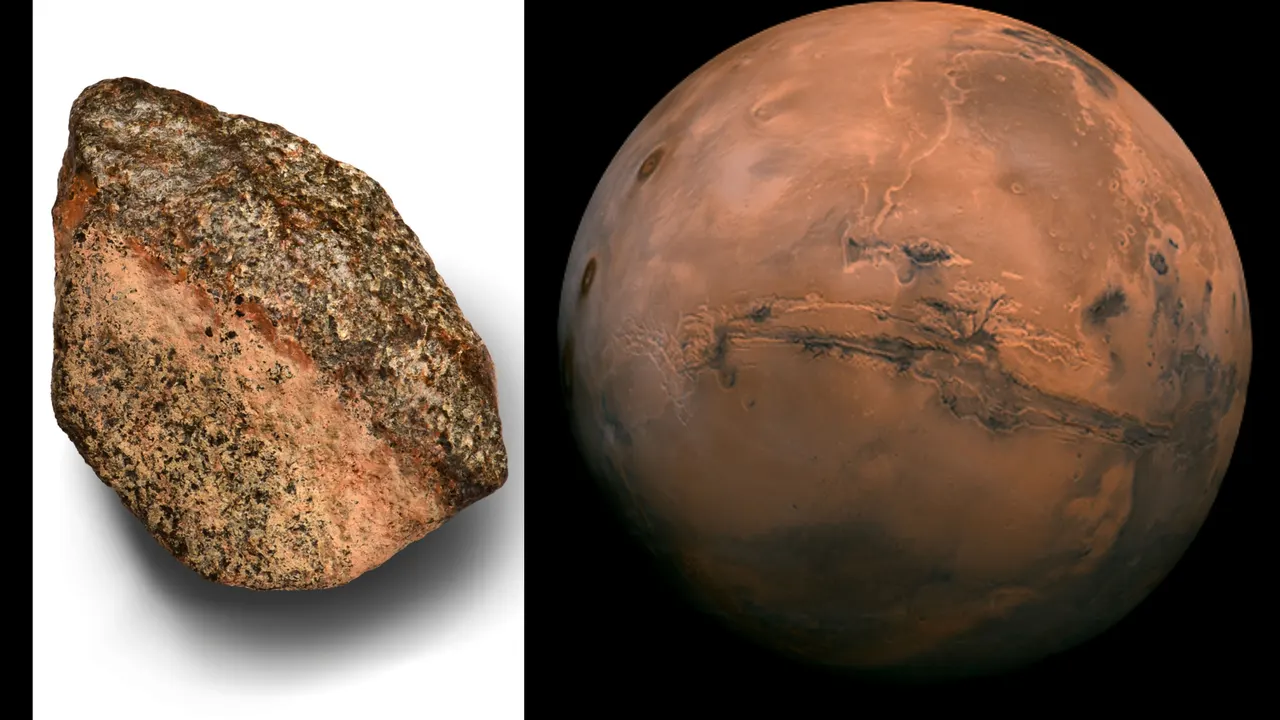
A rose-colored rock found in the Sahara Desert may hold key clues to the ancient geology of Mars. The meteorite, named Teghaza 001, formed more than 4.1 billion years ago, making it one of the three oldest Martian meteorites ever discovered, according to NASA's Jet Propulsion Laboratory.
The rock weighs roughly 1.8 pounds (800 grams) and was found in 2022 on a salt plain in Mali that gave it its name. An impact blasted it off Mars before it eventually landed on Earth.
A rare piece of early Martian crust
Teghaza 001 combines igneous minerals and textures that preserve evidence of a complex history. Its mineral makeup resembles materials seen in the southern highlands of Mars by NASA's Mars Reconnaissance Orbiter. Researchers cannot say exactly where it originated, but they have identified 13 possible source locations.
"It was only after we started looking closely that we realized this meteorite is really unique," said research leader Yang Liu of JPL. "One of the paper's reviewers called it a Rosetta Stone for Mars." Team member Lee Saper of NASA's Ames Research Center called it the first piece of Martian crust from a region never sampled before, one that records interactions of water and rock and possibly an imprint of the atmosphere as the planet lost water.
How the age was determined
Scientists first identified the rock as Martian from its oxygen isotopes. They then examined tiny zircon crystals and applied rubidium-strontium dating to individual mineral grains on its surface, which preserved the sample for future study.
The results show water altered the rock about 4.1 billion years ago, so the rock itself is older. The evidence points to a dynamic water cycle on early Mars, with liquid water interacting with the crust. It is the first time rubidium-strontium dating has been used on an ancient Martian meteorite, and the method could now be applied to other samples.
The findings were published on Thursday, Oct. 29, in the journal Science. A separate study of the meteorite's water content appeared on June 10 in Science Advances. "We've only scratched the surface," Liu said.
Apps worth a look
SUMO: the number puzzleTap the right tiles, add them up, hit the target. Easy to learn, hard to master. Free, for all ages.
Dialo: learn languages by speakingTalk to an AI conversation partner; every sentence comes back corrected and explained in your language. 9 languages, A1 to C2.
ediviewer: read EDI files like documentsOpen EDIFACT and X12 messages, see every segment explained, convert to JSON/XML, export PDF and Excel. Runs locally, no upload.
giftdetect: the right gift in minutesPick who it is for, the occasion and their personality. The search engine reads product descriptions from local shops and ranks what fits. Free, no sign-up.
More from this day
See all →
Citus Demonstrates GPS-Free Firefighter Tracking, Eyes Military Use

Google Cloud expands CodeMender and AI agent security tools

Operation Ghostbusters: 830,840 Suspected Ghost Students Found
JNSA Security Quiz Service Hit by Breach, 15,128 Records at Risk
More in: Space
See all →
Ermis-3: Greek CubeSat Completes First Laser Link to Earth
Blue Origin unveils Northstar, a cheaper and stronger engine
AST SpaceMobile Unveils Blacklift Rocket, Targets 2028 Debut