AST SpaceMobile Unveils Blacklift Rocket, Targets 2028 Debut
AST SpaceMobile is building a reusable rocket called Blacklift to launch its BlueBird satellites, with Firefly engines and a first flight targeted for 2028.
 SUMO· the number puzzle
 Dialo· learn languages by speaking
 ediviewer· read EDI files like documents
 giftdetect· the right gift in minutes
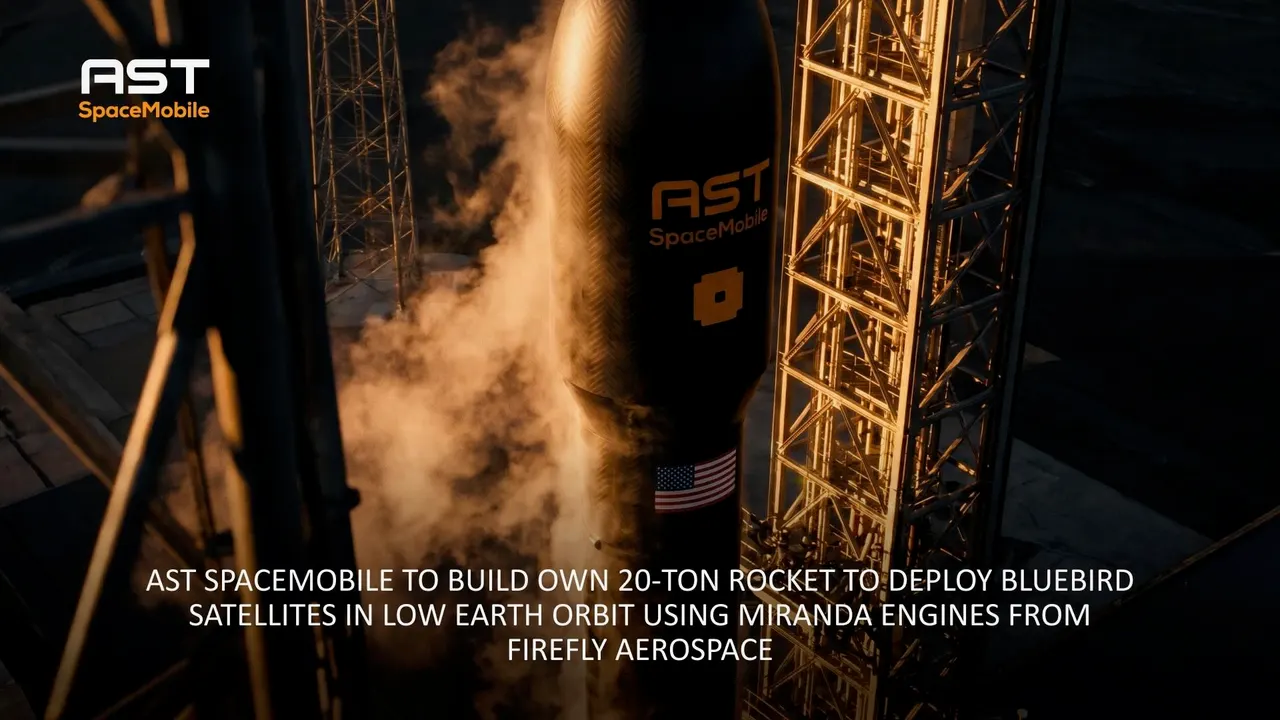
AST SpaceMobile announced on Nov. 6 that it is developing Blacklift, a reusable rocket designed to launch its broadband satellites to low Earth orbit. The company is targeting a first flight in 2028.
The Texas-based firm is building a constellation of BlueBird satellites that beam internet service directly to cell phones. It has launched 13 so far, including eight next-generation "Block 2" spacecraft, whose antennas each cover 2,400 square feet (223 square meters), the largest commercial array ever deployed in LEO. Those satellites have flown on SpaceX's Falcon 9, Blue Origin's New Glenn and India's Launch Vehicle Mark-3.
"The Blacklift rocket is the springboard to significantly expand our total addressable market," founder, chairman and CEO Abel Avellan said, citing regular unconstrained access to orbit and favorable owner economics.
Firefly engines at the core
AST SpaceMobile will not start from scratch. Firefly Aerospace, also based in Texas, will supply engines and engineering services for the first three Blacklift launches under a $500 million supply and services agreement. After that, AST SpaceMobile will build the engines itself under a license from Firefly, which cost about $800 million, half in cash and half in stock.
The engines are Miranda for the booster and Vira for the upper stage. Neither has flown, but the company says Miranda has fired for more than 4,200 seconds across 175 hot fire tests. President Scott Wisniewski said it will let the company leapfrog the traditional five-to-10-year development cycle.
Capacity and a changing launch market
Blacklift is designed to lift 20 tons to LEO, enough for up to five BlueBirds per launch. The Falcon 9, by comparison, carries about 25 tons. Meanwhile, AST SpaceMobile already has contracts with other providers to launch more than 100 BlueBirds across 2027 and 2028.
The announcement comes 10 days after Cowboy Space revealed Big Iron, a rocket for its planned constellation of 20,000 AI data centers, also aimed at a 2028 debut. SpaceX has said it plans to retire Falcon 9 and Falcon Heavy once Starship is operating, and has indicated it will prioritize its own satellites on the new vehicle. That could tighten launch availability for other operators, which helps explain AST SpaceMobile's push toward vertical integration.
Apps worth a look
SUMO: the number puzzleTap the right tiles, add them up, hit the target. Easy to learn, hard to master. Free, for all ages.
Dialo: learn languages by speakingTalk to an AI conversation partner; every sentence comes back corrected and explained in your language. 9 languages, A1 to C2.
ediviewer: read EDI files like documentsOpen EDIFACT and X12 messages, see every segment explained, convert to JSON/XML, export PDF and Excel. Runs locally, no upload.
giftdetect: the right gift in minutesPick who it is for, the occasion and their personality. The search engine reads product descriptions from local shops and ranks what fits. Free, no sign-up.
More from this day
See all →
Citus Demonstrates GPS-Free Firefighter Tracking, Eyes Military Use

Google Cloud expands CodeMender and AI agent security tools

Operation Ghostbusters: 830,840 Suspected Ghost Students Found

JNSA Security Quiz Service Hit by Breach, 15,128 Records at Risk
More in: Space
See all →
Ermis-3: Greek CubeSat Completes First Laser Link to Earth
Blue Origin unveils Northstar, a cheaper and stronger engine
Teghaza 001: Sahara Meteorite From Mars Is Over 4.1 Billion Years Old