STATION F startups raise record €2B as 2026 Future 40 is named
Companies in the STATION F ecosystem raised a record €2 billion in 2026, as the Paris campus named its eighth Future 40 cohort of promising startups.
 SUMO· the number puzzle
 Dialo· learn languages by speaking
 ediviewer· read EDI files like documents
 giftdetect· the right gift in minutes
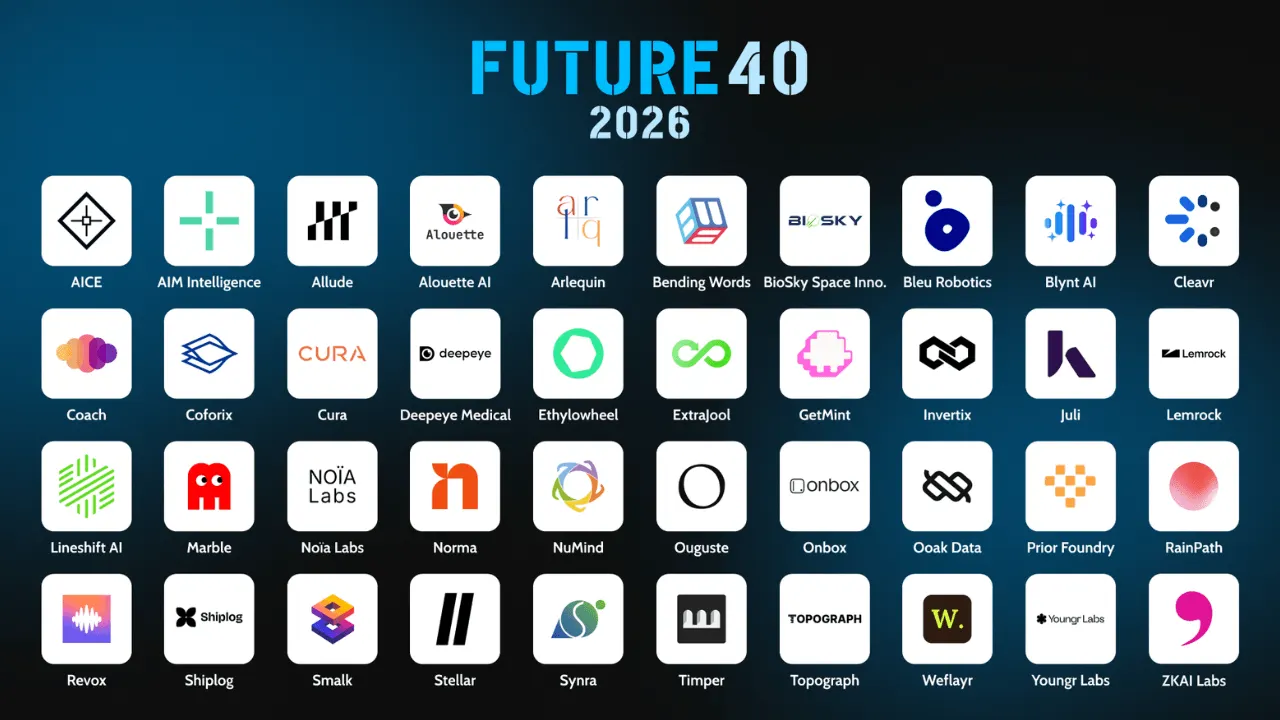
STATION F has unveiled its 2026 Future 40, the eighth edition of its list of promising startups, as companies across the wider Paris campus ecosystem raised a record €2 billion this year. That tops the more than €1.5 billion raised in 2025, with big rounds from alumni Multiverse Computing (€500 million) and Alan (€480 million) driving the total.
The 40 companies were chosen from more than 1,000 startups, roughly four per cent of the campus's 2026 community. They have raised €110 million to date, making this one of the better-funded cohorts. Notable rounds include Arlequin AI (€28 million), CURA ($10 million), Cleavr (€8 million) and Lemrock (€7 million). Thirty-one are at pre-seed or seed stage and two at Series A. Across all eight editions, Future 40 companies have raised €1.2 billion.
Bootstrapping, PhDs and physical AI
Five companies in the cohort are bootstrapped. Camille Aubery, an investor at STATION F, links this to a tougher funding climate, but also to founders who want to keep control. AI tools help too: Oguste reached €400,000 in annual recurring revenue in under a year without outside funding, and Revox used an AI agent to book 250 sales calls in a month. Two of the five are now raising.
The list spans AI, deeptech, developer infrastructure, robotics and climate tech, with sovereign AI and physical AI emerging as themes. Examples include Bleu Robotics, Allude and AICE, which builds low-cost subsea drone swarms. According to Aubery, 47 per cent of teams have at least one PhD and 75 per cent are repeat founders.
Founders return from Silicon Valley
Six of the companies took part in Y Combinator and then came back to France. Aubery says founders increasingly use the US ecosystem for networks and opportunities while building at home, where it is cheaper. Late-stage capital remains scarce: “We still lack liquidity and sufficient late-stage capital,” she said.
Founded by Xavier Niel in 2017, the 50,000-square-metre campus supports more than 1,000 startups a year through 40 programmes, and around 9,000 have passed through. Partnerships with Sanofi, Doctolib, AP-HP and Roche serve healthtech, while TotalEnergies acquires up to four companies a year from the campus. Converting corporate pilots into lasting customers remains difficult.
Apps worth a look
SUMO: the number puzzleTap the right tiles, add them up, hit the target. Easy to learn, hard to master. Free, for all ages.
Dialo: learn languages by speakingTalk to an AI conversation partner; every sentence comes back corrected and explained in your language. 9 languages, A1 to C2.
ediviewer: read EDI files like documentsOpen EDIFACT and X12 messages, see every segment explained, convert to JSON/XML, export PDF and Excel. Runs locally, no upload.
giftdetect: the right gift in minutesPick who it is for, the occasion and their personality. The search engine reads product descriptions from local shops and ranks what fits. Free, no sign-up.
More from this day
See all →
Tech Funding Hits 12-Month Low of $592 Million in October

NPCI Launches NTSL, a Subsidiary Focused on AI and Blockchain
Peppermint Robotics raises Rs 100 crore in pre-Series B round