South Korea to Add Cybersecurity to Top-Tier Hospital Ratings
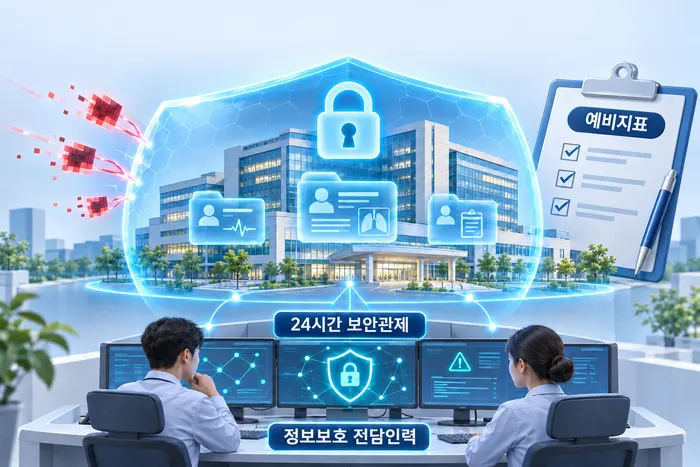
South Korea's health ministry will test security staffing and 24-hour threat monitoring as preliminary indicators for the 2030 designation of top-tier general hospitals.
 SUMO· the number puzzle
 Dialo· learn languages by speaking
 ediviewer· read EDI files like documents
 giftdetect· the right gift in minutes
South Korea's Ministry of Health and Welfare is bringing cybersecurity into the evaluation of its top-tier general hospitals. For the seventh designation round, planned for 2030, the ministry has added "building and operating a medical information protection system" to the preliminary assessment items.
The new item looks at two things: how many dedicated information-security staff a hospital has, and how actively it detects, analyzes and responds to cyberattack intelligence in real time. The detection and response part measures whether a hospital runs a system that can check around the clock that information systems are being used and accessed only within permitted limits. Outsourced operation is accepted.
A trial before it counts
The preliminary indicators are meant to give the ministry a picture of current conditions rather than to score hospitals for now. By publishing them early, the ministry hopes to learn how effective and how discriminating they are in real clinical settings, and to use that as the basis for choosing the final indicators. It plans to assess the results in the first half of next year and decide in the second half whether to make them formal criteria. A study on detailed indicator design will run alongside.
Why it matters
Data breaches keep hitting every industry, and medical records are especially sensitive. Hospital files often cover guardians as well as patients, and a leak of health data can cause wider harm than expected. A paralyzed hospital system can also disrupt care and endanger lives.
Figures from the ministry, submitted to lawmaker Jeon Jin-sook of the Democratic Party, show 114 cyber incidents at medical institutions between February 2020 and May 2026. Clinics accounted for 49 and hospitals for 43, together 80.7% of the total.
That points to a gap in smaller facilities. In a report for the Korea Social Security Information Service, Professor Park Hong-seok of Korea University Medical Center said top-tier hospitals average a security budget of 860 million won and 2.1 dedicated staff, while small and mid-sized hospitals have 20 to 50 million won and 0.6 part-time staff. He called the gap structural and chronic, and urged a shared-responsibility model between the state and providers, with the medical ISAC upgraded into a legally grounded threat-sharing hub.
Apps worth a look
SUMO: the number puzzleTap the right tiles, add them up, hit the target. Easy to learn, hard to master. Free, for all ages.
Dialo: learn languages by speakingTalk to an AI conversation partner; every sentence comes back corrected and explained in your language. 9 languages, A1 to C2.
ediviewer: read EDI files like documentsOpen EDIFACT and X12 messages, see every segment explained, convert to JSON/XML, export PDF and Excel. Runs locally, no upload.
giftdetect: the right gift in minutesPick who it is for, the occasion and their personality. The search engine reads product descriptions from local shops and ranks what fits. Free, no sign-up.
More from this day
See all →
Singapore's PDG secures $1.3 billion for Johor data hub
SK hynix's $45 Billion New York Chip Plans Hit Export Snag
EIC Fund's 10 Largest Investments of 2026 So Far Revealed
IFC Backs 15 African Agritechs and Links Them to Banks
More in: Security
See all →
Crédit Mutuel Arkéa confirms cyberattack as fraud total unclear
Google Cuts Off Videostrong Over Backdoor in 1.3M Android Devices

Binance Record Theft: Fake Job Interview Was the Entry Point