Rubik's Cube production returns to Hungary with a robot line
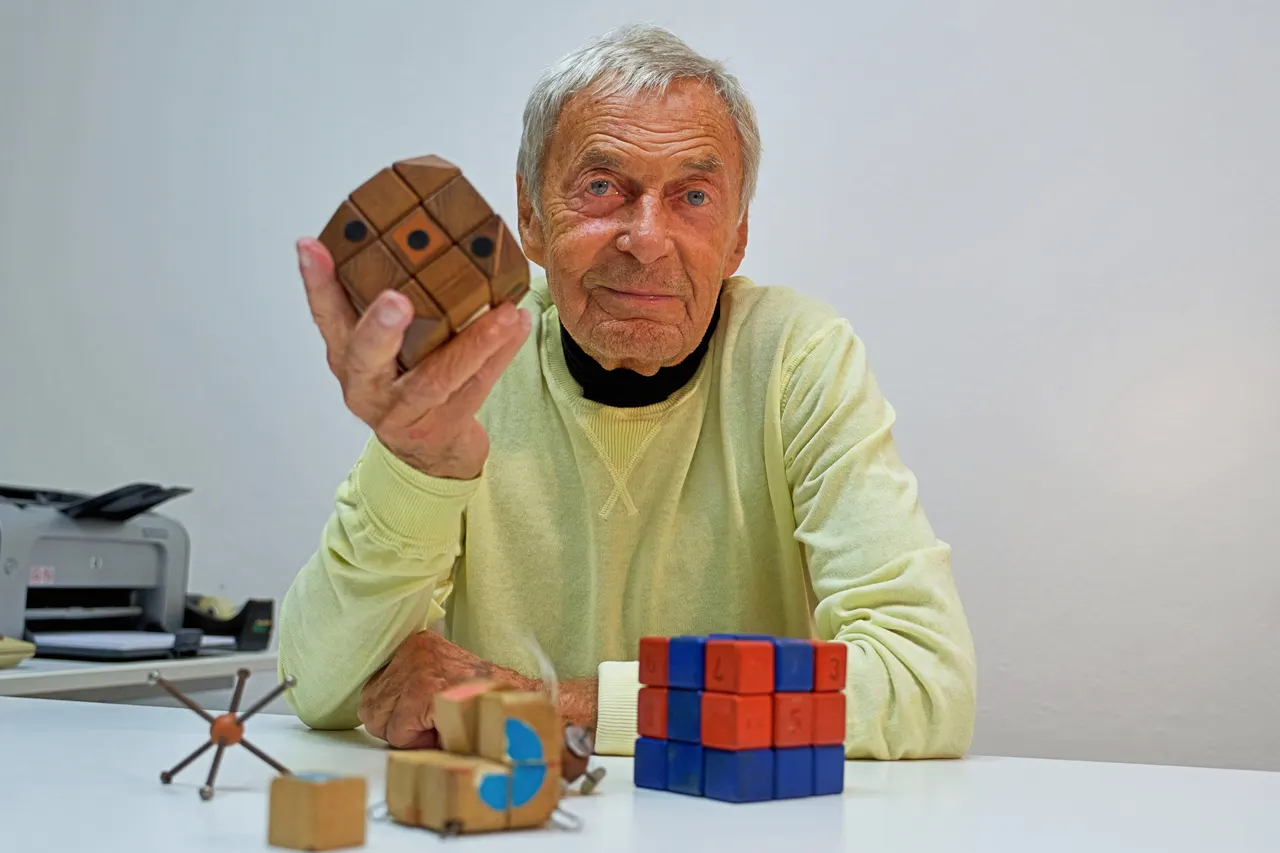
The Rubik's Cube is being made in Hungary again. A new fully automated line in Jaszbereny will turn out one million cubes a year, and Erno Rubik, 82, was there.
 SUMO· the number puzzle
 Dialo· learn languages by speaking
 ediviewer· read EDI files like documents
 giftdetect· the right gift in minutes
The Rubik's Cube is going home. Production of the puzzle is returning to Hungary, where it was invented, with a new fully automated line in the city of Jaszbereny that opened on Tuesday.
"This is the homeland of the cube. The cube was born here," said Erno Rubik, who is 82, at the opening. Robotic arms on the line assemble the cubes and test that they work and hold up. The line is designed to make one million Rubik's Cubes a year.
How the Rubik's Cube began
It started in 1974, when Rubik was teaching design at the Academy of Applied Arts and Design in Budapest. He wanted a three-dimensional object that felt "endless", and built a wooden prototype made of 27 blocks that could turn around several axes.
He soon saw the commercial potential. From 1977, the first 5,000 copies of what was then called the Magic Cube went on sale in specialist shops in the Hungarian capital. Sourcing materials in socialist Hungary was hard, and Rubik says he realised: "We were not ready for this scale of production... We cannot meet the needs of the world market."
A British toy company, and later an American one, took the licence, and production moved abroad. Between 1980 and 1983, which Rubik calls the "first big wave", 200 million cubes were sold. Sales dropped after that, but millions still sell every year, and more than half a billion have been sold in total.
Why the cube is popular again
Speedcubing, meaning competitions where people race to solve it, has given the puzzle another boost. According to the World Cube Association, the current record is 2.51 seconds, set last month in China by nine-year-old Geng Xuanyi.
Steve Radevich, a senior vice president at Spin Master, the Canadian toy company that owns the Rubik's Cube trademark, said the day's motto was "Back to the roots: the cube comes home." Rubik himself calls the cube a "transformable sculpture", a meeting point of art and engineering. He also noted how different the robot line is from the early years, when cubes were put together by hand.
Apps worth a look
SUMO: the number puzzleTap the right tiles, add them up, hit the target. Easy to learn, hard to master. Free, for all ages.
Dialo: learn languages by speakingTalk to an AI conversation partner; every sentence comes back corrected and explained in your language. 9 languages, A1 to C2.
ediviewer: read EDI files like documentsOpen EDIFACT and X12 messages, see every segment explained, convert to JSON/XML, export PDF and Excel. Runs locally, no upload.
giftdetect: the right gift in minutesPick who it is for, the occasion and their personality. The search engine reads product descriptions from local shops and ranks what fits. Free, no sign-up.
More from this day
See all →
Peanuts Native runs 12 Switch games on Android, no emulator
Glydr foot controller: a $299 pad that moves gaming to your feet