EgoThumb: a robotic sixth finger that works without being steered
EgoThumb is an extra robotic thumb that watches your hand through a camera and helps on its own. The idea came from a researcher fed up with soldering.
 SUMO· the number puzzle
 Dialo· learn languages by speaking
 ediviewer· read EDI files like documents
 giftdetect· the right gift in minutes
Soldering wires means holding parts, handling the iron and feeding in the solder at once. One researcher got tired of that, and the annoyance produced EgoThumb, an extra robotic thumb that uses AI to help without being steered.
That is the point of it. Earlier sixth fingers raised an awkward question: how do you control a limb your brain has no commands for? Feet, voice or your other hand all turn the gadget into one more skill to learn.
How does EgoThumb work?
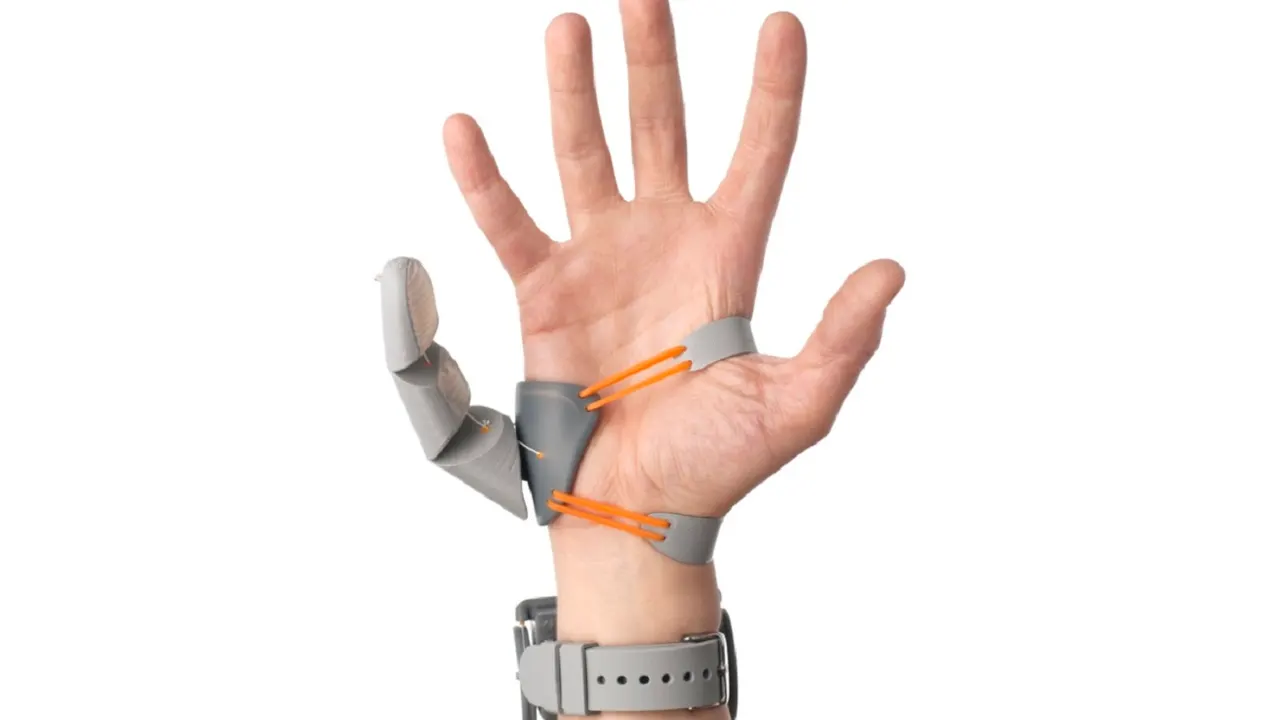
The build is simple. Three joints, each moved by a pair of tendons for bending and straightening. The motors sit on the forearm, which keeps the thumb light. A small wide-angle camera by the hand watches your fingers and the objects around them.
The camera feed goes to an AI model, along with the current joint positions. It was trained by imitation learning, meaning it learned from human demonstrations. During training an operator moved the thumb with a foot-operated interface. Afterwards the algorithm predicted the moves itself. Reach for a bottle and the thumb holds it while your fingers twist the cap off. Put the bottle down and it lets go.
Cambridge researchers built a Third Thumb earlier, steered with toe pressure. EgoThumb tries to remove the need for constant attention.
How well does it work?
Three people tried four tasks: lifting a cube, unscrewing a cap, stirring tea and moving a ball, ten attempts each. Success rates averaged 90%, 92.5% and 87.5%. Two participants who were not part of the model's training did about as well as the operator who supplied the demonstrations.
There is a catch. Those results come from places the algorithm knew from training. Move things to new surroundings and some tasks got worse: stirring tea in two new environments averaged roughly 67% and 73%. Three people is a small sample, the model runs on an external computer, and nobody has tested actual soldering yet.
Safety is the open question. A camera can miss an object hidden by the hand, and it cannot sense pressure or slipping, so a wrong call could mean a dropped or crushed item. The team plans to add touch sensors, make the device smaller and more comfortable, and integrate the camera better. Hardware designs and software are open source.
Apps worth a look
SUMO: the number puzzleTap the right tiles, add them up, hit the target. Easy to learn, hard to master. Free, for all ages.
Dialo: learn languages by speakingTalk to an AI conversation partner; every sentence comes back corrected and explained in your language. 9 languages, A1 to C2.
ediviewer: read EDI files like documentsOpen EDIFACT and X12 messages, see every segment explained, convert to JSON/XML, export PDF and Excel. Runs locally, no upload.
giftdetect: the right gift in minutesPick who it is for, the occasion and their personality. The search engine reads product descriptions from local shops and ranks what fits. Free, no sign-up.
More from this day
See all →


More in: Hardware
See all →Samsung, Google and Gentle Monster AI glasses sell out preorders

Glasses-free 3D display turns 2D video into 3D and tracks your eyes

Fritzbox 5690 Pro: some units ship with half the memory