Glydr foot controller: a $299 pad that moves gaming to your feet
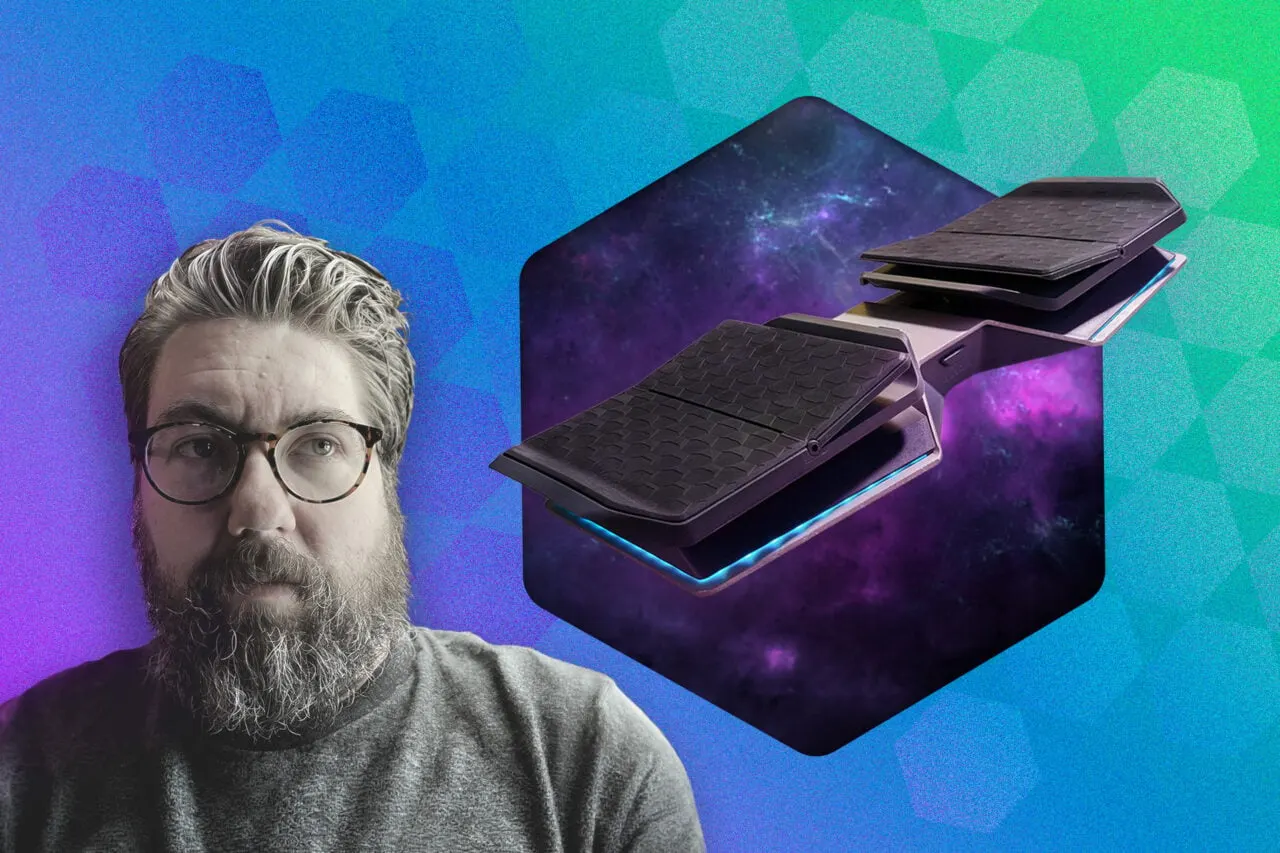
Glydr is a $299 foot controller with up to 16 mappable actions. Co-founder John Warren, a wheelchair user, says it spares tired hands in games like Apex Legends.
 SUMO· the number puzzle
 Dialo· learn languages by speaking
 ediviewer· read EDI files like documents
 giftdetect· the right gift in minutes
Your thumbs are doing too much. That is the pitch behind Glydr, a $299 foot-operated controller that takes sprinting, crouching and other actions off your hands and gives them to your feet.
John Warren, a games journalist with more than 15 years in the industry and a lifelong wheelchair user, joined Glydr as a co-founder after trying it. He was sceptical at first. When co-founder Rick Tett introduced the device in 2020, Warren assumed something like it already existed in the disability or VR space. His market research said otherwise. Existing game pedals, such as Logitech's racing setups, mostly handle on/off switches, braking and movement. Glydr offers analog, multidirectional input and supports up to 16 mappable actions.
What is Glydr and how does it work?
Glydr is a customisable foot controller meant for games and everyday computer use. Warren tested it in Apex Legends, where he struggles with hand dexterity when toggling sprint and crouch on thumbsticks or reaching across a keyboard. Mapping those to his feet, he says, let him play for a long time and get tired of the game, not frustrated that his hands were too slow.
He argues that back paddles on Pro and Elite controllers still make your hands do the same work from a slightly handier spot. Glydr moves the load elsewhere.
Built to be kicked around
The body is aluminium, because the team wanted it heavy enough to stay put through hours of repetitive movement. It uses Hall effect sensors, which reduce drift and help it last. Rubber pads with tread work even if you wear shoes. It was designed with Create, a manufacturing studio in Taiwan. About 600 units are on the market, and Warren says only one has come back broken during play. Don't stand on it, he says, though he knows people will kick it.
Accessibility shaped the design. Early versions needed both feet, so Warren suggested making the pads run independently. The team worked with a professional Rocket League player with cerebral palsy, whose body is weaker on one side, so he could use one foot and one hand.
At conferences, Warren says, about 90 percent of sceptics who sit down and play come round within minutes.
Apps worth a look
SUMO: the number puzzleTap the right tiles, add them up, hit the target. Easy to learn, hard to master. Free, for all ages.
Dialo: learn languages by speakingTalk to an AI conversation partner; every sentence comes back corrected and explained in your language. 9 languages, A1 to C2.
ediviewer: read EDI files like documentsOpen EDIFACT and X12 messages, see every segment explained, convert to JSON/XML, export PDF and Excel. Runs locally, no upload.
giftdetect: the right gift in minutesPick who it is for, the occasion and their personality. The search engine reads product descriptions from local shops and ranks what fits. Free, no sign-up.
More from this day
See all →
Quantum Systems drones fly again after QBase malware scare
Whoop Humans is a social network built on 'verified heartbeats'
Peanuts Native runs 12 Switch games on Android, no emulator