Quick Commerce Becomes Top Channel for Indian Beauty Brands
Beauty sales on quick commerce are growing about 90% a year at roughly $1 Bn in annualised GMV, pushing D2C brands to rethink marketplace spending.
 SUMO· the number puzzle
 Dialo· learn languages by speaking
 ediviewer· read EDI files like documents
 giftdetect· the right gift in minutes
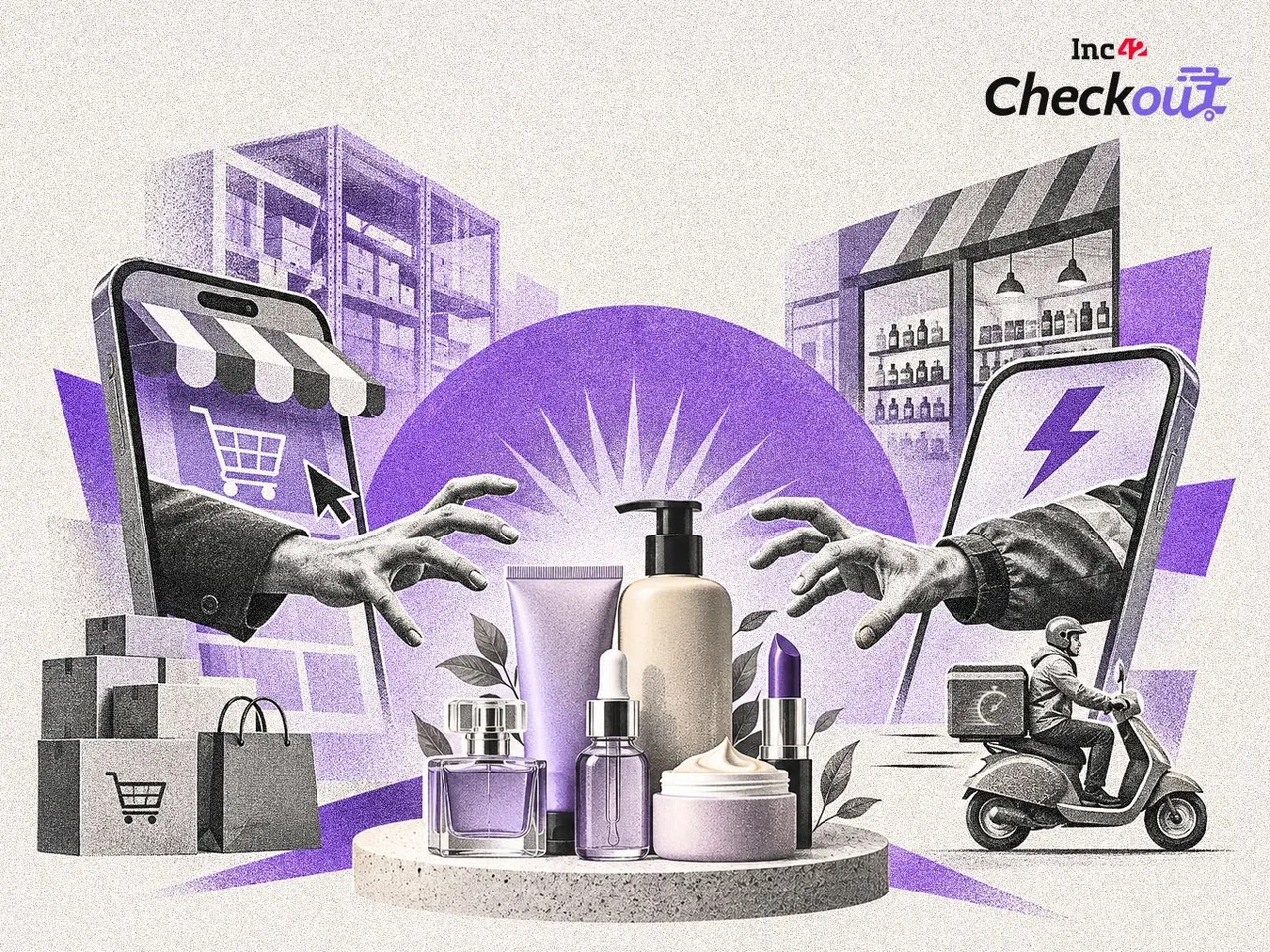
Quick commerce is fast becoming the main sales channel for India's beauty and personal care (BPC) brands, with some now relying on it almost entirely for growth. According to Redseer, beauty sales on quick commerce stand at roughly $1 Bn in annualised GMV and are growing about 90% a year. Elara Securities estimates the channel will account for 25-30% of online BPC sales by FY30.
Brands shift their mix
The change has been quick. Asaya cofounder and CEO Neeraj Biyani says quick commerce did not exist for the skincare brand a year ago, and marketplaces are no longer its largest channel. At Moxie Beauty, whose annualised revenue crossed ₹100 Cr last December, quick commerce is now the biggest channel at more than 30% of sales. Renee Cosmetics, which reported ₹440 Cr in FY26 revenue, has seen its quick commerce share rise from about 3% to over 13% in two years. Typsy Beauty says the channel has grown about 5x in absolute terms over the past year.
Analysts say the category fits the model. Elara Capital's Karan Taurani notes that beauty carries a premium gross margin and higher EBITDA margin than other categories, which explains why platforms are pushing into it.
Ads, SKUs and stockouts
Brands are moving ad budgets accordingly. Moxie Beauty's Nikita Khanna says spending follows where people choose to buy. Social media remains the largest ad line, and discovery still happens largely on Instagram through creators, with conversion often occurring later on Nykaa, Blinkit or a brand's own site. Search data from 1DigitalStack shows volumes for 10 generic makeup keywords rose 236% on Blinkit between Q1 2025 and Q2 2026 and fell 76% on Amazon, though Amazon's volume still appears larger.
Product strategy is changing too. Renee Cosmetics created special small packs for Blinkit, Zepto and Instamart after finding that shoppers there often make last-minute purchases. Moxie Beauty favours a mix of small and full-size packs, and some startups think it is too early to produce small SKUs for every platform.
Stockouts are the biggest risk, according to the founders of Asaya and Typsy Beauty, because a few days out of stock at key dark stores hurts rank, visibility and ad returns. Typsy says replenishment has moved from monthly to weekly, forcing city- and SKU-level planning.
The contest with marketplaces is not settled. Nykaa, Myntra, Amazon and Flipkart remain the main places to compare products and read reviews, especially for premium items, but they are now adapting to a game set by Blinkit, Instamart and Zepto.
Apps worth a look
SUMO: the number puzzleTap the right tiles, add them up, hit the target. Easy to learn, hard to master. Free, for all ages.
Dialo: learn languages by speakingTalk to an AI conversation partner; every sentence comes back corrected and explained in your language. 9 languages, A1 to C2.
ediviewer: read EDI files like documentsOpen EDIFACT and X12 messages, see every segment explained, convert to JSON/XML, export PDF and Excel. Runs locally, no upload.
giftdetect: the right gift in minutesPick who it is for, the occasion and their personality. The search engine reads product descriptions from local shops and ranks what fits. Free, no sign-up.