Stanford physicist's quantum gravity paper was built with GPT-6 Astra
Ven Chandrasekaran says he spent months and about 400 million tokens working through proofs with GPT-6 Astra for a new quantum gravity preprint.
 SUMO· the number puzzle
 Dialo· learn languages by speaking
 ediviewer· read EDI files like documents
 giftdetect· the right gift in minutes
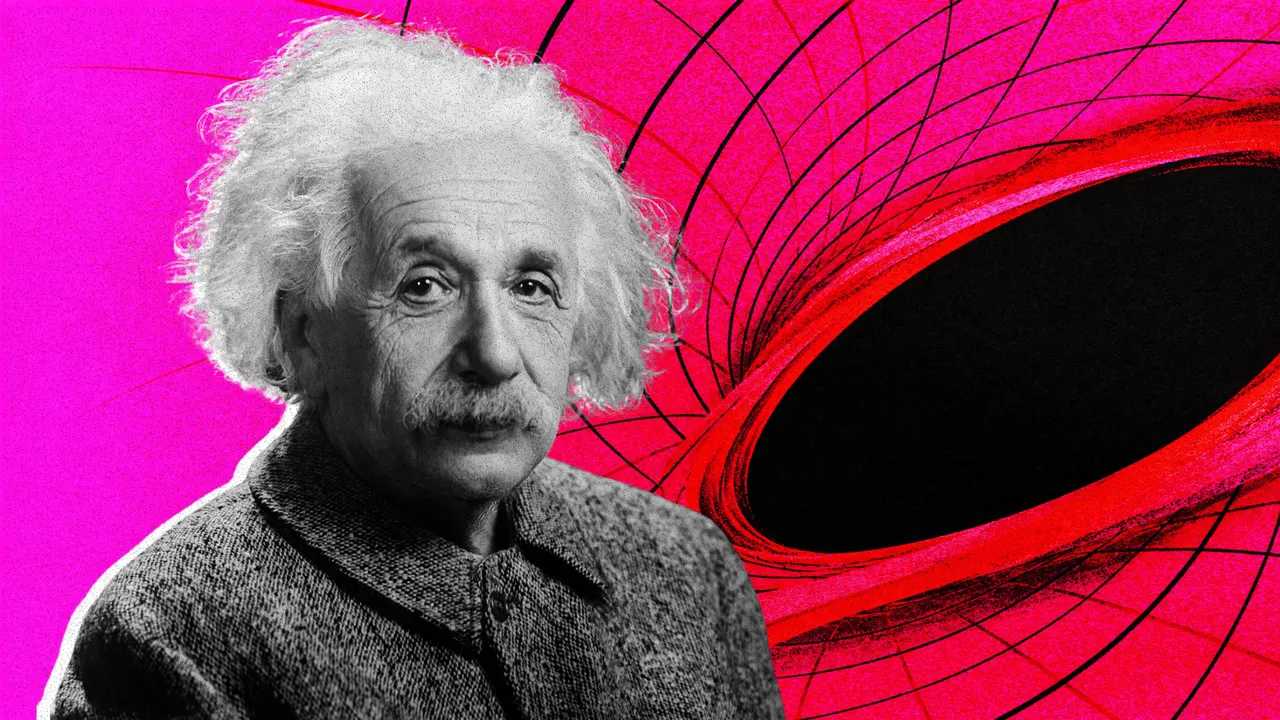
Physicists have been trying to make Einstein's gravity and quantum mechanics get along for a century. On 25 November 2026, Stanford physicist Ven Chandrasekaran posted a new attempt on arXiv. In the acknowledgements he says part of the work was developed in months of back-and-forth with GPT-6 Astra, OpenAI's model.
The preprint is called "An algebraic quantization of gravity from the null cone". It runs 54 pages plus appendices and has a single author. Chandrasekaran works at Stanford's Leinweber Institute for Theoretical Physics and also for OpenAI. He writes that several calculations and proofs came out of a detailed collaboration with the model, roughly 400 million tokens in total, and thanks OpenAI for the computing power. He also thanks Sam Altman and Sébastien Bubeck for their encouragement.
What is the new quantum gravity theory?
The usual approach treats gravity like electromagnetism: start from a fixed spacetime and study small ripples in it, carried by a hypothetical particle called the graviton. It works at low energy, but the corrections keep piling up, so physicists call it non-renormalizable.
Chandrasekaran starts elsewhere. He looks at a limited region of spacetime called a causal diamond, bounded by light cones, the paths a light ray can take to or from a point. The geometry of that region gives him an internal clock, so he does not need an outside time.
He reports a finite result for the amplitude of a graviton pair appearing and vanishing, where the standard method diverges. A bounded region holds only a finite number of independent quantum states. The theory recovers the Bekenstein-Hawking black hole entropy, a known quantum correction for large uncharged, non-rotating black holes first computed by Ashoke Sen, and Einstein's equations at low energy.
How much did the AI actually do?
It is unclear. Chandrasekaran does not say which proofs came from the model, and he signs the paper alone. This is not a theory invented by an AI.
Caution is needed anyway. The model covers gravity only, with no matter or electromagnetic fields, and the paper has not been peer reviewed. String theory and loop quantum gravity have been around for decades, and none has decisive experimental confirmation.
Apps worth a look
SUMO: the number puzzleTap the right tiles, add them up, hit the target. Easy to learn, hard to master. Free, for all ages.
Dialo: learn languages by speakingTalk to an AI conversation partner; every sentence comes back corrected and explained in your language. 9 languages, A1 to C2.
ediviewer: read EDI files like documentsOpen EDIFACT and X12 messages, see every segment explained, convert to JSON/XML, export PDF and Excel. Runs locally, no upload.
giftdetect: the right gift in minutesPick who it is for, the occasion and their personality. The search engine reads product descriptions from local shops and ranks what fits. Free, no sign-up.
More from this day
See all →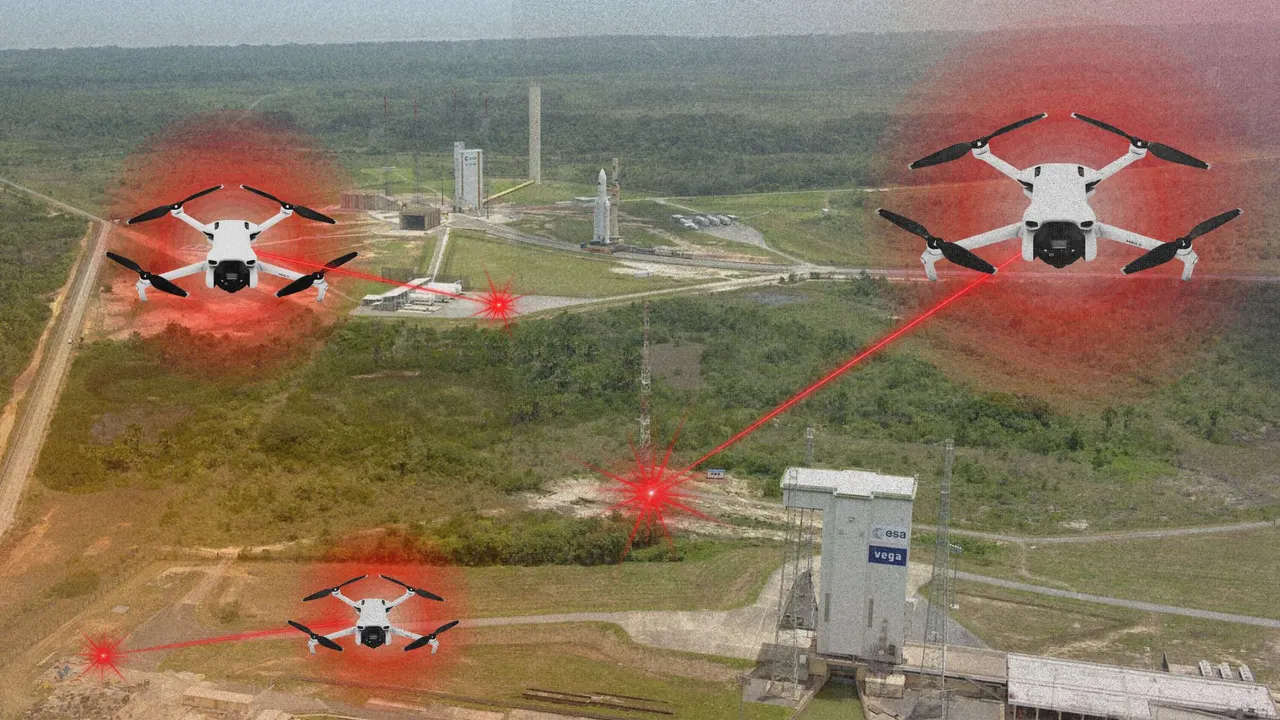
Ariane 6 drone threat: Kourou has no lasers, but a huge no-fly zone

Anthropic Siren: a honeypot to catch Claude breaking out

SOOP's LoL Mangjeonjeon Now Scores Streamers on Six Skills

Sh Suhyup Bank data breach exposes 54 customers' loan details
More in: Science
See all →
Amateur astronomer finds exoplanet candidate using Codex AI

Scientists use GTA V's Los Santos to model sea-level rise

Seabirds with microphones expose ships that switch off AIS tracking