POS malware leak exposes over 1 million bank cards in 20+ countries
An open server left by card thieves exposed data on more than 1 million bank cards, all siphoned from just 782 outdated payment terminals, mostly in Brazil.
 SUMO· the number puzzle
 Dialo· learn languages by speaking
 ediviewer· read EDI files like documents
 giftdetect· the right gift in minutes
Someone built a card-stealing operation on old payment terminals, then left the server open for anyone to find. Researchers at Cybernews did, and what they saw was data on more than 1 million bank cards from users in over 20 countries.
The server held the malware's source code, attack tools and a control panel called VINY JUNIOR TRILHAS, where the stolen card data was stored. The malware targeted point-of-sale (POS) terminals, the devices shops use to take card payments. They ran outdated versions of Windows and Windows Server.
In total, 782 systems were compromised: 677 in Brazil, 22 in the US and eight in Russia. The attackers installed infostealers, programs that grab data as a payment is processed. They took card numbers, expiry dates, bank identification numbers, the issuing country and bank, and card types and brands. They also logged details of the terminals themselves, including OS version, country and city. Brazilian banks were the main target.
How did the attack work?
The attackers exploited CVE-2024-49138, a privilege escalation bug in the Windows Common Log File System driver. It only works if the attacker already has access to the machine. Microsoft patched it two years ago, so the hacked terminals were badly out of date.
This was no one-off theft. The terminals kept sending daily transaction data to the attackers over a long campaign. Access to the server was finally shut down on 31 August 2026, and the national computer emergency response team (CERT) was notified on 8 September.
What does it mean for cardholders?
At least a million cardholders face the risk of unauthorised purchases or account takeover. How bad it gets depends on how good each bank's fraud detection is, how it protects customers, and how fast it spots illegal transactions. If you shop in affected regions, checking statements for charges you do not recognise is the sensible move.
Apps worth a look
SUMO: the number puzzleTap the right tiles, add them up, hit the target. Easy to learn, hard to master. Free, for all ages.
Dialo: learn languages by speakingTalk to an AI conversation partner; every sentence comes back corrected and explained in your language. 9 languages, A1 to C2.
ediviewer: read EDI files like documentsOpen EDIFACT and X12 messages, see every segment explained, convert to JSON/XML, export PDF and Excel. Runs locally, no upload.
giftdetect: the right gift in minutesPick who it is for, the occasion and their personality. The search engine reads product descriptions from local shops and ranks what fits. Free, no sign-up.
More from this day
See all →
South Korea CSAT cheating: 111 cases, AI glasses and a death
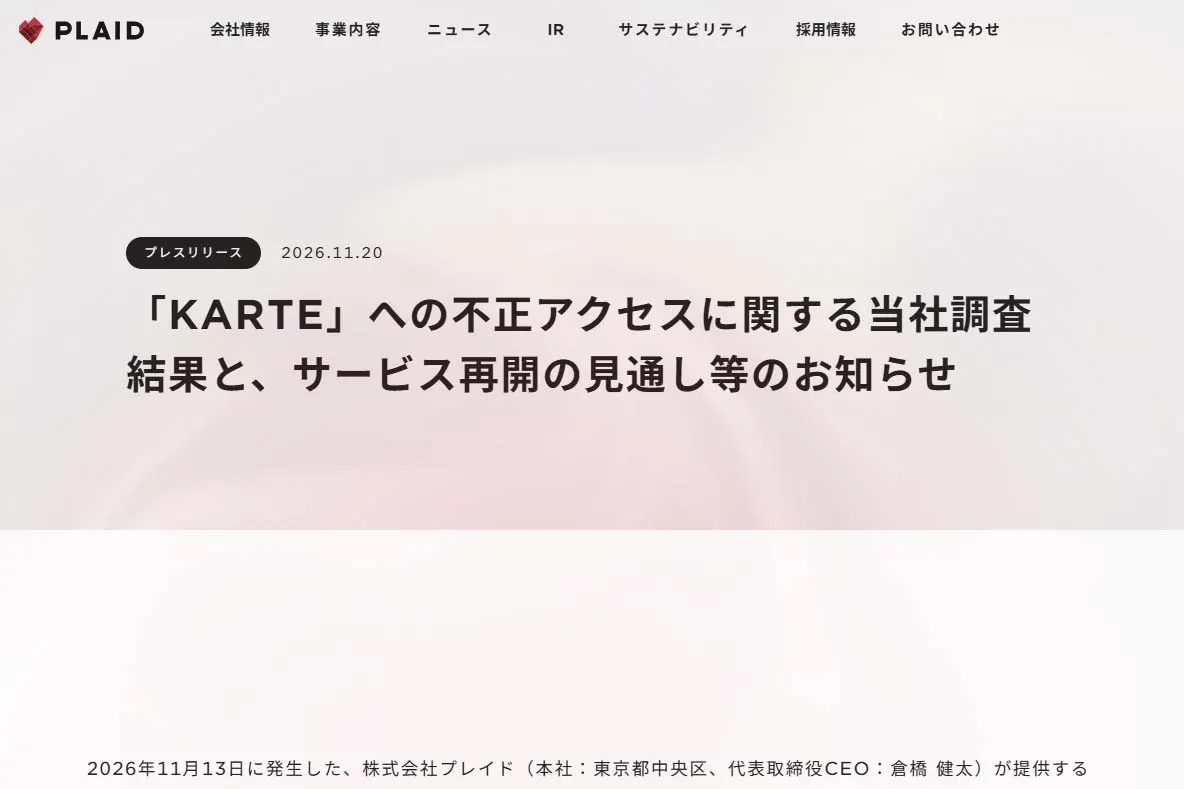
KARTE data breach: Plaid says service stays off until mid-January

Anthropic mathematician claims Claude helped prove Riemann hypothesis