Anthropic mathematician claims Claude helped prove Riemann hypothesis
Anthropic's Levent Alpöge says he and Claude proved the Riemann hypothesis. There is no paper, just a 250,000-page AI draft and Lean files, and checking has begun.

 SUMO· the number puzzle
 Dialo· learn languages by speaking
 ediviewer· read EDI files like documents
 giftdetect· the right gift in minutes
A mathematician at Anthropic says he and Claude have proved the Riemann hypothesis, one of the biggest open problems in mathematics. Nobody has confirmed it yet, and the claim comes with an odd catch: there is no paper.
Levent Alpöge posted a file called remark.pdf on his own website. In it he writes that, while working with Claude, he found a proof of the Riemann hypothesis. He says the method extends to the generalized Riemann hypothesis, and that with a bit more time he expects to settle the extended version too. According to the note, he and Claude have already formalized the arguments without any extra assumptions.
What is the Riemann hypothesis?
It is a classic problem in number theory about prime numbers: how many there are up to a given size, and how precisely that count can be estimated. Alpöge writes that its shadow has guided mathematicians for 150 years and even reached into physics. It is also one of the Millennium Prize Problems, which carry a $1 million reward.
Has the Riemann hypothesis really been proved?
Not in any settled sense. The draft is too long to be a paper: the AI-generated text reportedly runs past 250,000 pages. Instead, Alpöge uploaded the proof in Lean, a programming language that lets a computer check every step of the logic, as long as the statement has been formalized properly. The files are split into 14 parts.
The status is simply "under verification". Whether the proof holds up, and what follows if it does, is unclear. At the time of the original report, Anthropic's share price was said to be down 14%.
Alpöge's own account is oddly personal. He says that as a student he secretly planned to take on this problem decades later, collecting every tool he might need. He started by combining two quite different ideas from a simplified model. One was new and striking on its own, because it easily produced a result mathematicians have long counted among the biggest consequences of the hypothesis. From there, he says, Claude pulled far ahead of him near the finish.
He also admits the argument contains far more mathematics than he ever imagined it would need, and expects it to be simplified a lot, possibly soon.
Apps worth a look
SUMO: the number puzzleTap the right tiles, add them up, hit the target. Easy to learn, hard to master. Free, for all ages.
Dialo: learn languages by speakingTalk to an AI conversation partner; every sentence comes back corrected and explained in your language. 9 languages, A1 to C2.
ediviewer: read EDI files like documentsOpen EDIFACT and X12 messages, see every segment explained, convert to JSON/XML, export PDF and Excel. Runs locally, no upload.
giftdetect: the right gift in minutesPick who it is for, the occasion and their personality. The search engine reads product descriptions from local shops and ranks what fits. Free, no sign-up.
More from this day
See all →
South Korea CSAT cheating: 111 cases, AI glasses and a death
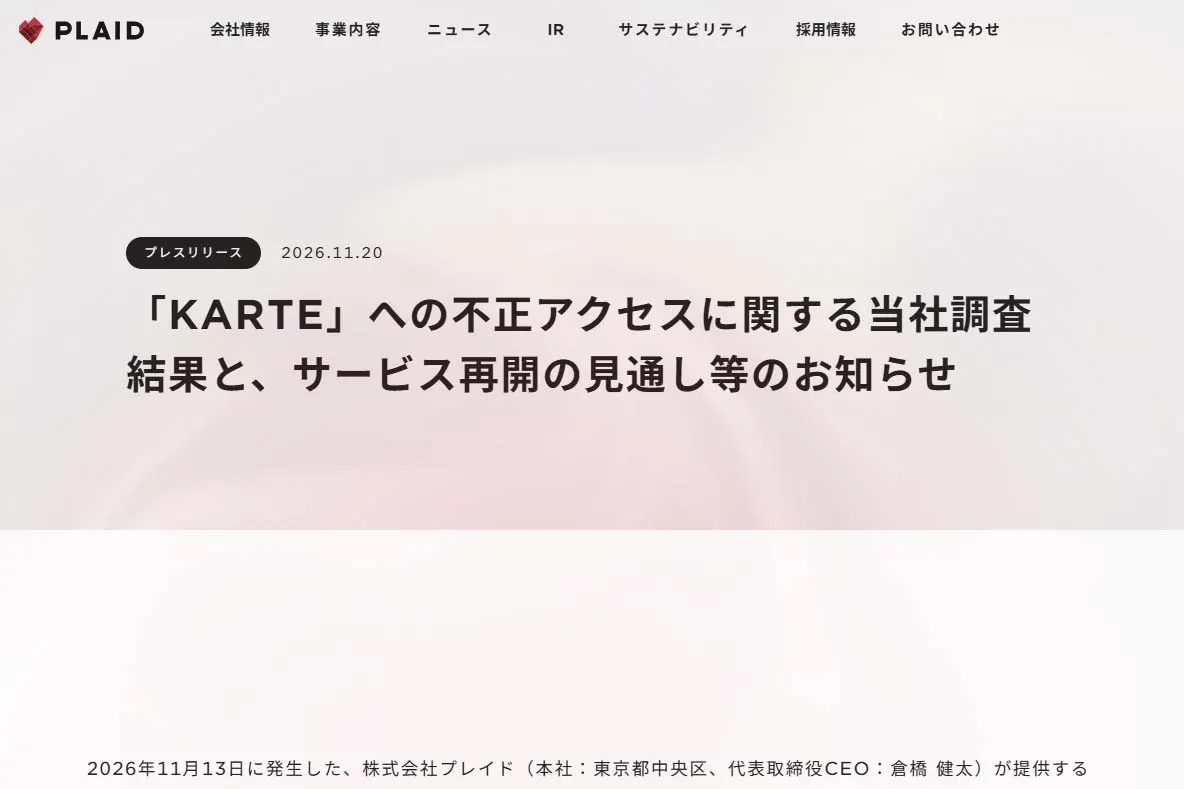
KARTE data breach: Plaid says service stays off until mid-January

Yuanchu No. 1: China's Man-Made Cave Air Battery Is Online