NASA CHAPEA Mars simulation ends after 378 days without windows
Four people lived 378 days in a windowless Houston habitat, with message delays of up to 22 minutes each way. NASA's second CHAPEA Mars simulation is now over.
 SUMO· the number puzzle
 Dialo· learn languages by speaking
 ediviewer· read EDI files like documents
 giftdetect· the right gift in minutes
No windows. No stepping outside. If a pipe clogs, you fix it yourself, and the only people you can lean on are the three locked in with you.
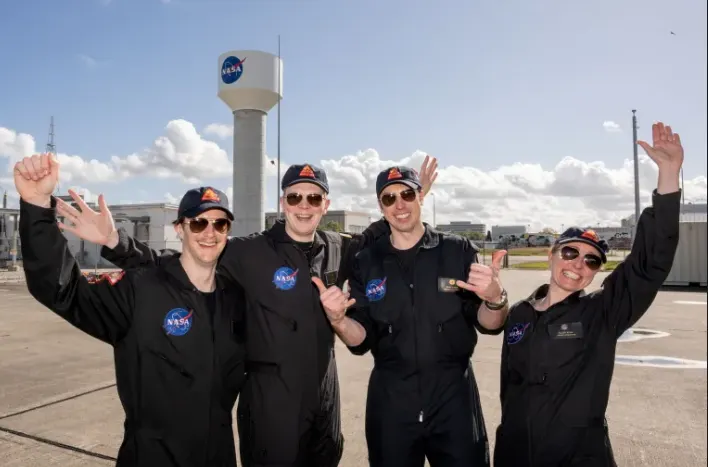
That was life for four volunteers in NASA's second CHAPEA Mars simulation. They walked out of their habitat in Houston on 31 October 2026 after 378 days. NASA shared their story, along with their own reflections, on 9 November.
What is NASA's CHAPEA mission?
CHAPEA is a ground-based experiment that recreates life on the surface of Mars to see how it affects people's health and performance. The setting was Mars Dune Alpha, a 3D-printed habitat at NASA's Johnson Space Center. It covers about 1,700 square feet (roughly 158 square metres) and has no windows at all.
The crew went in on 19 October 2025. For all 378 days they could not talk to family or friends in real time. Messages were delayed by up to 22 minutes each way, so a quick "how are you?" would get an answer 44 minutes later. Food, water and supplies were limited, and the crew tracked what they used.
The four were commander Ross Elder, medical officer Ellen Ellis, flight engineer James Spicer and science officer Matthew Montgomery. Their backgrounds include an Air Force experimental test pilot and a Space Force officer, so they are close to astronaut material. Ground teams could support them, but the hands-on work was largely theirs.
Did the crew get along?
By their own accounts, yes. Elder called it one of the best teams he has ever worked with, and Ellis said she relied on the other three every day.
That is not guaranteed in this kind of experiment. Biosphere 2, which began in Arizona in 1991, sealed eight people inside glass for a planned two years. Oxygen later dropped to dangerous levels, harvests fell short, and it emerged that oxygen had been pumped in without being disclosed. Scientists lost trust in it. Mars500, run in 2010 and 2011 by Russian researchers and the European Space Agency among others, kept six people in a windowless module for 520 days.
There is one big difference from the real thing. CHAPEA sits on Earth, so someone in real danger could have been taken out. On Mars that option does not exist. Even near Earth, a crew can be forced home: in January 2026 four people on the International Space Station returned a month early because of one crew member's health problem, the first medical return in more than 25 years of crewed stays.
Apps worth a look
SUMO: the number puzzleTap the right tiles, add them up, hit the target. Easy to learn, hard to master. Free, for all ages.
Dialo: learn languages by speakingTalk to an AI conversation partner; every sentence comes back corrected and explained in your language. 9 languages, A1 to C2.
ediviewer: read EDI files like documentsOpen EDIFACT and X12 messages, see every segment explained, convert to JSON/XML, export PDF and Excel. Runs locally, no upload.
giftdetect: the right gift in minutesPick who it is for, the occasion and their personality. The search engine reads product descriptions from local shops and ranks what fits. Free, no sign-up.
More from this day
See all →
Comet 220P/McNaught suddenly got 1,000 times brighter. Here's why

Coral Hart used AI to write 370 books in 20 months

WhatsApp Zaps: self-deleting photos and videos for any chat

Green SM taxis: Karnataka halts new registrations, eyes mandatory meters
More in: Science
See all →
Coriscada wind farm: 4 turbines replace 40 and make 78% more power
Wind turbine blade recycling: a French startup makes ping-pong tables
Drones that carry objects by weaving rope around them midair