Moon potatoes: they grew in fake lunar soil, with a catch
Oregon State researchers grew potatoes to harvest in simulated moon dust. They only thrived when 30 percent of the soil was worm compost.
 SUMO· the number puzzle
 Dialo· learn languages by speaking
 ediviewer· read EDI files like documents
 giftdetect· the right gift in minutes
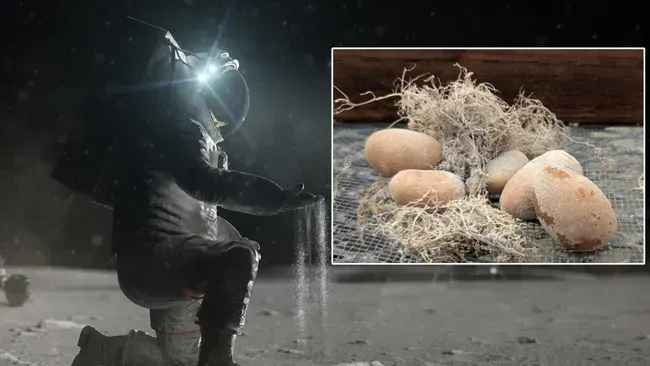
Potatoes can grow on the Moon, or at least in a lab copy of it. Researchers at Oregon State University raised potatoes through a full life cycle in simulated lunar soil, but only after mixing in a lot of worm compost.
The study appeared in the journal npj Microgravity and was funded by NASA, which is preparing longer astronaut stays on the Moon under its Artemis programme. Shipping all the food for a lunar base from Earth is hardly realistic, so growing some on site is the obvious goal.
Why can't potatoes grow in pure moon dust?
Most of the Moon is covered in regolith, a dry layer of crushed rock, dust and sharp glass particles. Billions of years of tiny meteorite impacts and cosmic radiation ground it down so finely that the grains can scrape plant roots. It also holds lots of iron, calcium and soluble heavy metals, but no nitrogen, and it lacks plant-available potassium, phosphorus and humus. "No crop would grow without adding it," project leader Aymeric Goyer says of nitrogen.
Real lunar dust is too scarce for farming experiments, so the team used five lab-made mixes imitating both dark volcanic plains and bright highlands. They compared them with fertile Oregon farmland, adding 5 to 30 percent worm compost. Without additives the plants stunted, barely grew roots and stored lots of copper in their leaves. Five to 15 percent compost helped only partly. At 30 percent, height and tuber yield matched the Earth soil.
Are moon potatoes safe to eat?
Not proven. The tubers kept their nutritional value, and natural potato toxins stayed at normal levels. The university's release calls them safe, but the study itself is more cautious: in some groups the potatoes held slightly raised copper, zinc and aluminium, which need further monitoring. The team has not tasted a single one, because every tuber was used up in chemical analysis.
There are other limits. A 30 percent compost share is a transport problem for early missions, so the authors see farming in pure regolith as unlikely at first. Crews could instead bring a small starter batch of compost and earthworms and build up soil from waste. The greenhouse also had full Earth gravity and no space radiation. A follow-up study will compare ten potato varieties in the fake moon dust.
Apps worth a look
SUMO: the number puzzleTap the right tiles, add them up, hit the target. Easy to learn, hard to master. Free, for all ages.
Dialo: learn languages by speakingTalk to an AI conversation partner; every sentence comes back corrected and explained in your language. 9 languages, A1 to C2.
ediviewer: read EDI files like documentsOpen EDIFACT and X12 messages, see every segment explained, convert to JSON/XML, export PDF and Excel. Runs locally, no upload.
giftdetect: the right gift in minutesPick who it is for, the occasion and their personality. The search engine reads product descriptions from local shops and ranks what fits. Free, no sign-up.
More from this day
See all →
GPT-5.6 Sol leaves ChatGPT on Dec 23 and users are angry

Kagi Mail beta: an ad-free Gmail alternative from Kagi

Ladybird browser enters alpha with ready-made installers

Amflow UE e-bike lands well while Rivian's ALSO halts TM-B deliveries
More in: Science
See all →
Lightning and climate change: AI predicts up to 140% more strikes

Ancient Amazon city found under jungle with LiDAR, 6,000 platforms

ETRI tests 5 autonomous search drones for missing persons