Mischief 1: A Video AI Model Built on Lessons From Living Neurons
The Biological Computing Co. has launched Mischief 1, an image-to-video model it says draws on real neuron research, at 5 cents for a five-second 720p clip.
The Biological Computing Co. (TBC) launched Mischief 1 on 30 October 2026, an image-to-video generator the company calls the first commercial model derived from studying real neurons. Co-founder and CEO Alex Ksendzovsky announced it on X, saying the team has spent four years growing brain cells on electrodes to understand how they compute.
The product itself is straightforward. Users supply a starting image and a text description, and the model returns a clip of three or five seconds in 480p or 720p. It is available through an API on the fal.ai platform, priced at 0.5 cents per second in 480p and 1 cent per second in 720p, or 5 cents for a five-second 720p clip. The launch landed the day before Halloween, hence the name, a nod to Mischief Night.
Built on Wan 2.2
Mischief 1 is not a model trained from scratch. It builds on Wan 2.2, the open-source video model from Alibaba, and adds a software layer that makes up less than 0.1% of the original model and sits between its computation blocks. TBC claims equivalent quality, generation at least five times faster and 80% lower compute cost. Its product page lists 12 seconds per generation versus 142 seconds for Wan 2.2 alone.
The neuron angle
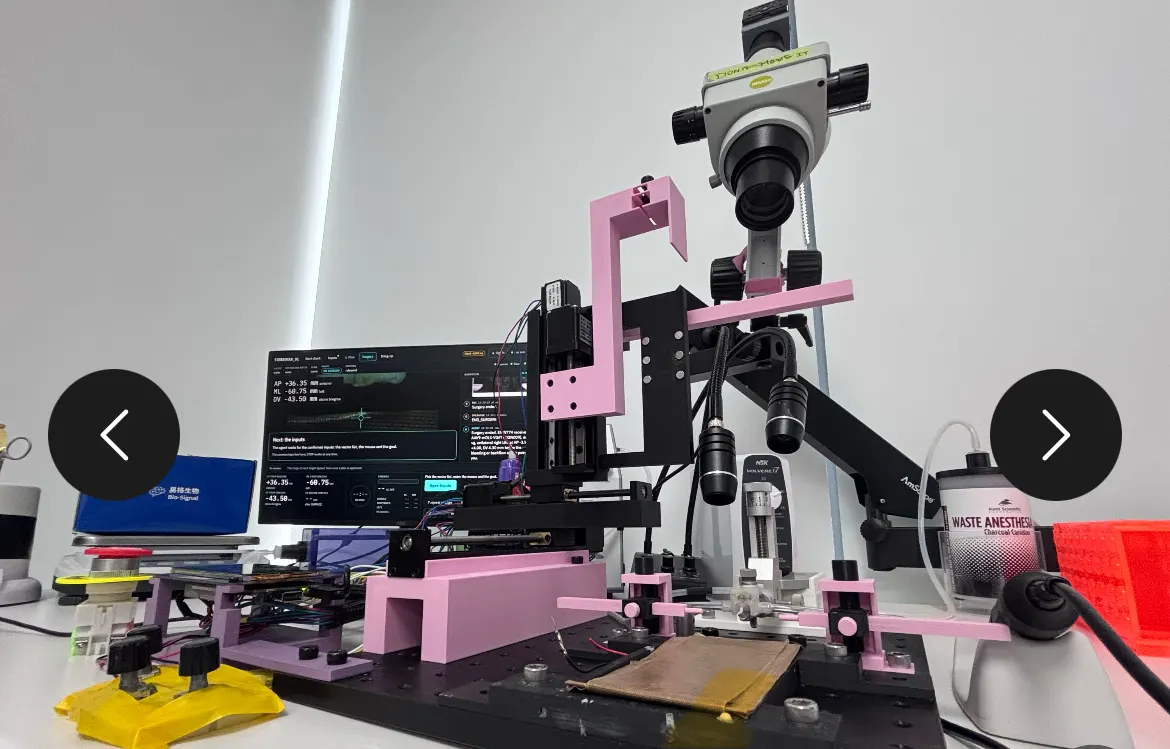
TBC was founded by neurosurgeons Alex Ksendzovsky and Jon Pomeraniec. In labs in San Francisco and Baltimore, it grows rat neurons and neurons derived from human stem cells on electrode grids. The team converts a computing problem, such as pixels, into electrical stimulation, records the neurons' response and looks for recurring computation patterns, which it then turns into equations for conventional artificial neural networks. No living cells are involved when a user generates a video, and the model runs on standard GPUs.
The motivation is efficiency: the human brain runs on about twenty watts, while AI data centers draw hundreds of millions. Cortical Labs and FinalSpark already sell or rent access to biological computing hardware, but TBC says it is the first to turn such research into a mainstream product.
There is a caveat. The company has published no scientific paper detailing its method, and it has not explained how rat neuron activity becomes code. Speedups of this order for Wan 2.2 are not new, since known optimization techniques already make it several times faster, so it remains unverified that the neuron-based approach does better.
More from this day
See all →
EU customs reform: new €2 fee per item on imports from November

Germany's d-you Wallet: Digital ID Arrives on Phones in 2027

AU Small Finance Bank Probes Salesforce Data Leak Claim