Claude Sonnet 5 Agent Picks Gene Therapy, Injects Mouse Brain
Exin Therapeutics says a Claude Sonnet 5 agent chose a gene therapy and guided an injection into an epileptic mouse's brain. Human oversight stayed tight throughout.
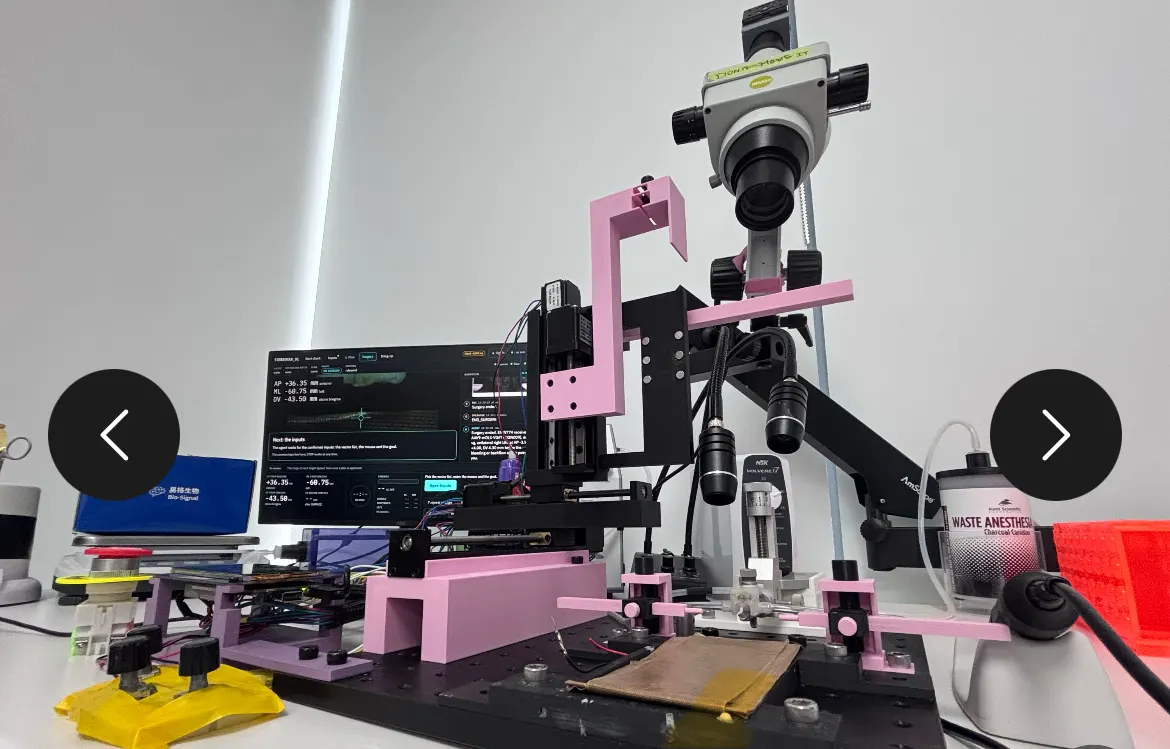
An AI agent powered by Claude Sonnet 5 selected a gene therapy, worked out where to inject it and steered the needle into the brain of an epileptic mouse, according to Gabriel Ocana-Santero, head of the Y Combinator-backed start-up Exin Therapeutics. The mouse woke up and recovered well, he says.
His post on X, published on 28 October 2026, spread quickly, often with inaccurate headlines claiming the AI operated "without human help". It did not.
What the agent actually did
The team gave the agent a mouse model of epilepsy, a spreadsheet of 19 gene therapy vectors, a motorized surgical rig with cameras and one goal: reduce seizures. According to Ocana-Santero, nobody told it which vector to use or where to inject.
The agent reasoned about the seizure mechanism and chose a therapy that strengthens GABA signaling, the brain's main inhibitory neurotransmitter, under a promoter limiting expression to GABAergic neurons. It took injection coordinates from three scientific papers, then drove the stereotaxic arms: a needle lowered to 4.3 mm, 250 nanoliters injected over five minutes, and 32 camera checks for bleeding.
A human surgeon performed the craniotomy, since the agent is not yet allowed to open the skull for safety reasons. Every irreversible action required human approval, fixed limits such as injected volume were coded outside the model, and a veterinarian held a physical emergency stop cutting power to all motors.
Uneven safeguards
The episode also exposes inconsistent guardrails. Per the researcher, Claude Opus 5.5 refused as soon as it detected biology, while Opus 5 completed the dry run but stopped before the live animal. Only Sonnet 5, a mid-range model, agreed to proceed. Anthropic had not responded publicly at the time of writing.
During the procedure, the agent also spotted a positioning error on the rig and refused to advance the needle, even when the operator tried to override it. The team repaired the hardware by hand, and the refusal proved justified.
Stereotaxic injection is routine in neuroscience labs, so this is far from a neurosurgeon's skill. Still, Ocana-Santero says no agent had previously chosen both a treatment and a brain target before dosing a living mammal, which he calls an in vivo "lab in the loop".
More from this day
See all →
EU customs reform: new €2 fee per item on imports from November

Germany's d-you Wallet: Digital ID Arrives on Phones in 2027

AU Small Finance Bank Probes Salesforce Data Leak Claim

Walmart Probes Flipkart Staff Over Alleged ₹150 Cr Kickbacks
More in: AI
See all →
Mischief 1: A Video AI Model Built on Lessons From Living Neurons

Bill Gates Calls for Mandatory AI Safety Limits, Warns of Weapon

Samsung Invites OpenAI's Sam Altman to Brief Its Top Executives