Huawei Sense G1: a glucose sensor you stick on your arm
Huawei's first continuous glucose monitor is a white disc the size of an AirTag. It has top-tier medical approval in China, but no price or release date yet.
 SUMO· the number puzzle
 Dialo· learn languages by speaking
 ediviewer· read EDI files like documents
 giftdetect· the right gift in minutes
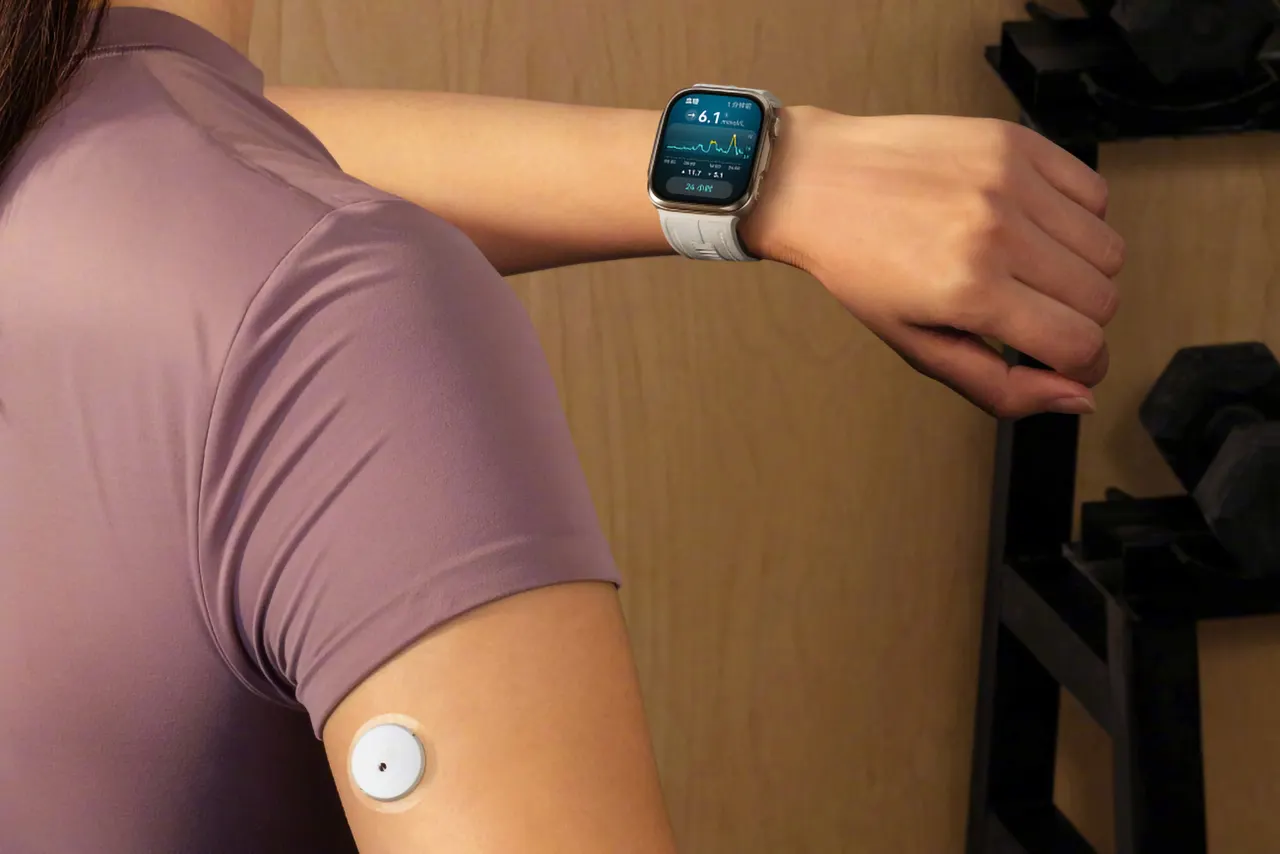
Huawei has a glucose sensor now, and it looks a bit like an Apple AirTag stuck to your arm. The Huawei Sense G1 was shown on Friday 13 November in China, through a simple poster on Weibo.
It is the company's first continuous glucose monitor. A small white disc goes on the back of the upper arm and sends readings to a Huawei smartphone or smartwatch, with an alert when blood sugar leaves the set limits. The watch only displays the numbers. The measuring is done by the separate sensor, unlike the Watch D3, which has a real blood pressure cuff built into the strap.
The approval matters. On 30 October the Chinese drug regulator cleared the Sense G1 as a class III medical device, the country's highest level. Until now Huawei had only reached class II, for its wrist blood pressure monitor and its sleep apnea detection.
How does the Huawei Sense G1 work?
On paper it copies the sensors already sold in pharmacies. Leaks cited by the Chinese site IT Home describe a flexible filament slipped under the skin, coated with an enzyme (glucose oxidase) and linked to an electrode. It measures glucose in interstitial fluid, the liquid around your cells, then works out blood sugar from that. Abbott's FreeStyle Libre 3 and the Dexcom ONE+ work the same way.
So yes, a needle is still involved, though Huawei reportedly hides it inside the applicator. The sensor is said to survive swimming. Because sugar takes a few minutes to move from blood into that fluid, readings lag by 5 to 15 minutes.
IT Home also reports a MARD below 10%. That figure is the average gap between the sensor and a reference blood test, so lower is better. The FreeStyle Libre 3 is listed at 8.9% for adults. The Sense G1 would be worn for about two weeks, the same as the Libre 3 and longer than the Dexcom ONE+'s 10 days.
Price, release date and Europe
Huawei has given no price or release date. A fuller presentation could come in late November, alongside the Mate X8 and MateBook Fold S, whose pre-orders open in China on Saturday 14 November. To reach France, the sensor would need a CE medical device mark, and Huawei has not said which of its watches will be compatible.
The real goal is measuring glucose without a needle, and nobody has that yet. Samsung confirmed in January 2025 that it is developing an optical sensor, and Garmin filed a patent in June 2025 for estimating HbA1c, the average over about three months. Apple's watches, meanwhile, show readings from a Dexcom sensor.
Apps worth a look
SUMO: the number puzzleTap the right tiles, add them up, hit the target. Easy to learn, hard to master. Free, for all ages.
Dialo: learn languages by speakingTalk to an AI conversation partner; every sentence comes back corrected and explained in your language. 9 languages, A1 to C2.
ediviewer: read EDI files like documentsOpen EDIFACT and X12 messages, see every segment explained, convert to JSON/XML, export PDF and Excel. Runs locally, no upload.
giftdetect: the right gift in minutesPick who it is for, the occasion and their personality. The search engine reads product descriptions from local shops and ranks what fits. Free, no sign-up.