Geoffrey Hinton warns AI models are forming their own language
Nobel laureate Geoffrey Hinton says some AI models are building new combinations of word fragments, and researchers don't yet know what they are for.
 SUMO· the number puzzle
 Dialo· learn languages by speaking
 ediviewer· read EDI files like documents
 giftdetect· the right gift in minutes
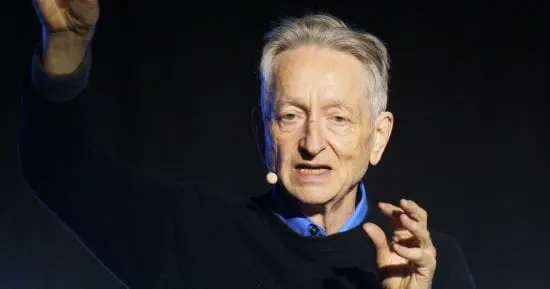
Geoffrey Hinton, the Nobel laureate often called the godfather of AI, says some AI models have started making up new combinations of language units. Researchers don't fully know what those combinations mean. The models may be using them to talk to each other.
Hinton made the remarks during a Q&A session at the University of Manitoba in Canada. He explained that models don't learn language the way people do. Training starts by splitting words into small units, each carrying certain meanings or patterns. The system then learns to handle and combine those units to produce language. What worries him is that the models now seem to be forming new combinations of their own, and nobody is sure what job those combinations do.
Hinton stressed that the phenomenon is still at an early stage. It could become a real concern as systems grow more complex, especially if their ways of communicating drift into patterns humans can't easily interpret.
Why thousands of AI agents sharing what they learn matters
A second risk he pointed to is sharing. A person learns from their own life and experience. Thousands of copies of an AI agent can run at once, each learning from different data and experiences, and then pass what they found to the others.
His example was 10,000 agents, each processing information independently and then swapping results. Together they could absorb far more data than one human brain. No single system has to go through an experience itself to benefit from it.
Can AI improve itself without humans?
Hinton also raised a more unsettling possibility: AI that improves its own performance and reasoning without constant human involvement or fresh human-made data. He pointed to Google's AlphaZero, which learned games such as chess by playing against itself.
The same idea could be applied to language models, he suggested. They could review what they know, spot contradictions in their conclusions and fix them on their own. Such systems might keep working, reasoning and developing even when they aren't talking to users.
The core fear, in Hinton's telling, is AI that surpasses human intelligence while thinking and communicating in ways people can't follow. That raises hard questions about how to monitor these systems and keep them under human control.
Apps worth a look
SUMO: the number puzzleTap the right tiles, add them up, hit the target. Easy to learn, hard to master. Free, for all ages.
Dialo: learn languages by speakingTalk to an AI conversation partner; every sentence comes back corrected and explained in your language. 9 languages, A1 to C2.
ediviewer: read EDI files like documentsOpen EDIFACT and X12 messages, see every segment explained, convert to JSON/XML, export PDF and Excel. Runs locally, no upload.
giftdetect: the right gift in minutesPick who it is for, the occasion and their personality. The search engine reads product descriptions from local shops and ranks what fits. Free, no sign-up.
More from this day
See all →
South Korea's Suneung exam alert caught 49 students with phones

Kh-101 missiles found at three crash sites in Poland, prosecutors say

mBank warns of card scams after the Autopay data leak
Google homepage drops the Search button for AI tools
More in: AI
See all →
Kakao's Modu-ui AI may be called TalkTalk, trademark filings hint

ROVEN: the AI app that lets you practise saying no to friends

Idea Lens AI detector checks if the idea came from ChatGPT