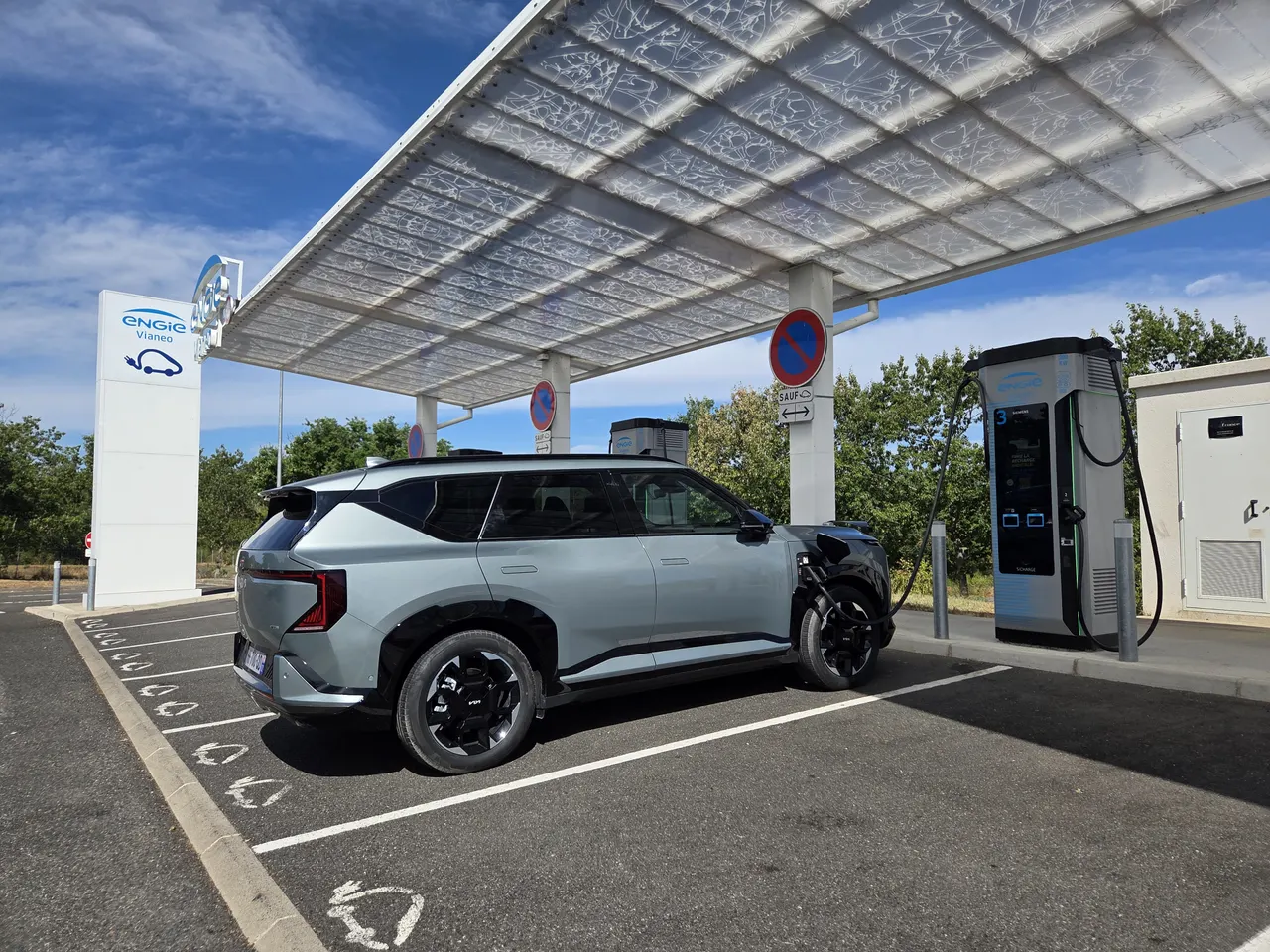
EV charging prices in Europe: 22% more without a subscription
Two electric cars can use the same charger, take the same energy and still get very different bills. Germany's ADAC wants Brussels to step in.
 SUMO· the number puzzle
 Dialo· learn languages by speaking
 ediviewer· read EDI files like documents
 giftdetect· the right gift in minutes
Park two electric cars at the same charger, charge the same amount of energy, and you can still end up with two very different bills. It all depends on which card or app starts the session.
That is the complaint from the ADAC, Germany's biggest motoring club, which is urging the European Commission to act against what it calls "discriminatory commercial practices". "In a supermarket, you would never accept such gaps for the same product," says Peter König, the club's vice-president for transport.
According to the ADAC, which does not detail its methodology, a driver without a contract with the charger's operator pays 22% more on average. Through roaming, meaning a third-party card or app that adds its own margin, the premium reaches 26%. Chargemap, widely used in France, works this way.
For scale, the supplier Lichtblick found an average of 52 cents per kilowatt-hour (kWh, the unit electricity is billed in, like litres at the pump) on standard AC chargers across 17 large German networks, and 61 cents on fast DC chargers. The highest price it found, 76 cents at Mainova, applies only to one-off card payments, which the operator calls a special case because of terminal costs.
What is Europe doing about EV charging prices?
The EU's AFIR regulation, in force since April 2024, requires card payment without a subscription on new chargers of 50 kW and above, and prices that are "reasonable, transparent and non-discriminatory". It sets no maximum gap between subscribers and walk-up customers, though. The Commission opened a public consultation in May 2026, with a draft now expected in early 2027 rather than late 2026.
Brussels is cautious. Kai Tullius of the Commission's transport directorate warns that banning any surcharge on one-off payments could produce a single average price, costing regulars more.
And in France?
France had 202,804 public charge points at the end of September 2026, according to Avere-France. The consumer group CLCV called the pricing a "lottery" in June. In the Nord region the average gap between paying directly and going through a mobility operator hits 45%. Que Choisir Ensemble found one 22 kW charger in Langres billing anywhere from €0.30 to €1.78 per kWh depending on the card.
Until rules change, check the final price in your card's app before you plug in. AFIR already requires it to show roaming fees. The comparison app Chargeprice can help, and an operator's own subscription often gives the lowest rate if you charge often enough.
Apps worth a look
SUMO: the number puzzleTap the right tiles, add them up, hit the target. Easy to learn, hard to master. Free, for all ages.
Dialo: learn languages by speakingTalk to an AI conversation partner; every sentence comes back corrected and explained in your language. 9 languages, A1 to C2.
ediviewer: read EDI files like documentsOpen EDIFACT and X12 messages, see every segment explained, convert to JSON/XML, export PDF and Excel. Runs locally, no upload.
giftdetect: the right gift in minutesPick who it is for, the occasion and their personality. The search engine reads product descriptions from local shops and ranks what fits. Free, no sign-up.
More from this day
See all →
Canon printer cashback in Poland: up to 550 zł back on a new one

Rebel Phone for Kids: TCL's phone with no TikTok or Instagram
Galaxy S25 Ultra US import ban: Maxell patent ruling explained

Neiry pigeon drone: remote-controlled pigeons now take photo orders
More in: Automotive
See all →
Euro 7 starts 29 November: what changes for new cars and yours
Paris electric car parking: free spots to end from July 2027

Porsche 550 J: an 80% electric 550 Spyder for £69,500