ETH Zurich Builds Tiny Robots Powered by Living Mouse Muscle
Researchers at ETH Zurich grew mouse muscle tissue and attached it to soft hydrogel frames, creating small robots that jump, walk, swim and grip objects.
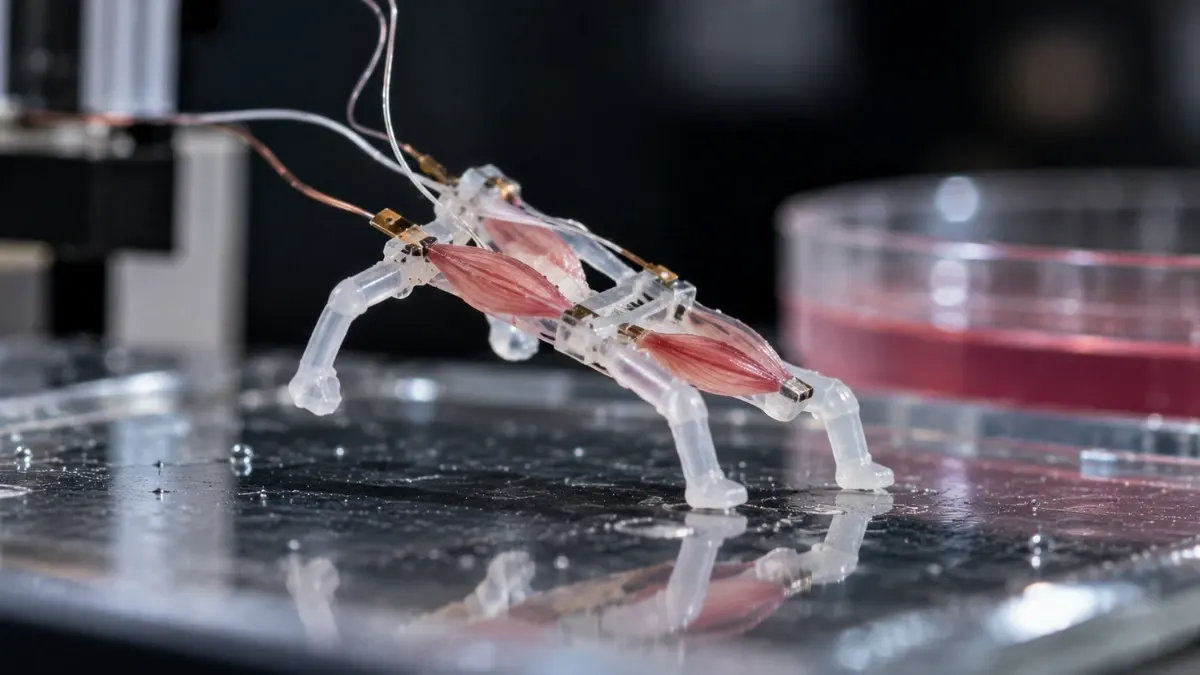
Researchers at ETH Zurich have built small biohybrid robots that move using real muscle grown in the lab from mouse cells. The machines can jump, walk, swim and grasp objects, and the team achieved stronger motion without adding more muscle tissue.
The work comes from the soft robotics laboratory led by Prof. Robert Katzschmann. The study, published in Nature Communications by Aiste Balciunaite, Mike Y. Michelis and colleagues, argues that the muscle and the structure it is attached to must be designed together. Earlier lab-grown muscles did contract, but the movement was often so small that it was visible only under a microscope.
Designed by algorithm, printed in a minute
The team used computer simulations and an evolutionary algorithm to test different shapes of muscle tissue and surrounding material, looking for the layout that turns a contraction into the largest deformation with relatively little muscle. The soft scaffolds were made from hydrogel, a water-rich material, using a 3D printing technique called xolography, in which controlled light hardens the material. Each scaffold took about a minute to produce.
The hydrogel surface carries microscopic grooves that help muscle cells attach and grow in the right direction, so the force of contraction is transferred more efficiently to the robot's body.
The actuators are about 1.5 cm long. After an electrical pulse, one robot jumped to a height of around 5 mm, or one third of its body length. A walking variant reached 6.2 mm/s, which the researchers say is the best result relative to body length among biohybrid walking robots described so far.
A long way from practical use
The biggest obstacle is keeping the tissue alive. Current prototypes need a nutrient solution, and larger machines would require something like a circulatory system to deliver oxygen and nutrients and remove waste. Biological variability is another problem: two identically designed muscles may not develop or perform the same way, which makes results hard to reproduce.
If these issues are solved, the approach could be used in future soft robots, miniature manipulators and biomedical devices. For now, the machines remain small laboratory demonstrators.
More from this day
See all →
SWK Energie launches meinGAMING, a power tariff for gamers

Hey Mac: Free App Unlocks Your Mac With Your Face, No Face ID

ORISA Tool Recovers Deleted AI Chats From Android Phone Memory

South Korean police probe 80 Tesla drivers over FSD lockouts
More in: Science
See all →
Manoj Gupta Breaks a 1996 Barrier in Shortest-Path Algorithms
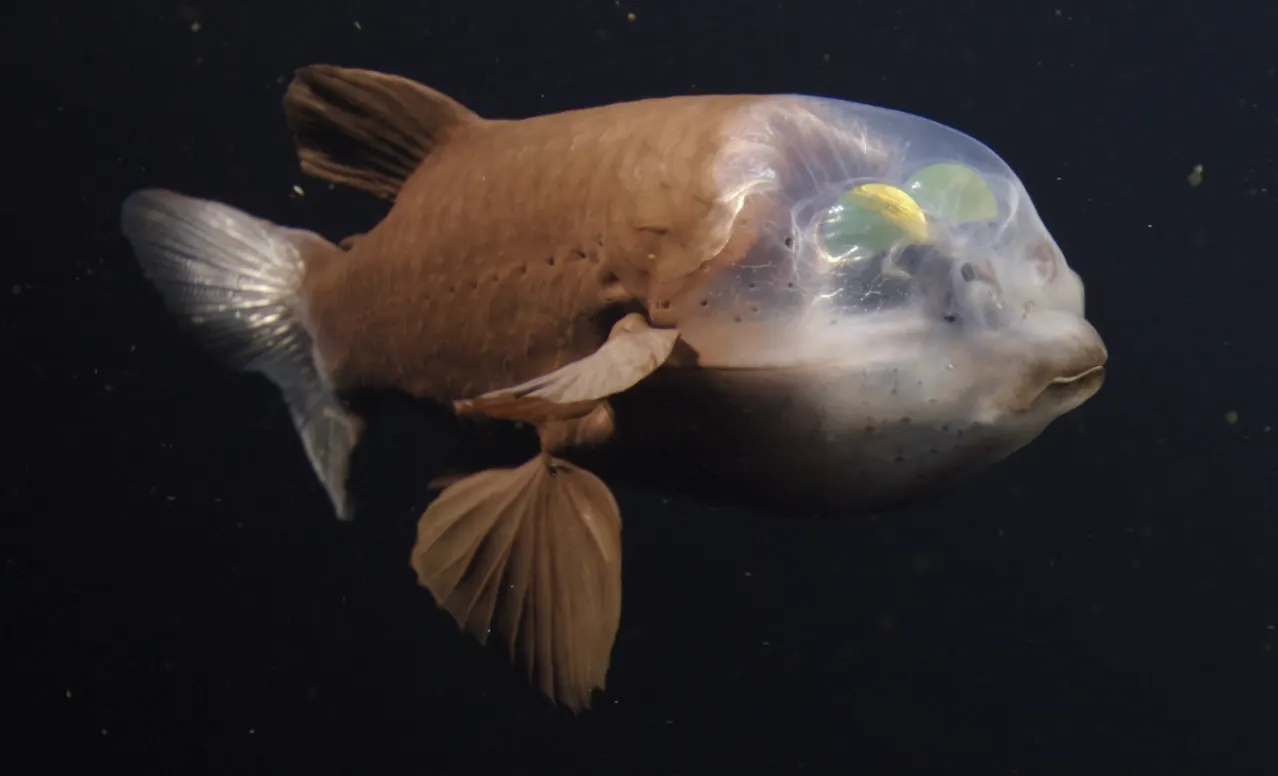
MBARI Films Barreleye Fish With Transparent Head in 4K for First Time

Pilot-wave theory survives a new test on quantum tunneling