Dongwon F&B's AI Shopping Assistant Lifts Conversion 10.8x
Dongwon F&B says sessions using the AI shopping assistant on its Dongwon Mall store converted at 16.2%, 10.8 times the rate of sessions without it.
 SUMO· the number puzzle
 Dialo· learn languages by speaking
 ediviewer· read EDI files like documents
 giftdetect· the right gift in minutes
Dongwon F&B says the AI shopping assistant on its online store, Dongwon Mall, is delivering clear results. According to the company, an analysis of about 12 million sessions from May to October this year shows that sessions using the AI converted to a purchase at 16.2%, or 10.8 times the rate of sessions that did not. Roughly half of all sessions involved the assistant.
How the assistant works
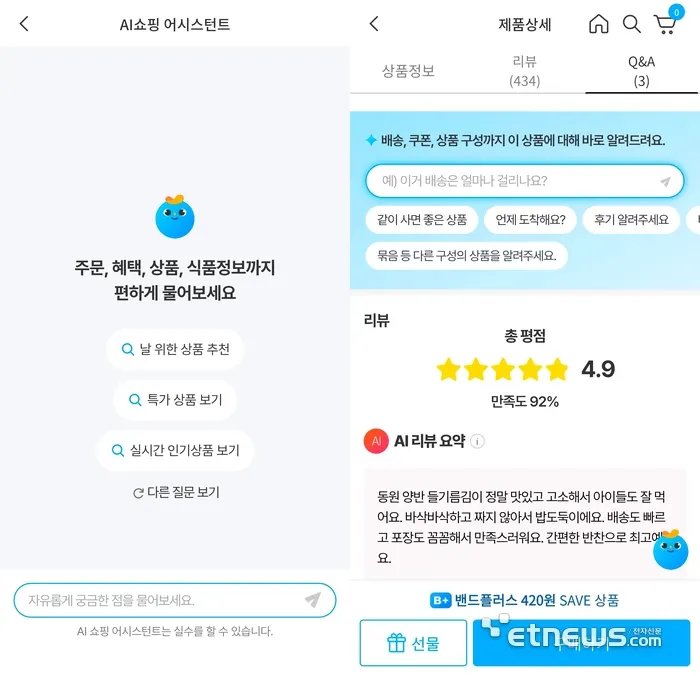
Launched in May, the service answers questions in everyday language, recommends products and explains orders, delivery and coupons. On a bone broth page, for example, a shopper can ask for similar items by price range and get low-price, premium and bulk options. Asking what goes well with seaweed snacks returns suggestions such as instant rice or canned tuna. It can also calculate how much more a customer must spend to qualify for free shipping and suggest items to reach it.
Initially available only through an icon at the bottom right of the screen, the assistant has been reachable since October 1 from the mobile search bar, search results and specialty sections. In the first 15 days after the expansion, the number of users rose to 5.6 times the previous period, and product-recommendation queries grew from 29.5% to 51.4% of all conversations.
Dongwon Mall sells about 130,000 items, including some 3,000 Dongwon products, along with third-party groceries, fresh food, health supplements and pet food. The in-house platform development team built the service and linked it to product, cart, order and coupon functions, aiming to support the whole journey rather than act as a support chatbot.
What comes next
Dongwon F&B plans to use "My Pet" member data to recommend suitable pet products and to expand benefits for AI users, a way to differentiate from large platforms selling the same goods.
The company acknowledges a caveat: the conversion figure compares AI and non-AI sessions over the same period, not before and after launch, so shoppers' purchase intent may partly explain the gap. The challenge is turning higher AI usage into repeat visits and purchases through better recommendation accuracy and personalization. A company representative said the accumulated purchase data could also feed more tailored recommendations and product development at manufacturing affiliates.
Apps worth a look
SUMO: the number puzzleTap the right tiles, add them up, hit the target. Easy to learn, hard to master. Free, for all ages.
Dialo: learn languages by speakingTalk to an AI conversation partner; every sentence comes back corrected and explained in your language. 9 languages, A1 to C2.
ediviewer: read EDI files like documentsOpen EDIFACT and X12 messages, see every segment explained, convert to JSON/XML, export PDF and Excel. Runs locally, no upload.
giftdetect: the right gift in minutesPick who it is for, the occasion and their personality. The search engine reads product descriptions from local shops and ranks what fits. Free, no sign-up.
More from this day
See all →
France drops article banning encryption backdoors in Résilience law
Orange launches Orange France super-app with AI aggregator

Korean Appliance Suppliers Bring AI to Press, Assembly and Logistics

South Korea Has Just 796 Chargers of 350 kW or More for 800V EVs
More in: Business
See all →
SoftBank, Grab and PETROS Commit $1 Billion to Sarawak AI Hub

Digital Fairness Act: EU Targets Subscription Traps and Dark Patterns

Beget restores first shared hosting sites from backups after attack