D-Vision SDR: Ukrainian Pocket Receiver Shows Russian Drone Feeds
A Kyiv startup's 290-gram handheld radio lets Ukrainian troops watch live video from Russian drones before impact, but encrypted, digital and fiber-optic drones limit it.
 SUMO· the number puzzle
 Dialo· learn languages by speaking
 ediviewer· read EDI files like documents
 giftdetect· the right gift in minutes
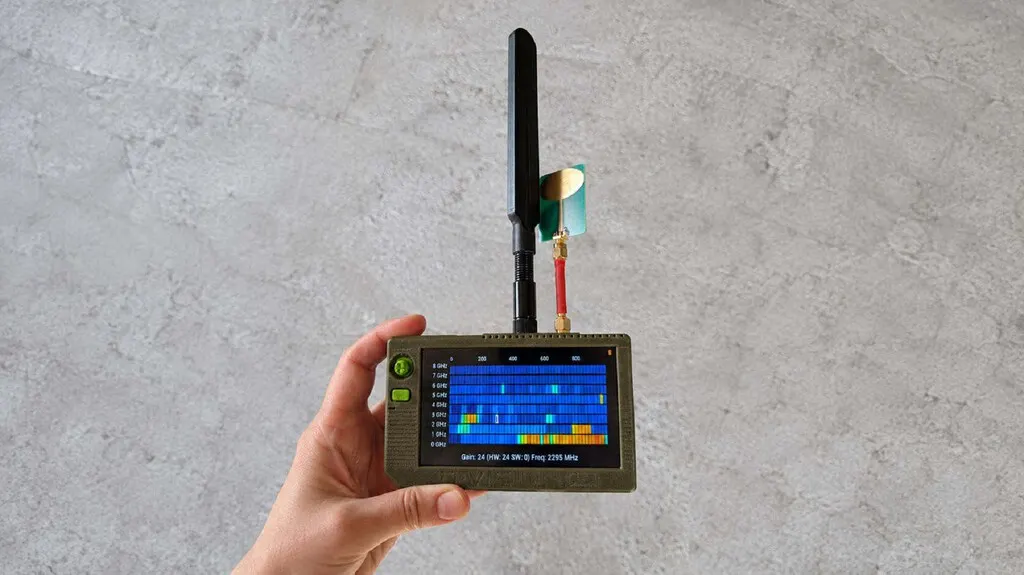
A Kyiv-based startup has built a handheld receiver that lets Ukrainian troops watch the live camera feed of a Russian drone while it is still in the air. The device, called D-Vision SDR and made by CODE380, weighs little more than a smartphone.
Many Russian drones transmit camera footage unencrypted, so anyone with the right receiver can tune in. With the D-Vision SDR, a unit can see where an attack drone is heading and what its pilot is aiming at before impact, which helps troops take cover or move equipment.
How it works
The D-Vision SDR is a software-defined radio, meaning most of its work is done in software rather than fixed hardware. It scans frequencies from 500 MHz to 8.7 GHz and turns the signals it finds into video on a screen. The developers say it covers the whole range without blind spots and is more sensitive than competing detectors. Because the logic is in software, it can be updated when Russia changes its drone specifications.
Reported range reaches up to 10 kilometers for analog video between 540 MHz and 6 GHz, falling to 3.5 to 5 kilometers at higher frequencies. The device is passive: it only listens and emits nothing itself.
Weight is its main selling point. At about 290 grams, it is less than half the weight of its main Ukrainian rivals: Babai's Vydun 7.5 (roughly 900 grams, up to 7.5 GHz), Contra-drone's SENSE-4 (600 grams, up to 8.2 GHz) and BlueBird Tech's Chuyka 3.0 (up to 650 grams, upgradable to 8.8 GHz).
It also sweeps the 4.1 to 4.5 GHz band, which Russia's Molniya attack drones began using for video in June. Radio specialist Serhii "Flash" Beskrestnov, an adviser to Ukraine's president, said then that most detectors "don't see these frequencies or see them poorly".
Limits
Beskrestnov warns that digital video could replace analog, making portable detectors and fixed analog receiving stations ineffective. Digital transmissions are harder for many receivers to decode, and fiber-optic drones send nothing over the air to intercept. Russia is also designing variants with video that is harder to hack. The New York Times reported in August that some Molniya drones are AI-guided, use Nvidia chips and emit no signal at all.
The receiver is part of a growing set of cheap, passive Ukrainian sensors that work alongside radars, acoustic sensors and interceptors rather than replacing them.
Apps worth a look
SUMO: the number puzzleTap the right tiles, add them up, hit the target. Easy to learn, hard to master. Free, for all ages.
Dialo: learn languages by speakingTalk to an AI conversation partner; every sentence comes back corrected and explained in your language. 9 languages, A1 to C2.
ediviewer: read EDI files like documentsOpen EDIFACT and X12 messages, see every segment explained, convert to JSON/XML, export PDF and Excel. Runs locally, no upload.
giftdetect: the right gift in minutesPick who it is for, the occasion and their personality. The search engine reads product descriptions from local shops and ranks what fits. Free, no sign-up.
More from this day
See all →
GOG GALAXY Is Coming Natively to Linux After 18 Years
Claude Code accused of leaking users' email addresses to websites

Alta Ares wins six NATO counter-drone lots in first big deal

NCBR Sets Aside PLN 25 Million for International AI R&D Projects
More in: Hardware
See all →
FritzOS 8.50 and 8.51 roll out to more Fritzbox routers
Bluetooth HDT Quadruples LE Speeds to 7.5 Mbps for Better Audio
iPad mini 2026 OLED screen tested: brighter, more accurate colors