Brenner Base Tunnel: TBM Olga finishes the last machine-dug stretch
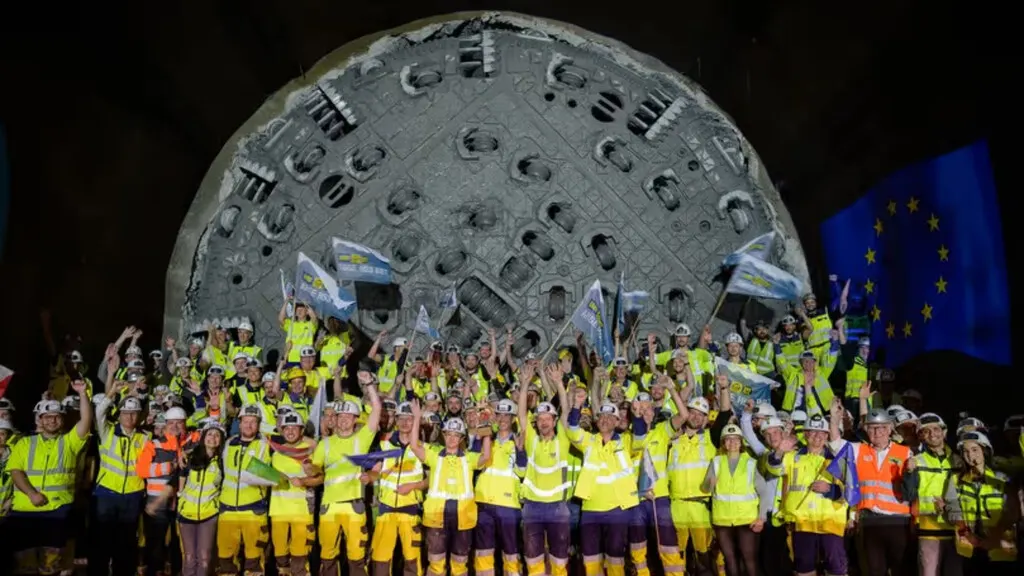
A 2,600-tonne, 183-metre machine called Olga broke through on 24 November, ending all machine boring on the Austrian side of the Brenner Base Tunnel.
 SUMO· the number puzzle
 Dialo· learn languages by speaking
 ediviewer· read EDI files like documents
 giftdetect· the right gift in minutes
A tunnel boring machine named Olga has finished its job under the Alps. On 24 November it broke through on the Austrian side of the Brenner Base Tunnel, the last mechanised drive in one of Europe's biggest railway projects. The machine weighs 2,600 tonnes and is 183 metres long.
Olga bored about 7.6 kilometres of the eastern tube towards Innsbruck, in section H53 Pfons-Brenner. It started on 18 September 2024 alongside its twin, Wilma, which finished 7.45 kilometres of the western tube on 25 August. Both are double-shield machines with a 10.33-metre diameter and 4,550 kW at the cutting head, run by a joint venture of PORR and Marti. According to manufacturer Herrenknecht, Olga's best month topped 600 metres.
What is the Brenner Base Tunnel?
It will link Innsbruck in Austria with Fortezza in Italy. Together with the existing Innsbruck bypass, it forms a 64-kilometre underground rail connection beneath the Alps. The gentle gradient is meant to let longer, heavier trains cross the mountains, adding capacity on the Scandinavian-Mediterranean corridor and moving freight off the roads.
Olga is the last of the machines used. Herrenknecht supplied eight of them, which have covered around 90 kilometres since 2015, digging the two main tubes and the exploratory tunnel beneath them. A conveyor system can move up to 5,000 tonnes of spoil an hour, roughly 190 loads of 26-tonne trucks. Martin Herrenknecht, the company's founder, was at the breakthrough and called it a moment that really moves him.
When will the Brenner Base Tunnel open?
Not yet. Drilling is done, but work on connecting galleries and shafts remains, and the railway systems still have to be installed. The Austrian and Italian sections already met in July, dug by conventional drill and blast.
On 20 October, project company BBT SE pushed the planned opening from 2032 to 2034 and raised the expected cost from 10.5 billion to 11.7 billion euros. It blamed an updated design for the rail systems, including turning the exploratory tunnel into a service tunnel, plus extra infrastructure and a longer construction period. The hardest rock work is behind them. What is left is fitting the tunnel out for trains.
Apps worth a look
SUMO: the number puzzleTap the right tiles, add them up, hit the target. Easy to learn, hard to master. Free, for all ages.
Dialo: learn languages by speakingTalk to an AI conversation partner; every sentence comes back corrected and explained in your language. 9 languages, A1 to C2.
ediviewer: read EDI files like documentsOpen EDIFACT and X12 messages, see every segment explained, convert to JSON/XML, export PDF and Excel. Runs locally, no upload.
giftdetect: the right gift in minutesPick who it is for, the occasion and their personality. The search engine reads product descriptions from local shops and ranks what fits. Free, no sign-up.
More from this day
See all →
Perplexity Pro model picker: 70 of 84 short checks got another model

Waymo robotaxis got stuck in San Francisco floods, 90 cm deep

Hisense 32S6S portable TV runs up to 10 hours on battery

GTA 6 physical sales record in Spain, with no disc in the box
More in: Science
See all →
Living at high altitude may change how your brain networks sync
Iowa lead azide blast: NASA used planes and a satellite to watch

Nuclear bomb in space: one blast could wipe out most satellites