BepiColombo reaches Mercury orbit after eight years and nine flybys
BepiColombo was due to enter orbit around Mercury on 21 November. Getting there took nine gravity assists, a power fault and a rewritten flight path.
 SUMO· the number puzzle
 Dialo· learn languages by speaking
 ediviewer· read EDI files like documents
 giftdetect· the right gift in minutes
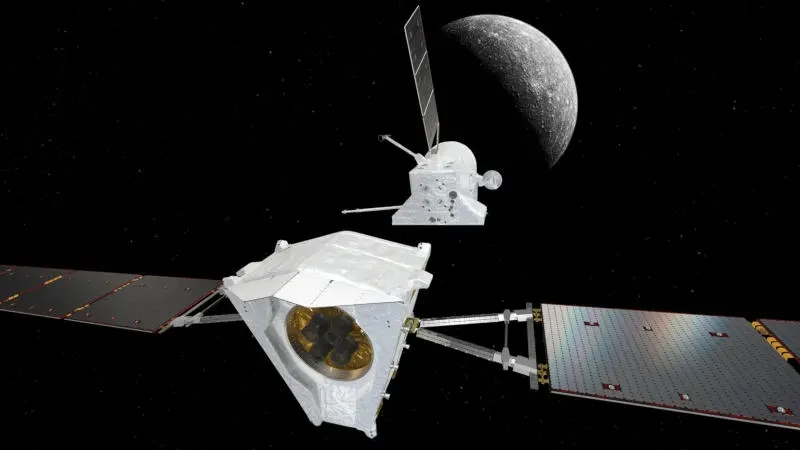
The BepiColombo spacecraft was due to enter orbit around Mercury on 21 November, eight years after it left Earth. Don't expect pictures and results straight away, though. The real science work starts in April 2027.
BepiColombo is a joint mission of the European Space Agency (ESA) and Japan's space agency JAXA. It launched in October 2018 and used nine gravity assists, passes close to Earth, Venus and Mercury, to bleed off speed. That is the odd part of flying to Mercury: the Sun pulls a probe in so hard that the difficulty is slowing down, not speeding up.
In 2024 a fault in the power system meant the engines could not run at full power. Engineers worked out a new trajectory, and arrival slipped from December 2025 to November 2026. The science goals stayed the same.
What happens after BepiColombo reaches Mercury?
The spacecraft is really two probes plus a sun shield: Europe's Mercury Planetary Orbiter (MPO) and Japan's Mercury Magnetospheric Orbiter, called Mio. The transfer module that carried them dropped away in September. On 21 November MPO and Mio were to enter orbit together, then separate in December.
Mio moves to a stretched orbit of about 9.3 hours and studies the magnetic field, the magnetosphere, the exosphere and the solar wind with five instrument packages. MPO keeps manoeuvring and should reach its science orbit, about 2.3 hours per lap, in March 2027. It carries 11 instruments, including spectrometers and a laser altimeter for mapping terrain.
What do scientists want to learn?
Mercury has a few puzzles. Its magnetic field is much weaker than Earth's, and its source sits roughly 400 km north of the planet's centre. The thin exosphere is constantly topped up with material from the surface, but how much each process contributes is unclear. And the planet has an unusually large iron core, so understanding how Mercury formed and changed is a main goal.
The main mission lasts about one Earth year, which is more than four years on Mercury. It could be extended if the spacecraft and its fuel hold out.
Apps worth a look
SUMO: the number puzzleTap the right tiles, add them up, hit the target. Easy to learn, hard to master. Free, for all ages.
Dialo: learn languages by speakingTalk to an AI conversation partner; every sentence comes back corrected and explained in your language. 9 languages, A1 to C2.
ediviewer: read EDI files like documentsOpen EDIFACT and X12 messages, see every segment explained, convert to JSON/XML, export PDF and Excel. Runs locally, no upload.
giftdetect: the right gift in minutesPick who it is for, the occasion and their personality. The search engine reads product descriptions from local shops and ranks what fits. Free, no sign-up.
More from this day
See all →Hugendubel, Tolino Cloud and eBook.de offline after cyberattack
YouTube app icons: 7 new designs, some retro, are in the works

PC repair job interview: the voltage switch trap he suggested

Google's new 3D emoji need 6GB RAM and 10GB storage, now explained
More in: Space
See all →BepiColombo reaches Mercury orbit after 8 years and a solar panel snag
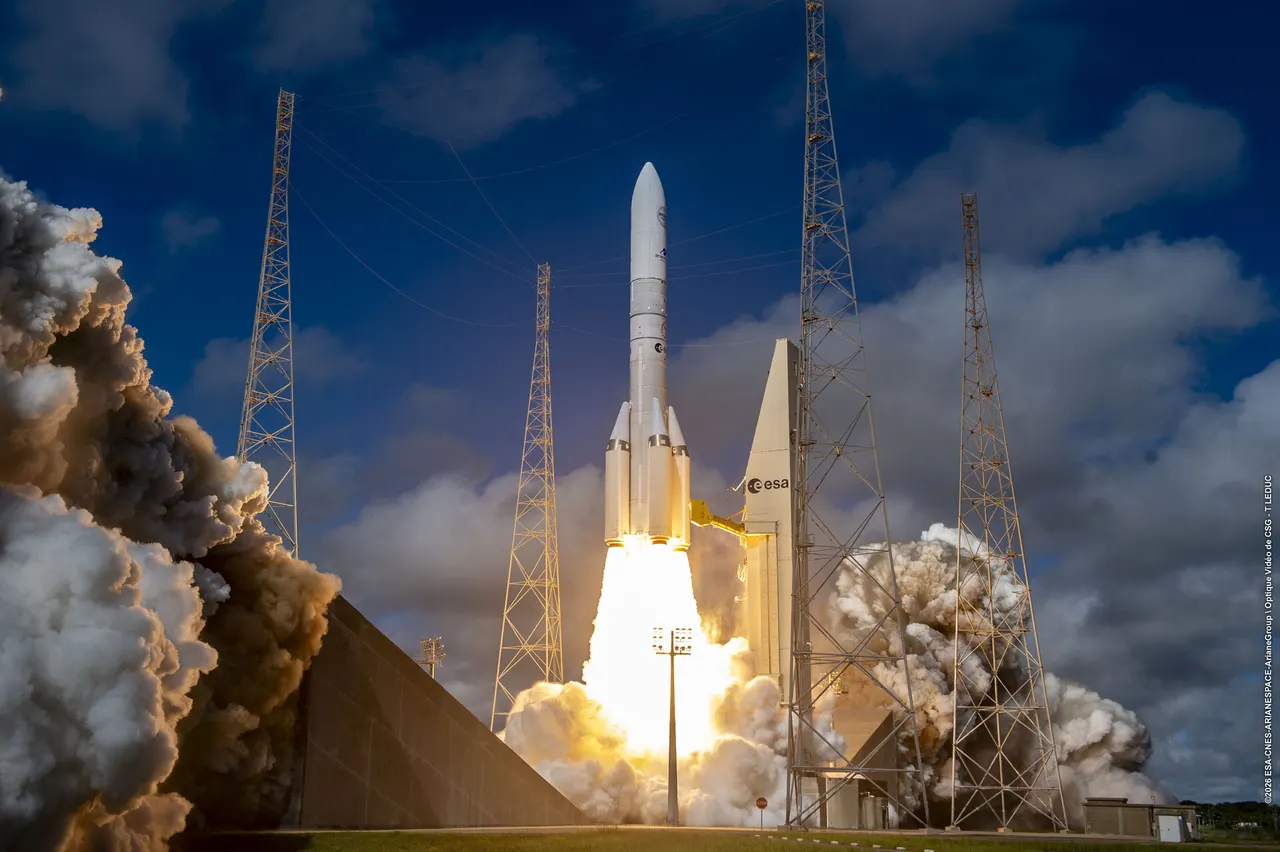
Ariane 6 launch live: 36 Amazon Leo satellites on one rocket
Perseverance and Odyssey both fail on Mars within a week