Asteroid 1998 KY26 is speeding up, but not because of ice
A tiny asteroid keeps drifting off its calculated path. A new Georgia Tech study says hidden water ice can't be the cause: the rock is simply too warm.
 SUMO· the number puzzle
 Dialo· learn languages by speaking
 ediviewer· read EDI files like documents
 giftdetect· the right gift in minutes
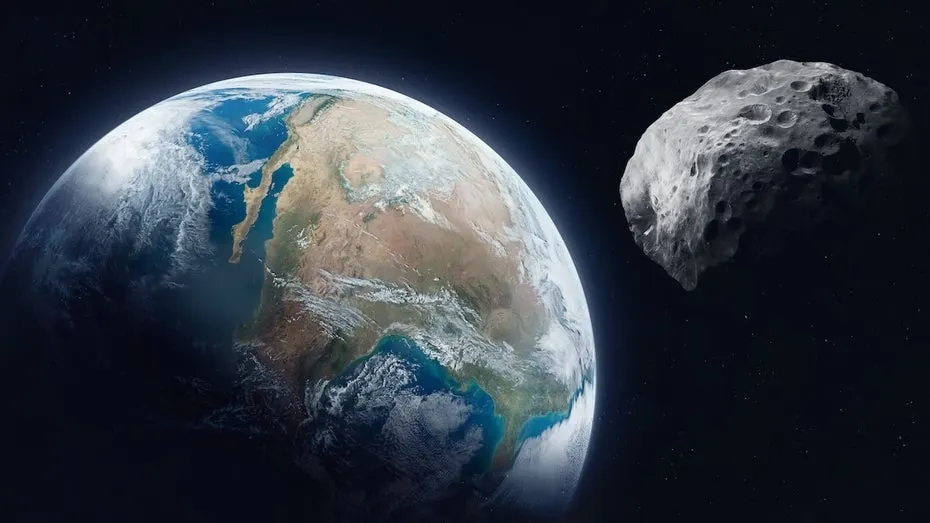
The near-Earth asteroid 1998 KY26 gets a small extra push that gravity alone can't explain. For a while, some researchers blamed water ice evaporating inside it. A new study says that idea doesn't hold up.
Korbin Hansen and Masatoshi Hirabayashi, two aerospace engineers at the Georgia Institute of Technology, built a 3D computer model of how heat travels from the surface to the core of the roughly 11-metre rock. In the journal Icarus, they report that even the coldest spots average at least 212 kelvin (minus 61 °C) over one orbit around the Sun. Water ice survives for long periods in a vacuum, even under a layer of rock, only below 145 kelvin (minus 128 °C).
Why was 1998 KY26 thought to be a dark comet?
A "dark comet" looks like an ordinary rocky asteroid, with no glowing dust cloud, but escaping gas nudges it off course like tiny thrusters. If ice were doing that here, the asteroid would lose about 0.03 grams of water per second and run dry after 62 years. Even a one percent water share would vanish in a little over 2,000 years. The body is probably a solid monolith, not a loose pile of rubble, so heat reaches the inside easily.
The ice theory came from old numbers. The asteroid was long estimated at about 30 metres across. In September 2025, observations led by Toni Santana-Ros of the University of Alicante, using European Southern Observatory telescopes, showed it measures only 11 metres and spins once every 5.35 minutes.
What is actually pushing the asteroid?
With roughly twenty times less mass and a bright surface reflecting 55 percent of sunlight, ordinary physics is enough. A team around Davide Farnocchia at NASA's Jet Propulsion Laboratory showed that the pressure of sunlight, plus the Yarkovsky effect (a weak recoil from the delayed heat a warm surface radiates), explains the acceleration.
The new model still rests on assumptions, and it is unclear how long the asteroid has been on its current orbit close to the Sun. Certainty should come in July 2031, when Japan's JAXA probe Hayabusa 2 arrives. It is already on its way.
For JAXA's engineers, the findings are awkward. They planned the mission for a target about three times larger that spins half as fast. On a small, dry rock, centrifugal force away from the poles beats its own gravity, so any approach or touchdown is risky. Kicked-up material or an uncontrolled bounce could damage the instruments.
Apps worth a look
SUMO: the number puzzleTap the right tiles, add them up, hit the target. Easy to learn, hard to master. Free, for all ages.
Dialo: learn languages by speakingTalk to an AI conversation partner; every sentence comes back corrected and explained in your language. 9 languages, A1 to C2.
ediviewer: read EDI files like documentsOpen EDIFACT and X12 messages, see every segment explained, convert to JSON/XML, export PDF and Excel. Runs locally, no upload.
giftdetect: the right gift in minutesPick who it is for, the occasion and their personality. The search engine reads product descriptions from local shops and ranks what fits. Free, no sign-up.
More from this day
See all →
Oregon sues OpenAI over ChatGPT child safety, seeks $2 billion

Google Wallet door unlock: your phone becomes your house key

DB Info app: Deutsche Bahn's new app that sells no tickets

eMudhra emBridge flaw: CERT-In warns it can leak file names
More in: Science
See all →
Artemis 2 astronaut Victor Glover on the hardest part: telling his daughters

Heavy fermions seen at a one-atom-thick layer's edge for the first time

Vitamin C after ham or sausage: what a new model suggests