Antarctic strawberry feather star has 20 arms and a berry-red body
Scientists mapping Antarctic feather stars found a new species with 20 arms and a strawberry-like center, Promachocrinus fragarius, among seven in its genus.
 SUMO· the number puzzle
 Dialo· learn languages by speaking
 ediviewer· read EDI files like documents
 giftdetect· the right gift in minutes
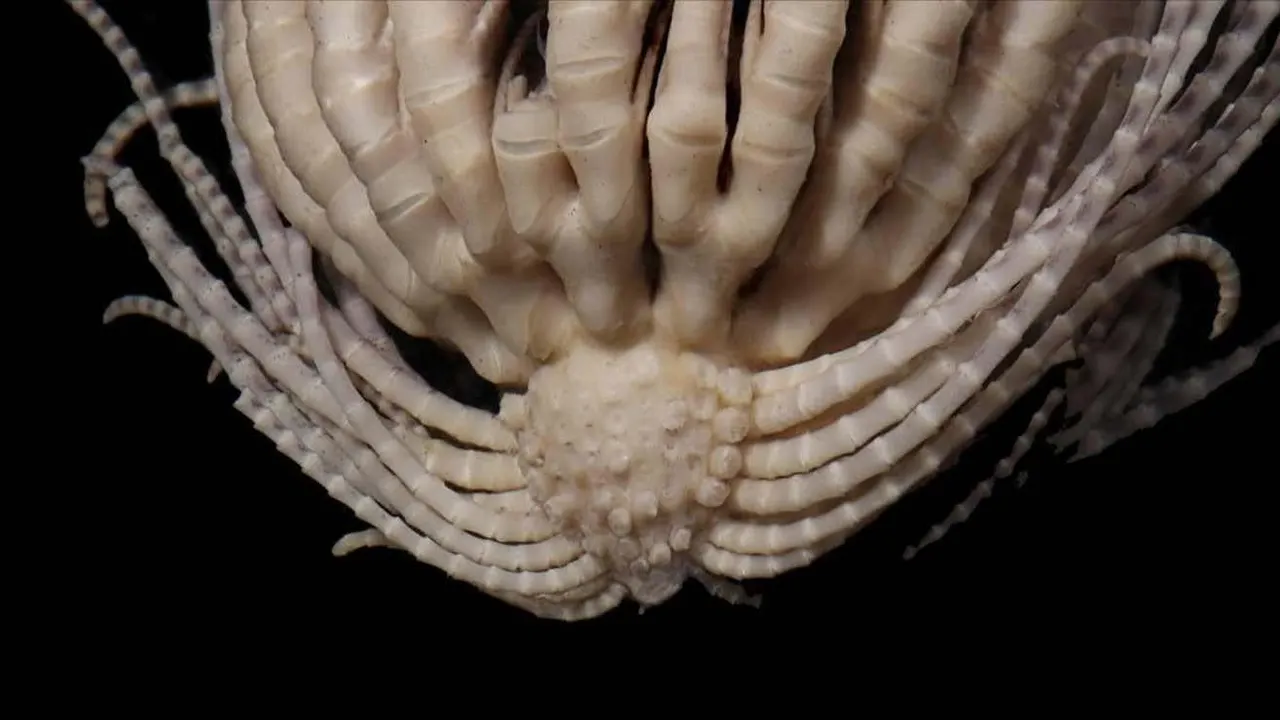
It looks a bit like a strawberry that grew 20 arms and moved to the Southern Ocean. Researchers have named it Promachocrinus fragarius, the Antarctic strawberry feather star, and it is one of the new animals to come out of a study of life around Antarctica.
The team is from the Scripps Institution of Oceanography at the University of California San Diego. Their goal was to work out the family tree of Promachocrinus, a group of marine animals. They analysed specimens first collected on Antarctic expeditions between 2008 and 2017.
What is the Antarctic strawberry feather star?
Promachocrinus is loosely related to echinoderms, the group that includes sea stars and sea cucumbers, but not much was known about it. Until now only one clearly identified species belonged to the genus, Promachocrinus kerguelensis. Earlier specimens were assumed to be Promachocrinus but never properly confirmed.
By comparing DNA and body shape, the researchers sorted members of the group into seven species. Four of them had been found before but never given a name.
P. fragarius is the eye-catcher. Its central body looks like a strawberry, 20 arms stretch out from it, and its colour ranges from purple to a deep reddish purple. It probably lives at depths of about 65 to 1,170 metres.
What happens next?
The findings were published in July 2023 in the journal Invertebrate Systematics. The team says the work would not have been possible without usable DNA samples, and that there are likely more unknown species in the ocean.
In the researchers' words, the Antarctic and the Southern Ocean ecosystem is vast, so understanding its biodiversity requires large-scale sampling.
Apps worth a look
SUMO: the number puzzleTap the right tiles, add them up, hit the target. Easy to learn, hard to master. Free, for all ages.
Dialo: learn languages by speakingTalk to an AI conversation partner; every sentence comes back corrected and explained in your language. 9 languages, A1 to C2.
ediviewer: read EDI files like documentsOpen EDIFACT and X12 messages, see every segment explained, convert to JSON/XML, export PDF and Excel. Runs locally, no upload.
giftdetect: the right gift in minutesPick who it is for, the occasion and their personality. The search engine reads product descriptions from local shops and ranks what fits. Free, no sign-up.
More from this day
See all →Hugendubel, Tolino Cloud and eBook.de offline after cyberattack
YouTube app icons: 7 new designs, some retro, are in the works

PC repair job interview: the voltage switch trap he suggested
Google's new 3D emoji need 6GB RAM and 10GB storage, now explained
More in: Science
See all →
Superhabitable planets: why scientists want a better Earth

Brain implant users write first guidelines for BCI trials

Teen screen time and the brain: what a Finnish MRI study found