University of Tokyo robot face has 65 artificial muscles
A University of Tokyo team built a robot head with 65 artificial muscles that copies human anatomy, and it can wrinkle its nose and pull its chin forward.
 SUMO· the number puzzle
 Dialo· learn languages by speaking
 ediviewer· read EDI files like documents
 giftdetect· the right gift in minutes
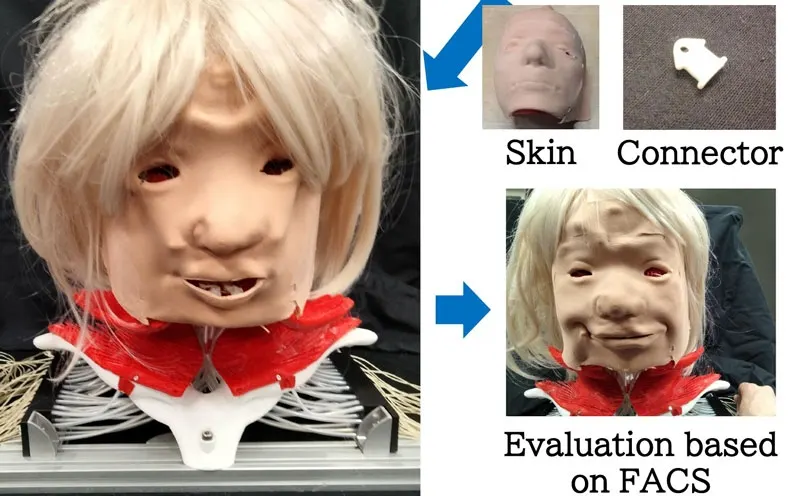
Researchers at the University of Tokyo have built a robot face that copies the muscles under human skin, and it can already do things like wrinkle its nose and push out its chin. It cannot yet close its eyes, which is a slightly awkward flaw for a face.
The problem they set out to solve is space. Robots with expressive faces exist, but they can't show the full range of basic facial movements. Doing that would take so many motors and levers that they would not fit inside a robot's head. So the team copied the muscle structure as closely as possible and moved the drive mechanism out of the head.
How does the robot face work?
The head has 65 artificial muscles covering 34 anatomical types. Their position, shape and attachment points come from 3D anatomical atlases. Each muscle is made of thermoplastic polyurethane (TPU) in a zigzag pattern, so it can stretch and contract. Control cables run through tubes made of PTFE, a slippery plastic, and pulling a cable shortens the muscle. That is what lets the motors sit outside the face. The silicone skin is cast in separate sections, and the muscle parts attach to it from the inside.
How well does it copy a human face?
The team tested it against FACS, the Facial Action Coding System from 1978, which breaks expressions into 47 individual movements called action units. With no skin fitted and researchers pulling the cables by hand, the robot managed 40 of the 47. These included raising the eyebrows, moving the jaw and eyeballs, and sticking out the tongue.
With the silicone skin on, the count dropped to 30. Even so, the robot could push out its chin, raise and lower the corners of its mouth and wrinkle its nose.
The weak spots are clear. Puffing out the cheeks and some lip movements would need a pneumatic (air-powered) drive, which this version lacks. The skin is not elastic enough, and the way the muscles connect to the eyelids stops the eyes from closing fully.
Next, the researchers want to try more complex expressions with more muscles. They also hope to replace the manual cable pulling with remote actuators.
Apps worth a look
SUMO: the number puzzleTap the right tiles, add them up, hit the target. Easy to learn, hard to master. Free, for all ages.
Dialo: learn languages by speakingTalk to an AI conversation partner; every sentence comes back corrected and explained in your language. 9 languages, A1 to C2.
ediviewer: read EDI files like documentsOpen EDIFACT and X12 messages, see every segment explained, convert to JSON/XML, export PDF and Excel. Runs locally, no upload.
giftdetect: the right gift in minutesPick who it is for, the occasion and their personality. The search engine reads product descriptions from local shops and ranks what fits. Free, no sign-up.
More from this day
See all →
OUTSENSE origami engineering folds wood and metal to a tenth of the size

GTA VI PS5 leak: full game dump reaches torrent sites
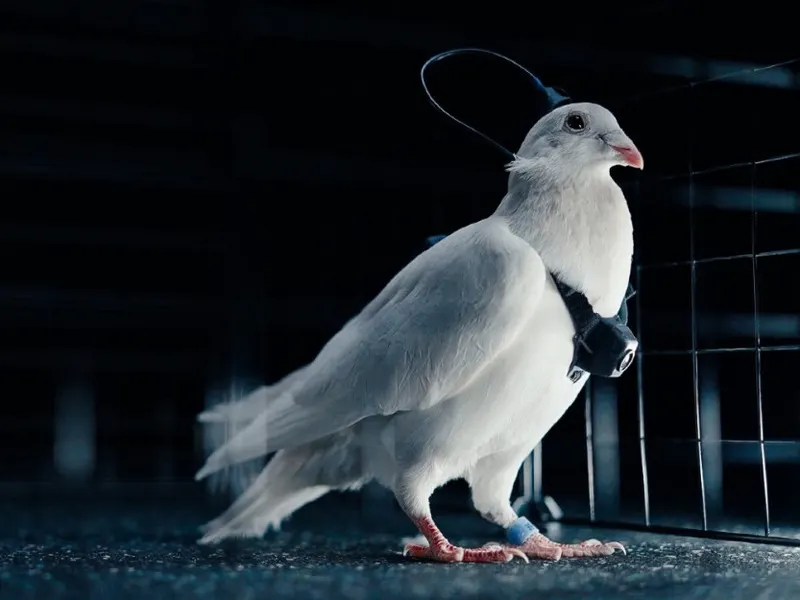
Neiry pigeon drones: Russian firm takes orders for bird photography