Tiny 2.1: an AI language model that runs on a 486 from a floppy
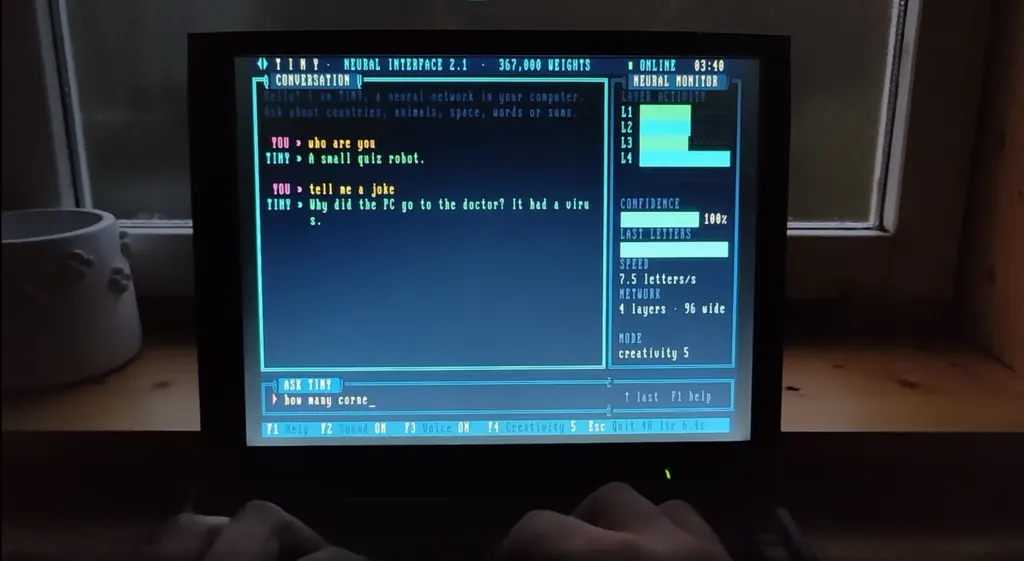
A Reddit user built Tiny 2.1, a small language model that boots on MS-DOS, runs on a 486DX and fits on a 1.44 MB floppy. Another AI wrote the code.
 SUMO· the number puzzle
 Dialo· learn languages by speaking
 ediviewer· read EDI files like documents
 giftdetect· the right gift in minutes
Running a chatbot on a computer from the early 1990s sounds like a joke. Tiny 2.1 is the real thing: a working language model that runs on MS-DOS, on a Pentium or a 486DX, and fits on a 1.44 MB floppy disk.
The project was shared on the ClaudeAI subreddit by a user called wollymonjak, and the full thing is on GitHub. According to the author, the code was written by Claude Fable 5.2 and the model was trained by Claude Opus 5.5. The program itself is in Turbo C 2.0, a compiler from the late 1980s.
How big is Tiny 2.1?
Small, obviously. It has 367,000 parameters spread over 4 layers that are 96 units wide. It works letter by letter, not word by word. The weights are stored in 8 bits, so the whole model weighs 380 KB, and it needs about 540 KB of free conventional memory.
It uses the same basic architecture as ChatGPT or Claude, just at a tiny scale. It runs in a full-screen neon interface with a live activity monitor and a robotic voice.
What can it do?
Not much, and that is fine. It is a question-and-answer model trained on roughly 3,500 facts, each phrased in many different ways. Ask about anything outside that data and it makes up an answer. The people who tried it in an online MS-DOS emulator found that long or complex questions get nonsense back. The charm is that a transformer works at all in a space this small.
How to run it
Go to the project's GitHub page, click the green Code button and download the ZIP. Then upload it to any online MS-DOS emulator and use the commands listed by the author. It can be recompiled with TCC -ml TINY.C. Write to it in English, which lowers the odds of a random answer.
Apps worth a look
SUMO: the number puzzleTap the right tiles, add them up, hit the target. Easy to learn, hard to master. Free, for all ages.
Dialo: learn languages by speakingTalk to an AI conversation partner; every sentence comes back corrected and explained in your language. 9 languages, A1 to C2.
ediviewer: read EDI files like documentsOpen EDIFACT and X12 messages, see every segment explained, convert to JSON/XML, export PDF and Excel. Runs locally, no upload.
giftdetect: the right gift in minutesPick who it is for, the occasion and their personality. The search engine reads product descriptions from local shops and ranks what fits. Free, no sign-up.
More from this day
See all →
Steam FPS data: Valve starts collecting frame rates from games

HMD 235 4G (2nd edition): a 75 euro phone with Snake and USB-C
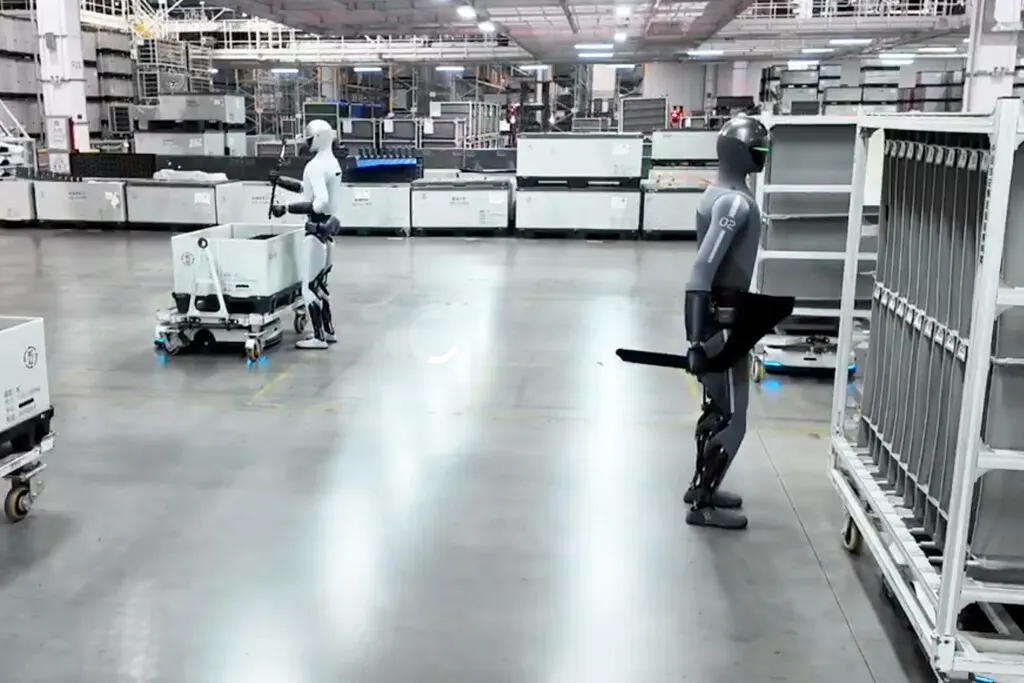
Xiaomi humanoid robots work an eight-hour shift in its EV factory

Android 17 Pixel update bugs: black camera screen and more
More in: AI
See all →
Wally Finder: an artist's AI hunts Waldo on 450 public cameras

Fed's Michael Barr warns AI agents could cause bank runs in minutes

Gemini 4 Argon agents hacked Epoch AI's site in a security test