Tesla driver asleep on Ottawa's Highway 417 charged by OPP
Ontario police pulled up beside a Tesla Model Y in rush hour and saw the driver's eyes closed and hands off the wheel. It's at least the fifth such case in Canada this year.
 SUMO· the number puzzle
 Dialo· learn languages by speaking
 ediviewer· read EDI files like documents
 giftdetect· the right gift in minutes
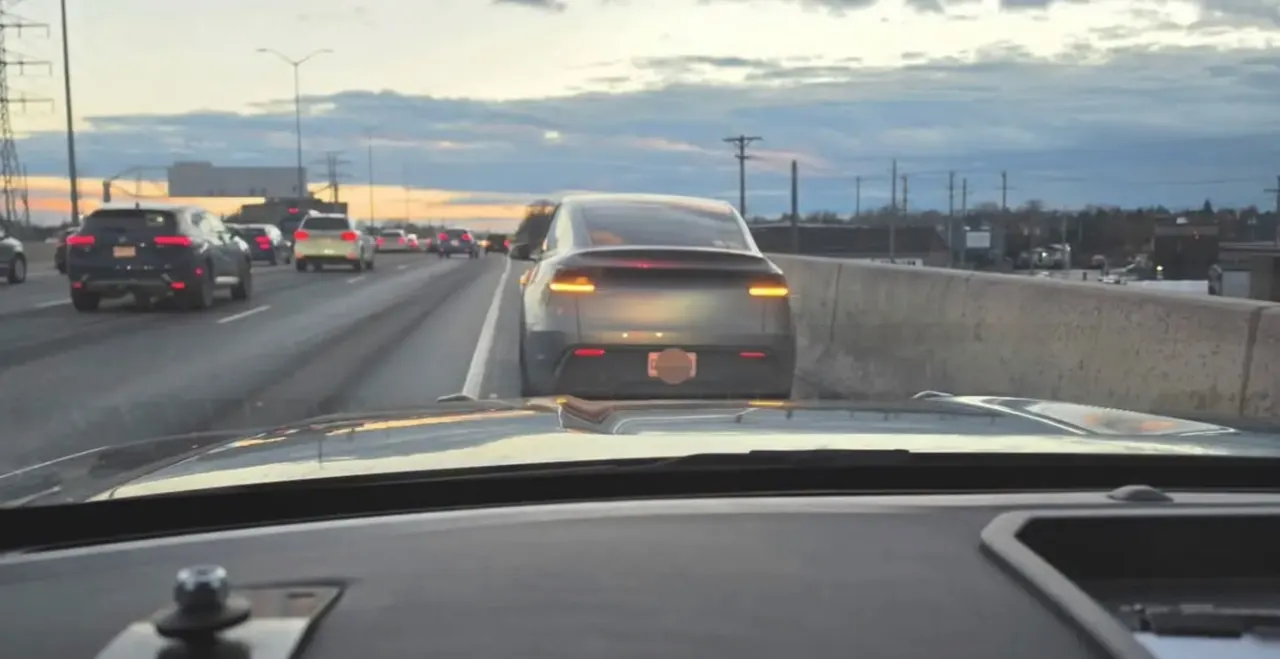
A Tesla driver who was asleep behind the wheel on Ottawa's Highway 417 during Tuesday's rush hour now faces a careless driving charge from the Ontario Provincial Police (OPP). The photo police shared shows a new-generation Model Y in traffic.
According to OPP, the officer could see the driver's eyes were closed and their hands were off the steering wheel. Rather than switching on the cruiser's lights straight away, the officer pulled in close to capture body camera footage first. OPP East Region posted about the stop on Wednesday. It named neither Tesla nor its driver-assist system, but said that even with an autonomous driving feature, drivers must still pay due care and attention.
How much is the careless driving charge in Ontario?
The set fine is $490 and six demerit points on conviction. If the case goes to court, the Highway Traffic Act allows fines up to $2,000, up to six months in jail and a licence suspension of up to two years.
Not the first sleeping Tesla driver in Canada
This is at least the fifth time this year Canadian police have gone public with one. In March, B.C. Highway Patrol ticketed a 37-year-old woman on the Trans-Canada Highway ($368 for driving without due care, plus $138 for speeding). She said she had "zoned out"; police said in-car video showed she was "literally asleep at the wheel." In July, a witness filmed a driver asleep with two kids in the back near Revelstoke. In August, two more drivers were ticketed $368 each on Highway 1, in North Vancouver and Langley.
The problem isn't only Canadian. In October, a driver told California Highway Patrol he was asleep on FSD when his Tesla hit a patrol car at a closed crash scene in Fairfield, and two officers were seriously injured.
Why it keeps happening
Years ago, "Full Self-Driving" needed a takeover every few miles, so nobody could nap. Now it can handle long highway stretches, and a person asked to supervise a system that's usually right tends to stop watching. Researchers call it automation complacency.
Tesla's owner's manual says its cabin camera doesn't need to see the driver's eyes fully and stays active with sunglasses on. If it can't see hands, it asks for a bit of torque on the wheel, which a sleeping hand on the rim can supply. Five strikeouts suspend FSD for a week, and each strike is forgiven after three and a half days. GM's Super Cruise, by comparison, uses infrared LEDs to track head and eye position.
Apps worth a look
SUMO: the number puzzleTap the right tiles, add them up, hit the target. Easy to learn, hard to master. Free, for all ages.
Dialo: learn languages by speakingTalk to an AI conversation partner; every sentence comes back corrected and explained in your language. 9 languages, A1 to C2.
ediviewer: read EDI files like documentsOpen EDIFACT and X12 messages, see every segment explained, convert to JSON/XML, export PDF and Excel. Runs locally, no upload.
giftdetect: the right gift in minutesPick who it is for, the occasion and their personality. The search engine reads product descriptions from local shops and ranks what fits. Free, no sign-up.
More from this day
See all →
Windows 11 KB5132061 fails to install: what to do now

Nāpōwawāʻenakaulua: Webb Finds Earliest Quasar Pair Ever
United Airlines AI agent ban: bots can't tick the check-in box

Jensen Huang resigns as Nvidia CEO; Colette Kress steps in as interim
More in: Automotive
See all →
Scion KEI-01: Toyota's Indiana-Built 25-mph Kei Truck
Tesla Cybertruck production extended to late summer 2027
Ejecting EV battery: the Chinese SUV that throws its pack away