South Korea Unveils AI Legislation Framework, Adds 7 AI Task Forces
South Korea's National AI Strategy Committee has adopted an AI legislation framework that puts the AI Basic Act first, and it is creating seven task forces for core projects.
 SUMO· the number puzzle
 Dialo· learn languages by speaking
 ediviewer· read EDI files like documents
 giftdetect· the right gift in minutes
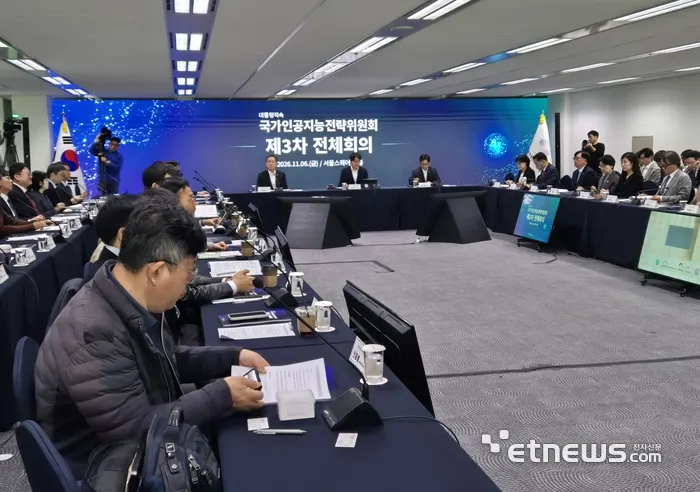
South Korea's National AI Strategy Committee has adopted a national AI legislation framework to guide all future AI-related lawmaking. It also approved a plan to set up seven task forces (TFs) for core national AI projects. Both items were decided at the committee's third plenary meeting on 6 November in Seoul, chaired by Vice Chair Ha Jung-woo and attended by about 60 government and private-sector members and agency heads.
A framework to keep AI laws consistent
The framework responds to a surge in bills. Since the 22nd National Assembly opened, about 29 months ago, 477 bills to enact or amend laws have mentioned AI. That compares with 170 over the four years of the 21st Assembly, or roughly 4.7 times as many per month. Individual bills keep coming, so coherence between them is a growing concern.
The framework sorts AI laws into four areas: development, AI transformation (AX) promotion, safety and trust, and misuse prevention. It sets four basic directions: legislation centered on the AI Basic Act, closing legislative gaps in defense and security, greater predictability for businesses, and immediate response when harms arise.
Ministries should first consider amending the AI Basic Act or existing laws rather than writing new ones. Defense and national security fall outside the Act's scope, so they will get their own legislation. The emphasis is on clarifying standards rather than tightening regulation, though immediate action is called for where risks to life, body or fundamental rights are confirmed and no rules exist. The committee will use the framework as a review standard and monitor compliance.
Seven task forces with deadlines
Three TFs report directly to the vice chair: youth leap, national superintelligence response, and global AI strategic cooperation. Four are tied to existing subcommittees: national cyber resilience, culture and content AI innovation, a data flywheel, and a K-AI full-stack ecosystem. Each must set deliverables and deadlines in advance, as with the 99 tasks in the national AI action plan.
The superintelligence TF is to identify ten key additions to the action plan by next June. The cyber resilience TF must prepare a diagnostic system and at least three AI data center failure and recovery scenarios by next March. Detailed plans are due this month.
The meeting also approved the status of a government-wide data pipeline, in pilot since September and serving 848 institutions. The Ministry of the Interior and Safety will identify more shareable data and build composite datasets for policy use.
Apps worth a look
SUMO: the number puzzleTap the right tiles, add them up, hit the target. Easy to learn, hard to master. Free, for all ages.
Dialo: learn languages by speakingTalk to an AI conversation partner; every sentence comes back corrected and explained in your language. 9 languages, A1 to C2.
ediviewer: read EDI files like documentsOpen EDIFACT and X12 messages, see every segment explained, convert to JSON/XML, export PDF and Excel. Runs locally, no upload.
giftdetect: the right gift in minutesPick who it is for, the occasion and their personality. The search engine reads product descriptions from local shops and ranks what fits. Free, no sign-up.
More from this day
See all →
Apple Charges $49.99 for Intelligence Usage Packs in Logic Pro
Redalpine closes $250M RAC VIII fund for European startups

Valkyrie Dynamics Raises €1M for Drone Interceptor Radar