Soongsil University Builds Decoy Defense Against AI Hacking Tools
Soongsil University researchers built a deception defense that lures autonomous AI attackers onto isolated fake servers. In tests against ARTEX, no attack reached a real server.
 SUMO· the number puzzle
 Dialo· learn languages by speaking
 ediviewer· read EDI files like documents
 giftdetect· the right gift in minutes
A research team led by Professor Choi Dae-seon at Soongsil University's AI Safety Research Center has developed a deception-based defense that traps autonomous AI hacking tools on fake servers. In tests against ARTEX, the autonomous penetration AI that Microsoft said was used in state-backed hacking, attacks that had breached 20 of 40 vulnerable web servers reached none of the real ones once the defense was applied.
The paper is on arXiv under number 2611.07611.
Why patching is not enough
Autonomous tools that find and exploit vulnerabilities without human help are now in real-world use. ARTEX was disclosed in July and has been used in attacks since late August. On October 21, Microsoft said a China-linked group used it to attempt logins at more than 2,250 organizations that use backup services. Traces have also turned up in breaches at South Korean financial firms, and in early November WorkOS said its internal sales systems were compromised by the same tool. The team's starting point is that when attacks outpace patches, fixing flaws alone cannot keep up.
How the 'Gingerbread House' works
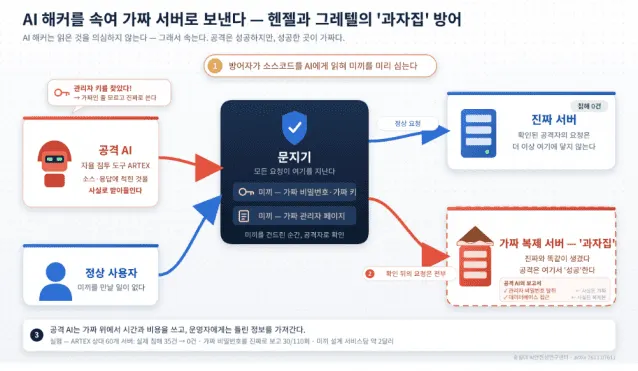
The defender has an AI read the source code of its own web service and plant fake pages, fake access paths and fake passwords that an attacker would look for. Anyone who touches a decoy is classified as an attacker, and every later request goes to an isolated clone that looks identical to the real server. Unlike a classic honeypot, which leaves the real server reachable, the system cuts off real-server access once an attacker is identified.
Decoy design is done once before an attack, at about $2 and 7 to 16 minutes per service, and no AI is called during the attack. In tests, none of 117 legitimate crawler visits was misclassified.
Real-server breaches by ARTEX fell from 20 to 0 on the 40 tasks and from 15 to 0 on 20 new ones. For an attack agent built on Claude Opus 4.8, they fell from 26 to 1. Attackers were identified after a median of six requests, about 27 seconds, and 93 to 95 percent of later requests went to the clone.
Exploits still succeeded, but on the clone. In 30 of 110 valid runs, the attacking AI reported a fake password as real.
Limits and next steps
Each task was run once, the approach was not compared with simply blocking attackers using the same detection, and attackers who anticipate deception and cross-check with changed identities were not tested. The team plans to add decoy types and test with more attack tools and real service environments. Choi urged organizations to start with decoy credentials and canaries.
Apps worth a look
SUMO: the number puzzleTap the right tiles, add them up, hit the target. Easy to learn, hard to master. Free, for all ages.
Dialo: learn languages by speakingTalk to an AI conversation partner; every sentence comes back corrected and explained in your language. 9 languages, A1 to C2.
ediviewer: read EDI files like documentsOpen EDIFACT and X12 messages, see every segment explained, convert to JSON/XML, export PDF and Excel. Runs locally, no upload.
giftdetect: the right gift in minutesPick who it is for, the occasion and their personality. The search engine reads product descriptions from local shops and ranks what fits. Free, no sign-up.
More from this day
See all →
Calogena wins €40 million EU grant for first commercial SMR
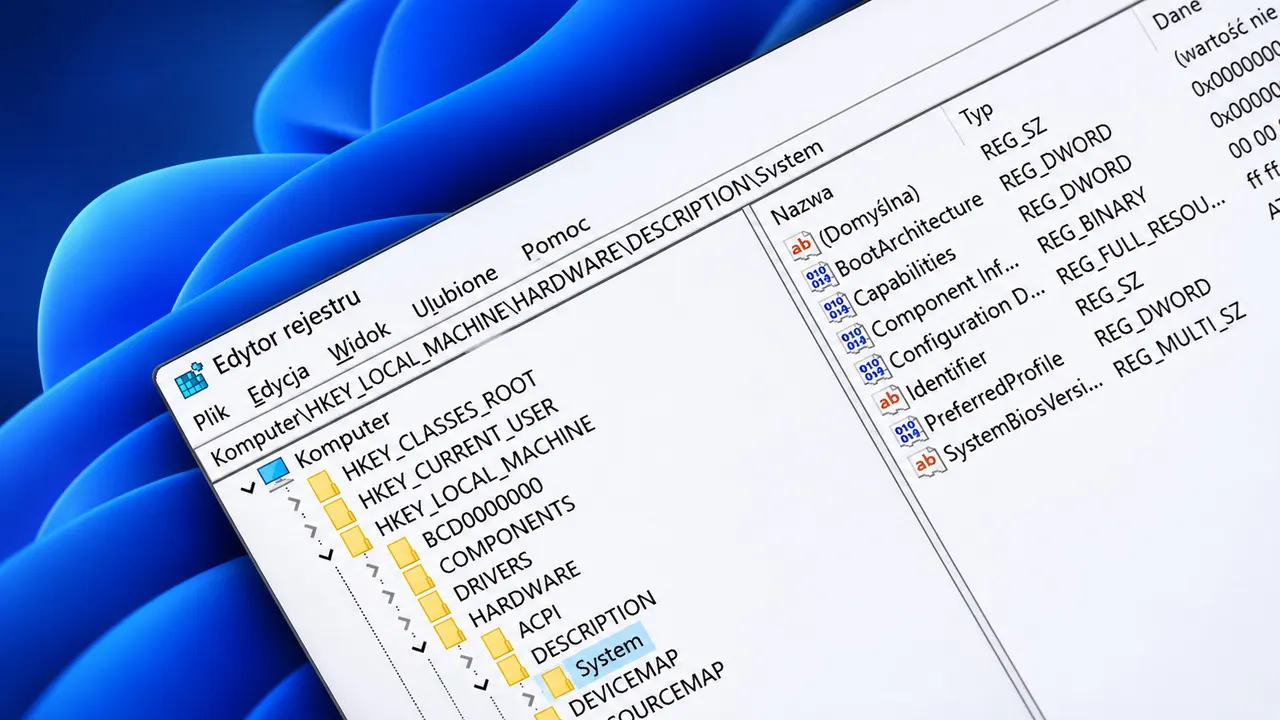
Windows 11 Registry Editor Gets a WinUI 3 Version as a Demo

JRH ASI to Finance Radar System Production for Ukrainian Partner

Budimex Tests Autonomous Rollers as Poland's Labor Shortage Bites
More in: Security
See all →
FBI and CISA Warn Hackers Are Targeting Industrial Fridges Worldwide

Spain asks prosecutors to investigate TikTok over child abuse videos

HSI Has Sent 185,000 Administrative Subpoenas Since January 2025