Riemann hypothesis proof found with Claude: 17 million lines of code
An Anthropic mathematician and Claude produced a 17-million-line proof of the Riemann hypothesis. Lean and Mathlib researchers say it checks out.

 SUMO· the number puzzle
 Dialo· learn languages by speaking
 ediviewer· read EDI files like documents
 giftdetect· the right gift in minutes
On 20 November, mathematicians were handed a solution 17 million lines long. Levent Alpöge, a mathematician at Anthropic, said he had found a proof of the Riemann hypothesis together with the AI model Claude, and published it as computer code.
The Riemann hypothesis is a 167-year-old problem about prime numbers, the ones like 2, 3, 5 and 7 that show up irregularly. It asks how they are distributed as the numbers get larger. Once the code was public, mathematicians started checking it. The next day, researchers behind the proof tool Lean and the maths library Mathlib said the proof in the code is correct. Now mathematicians are combing through the 17 million lines to find which idea was the real breakthrough.
How does AI find solutions that people miss?
Two earlier cases give a hint. Google DeepMind's AlphaEvolve, built on Gemini, was asked to find a shorter way to multiply matrices (grids of numbers). The classic 1969 method by Volker Strassen needs 49 multiplications for two 4×4 matrices. Researchers gave the system a program skeleton and a scoring rule, Gemini rewrote the code many ways, and the best-scoring versions became the starting point for the next round. The result: 48 multiplications for complex-number matrices, the first saving in 56 years.
OpenAI took a different route with the Navier-Stokes equations, which describe how water and air flow. It split AI agents into groups, some hunting for a proof and others for a counterexample. Some agents found one first in a version without viscosity (the stickiness of a fluid), and passed it on. About 10,000 agents worked at once and built a vortex whose fluid speed grows without limit in finite time. The first search took 88 hours, and converting it to Lean code for checking took 17.
How do you check an AI proof?
A flawless argument can still answer the wrong question. So the Lean and Mathlib team compared the code's conclusion with a statement of the Riemann hypothesis that mathematicians had reviewed beforehand, and confirmed they matched exactly. They also checked the reasoning with different verification programs. Work continues on rewriting the proof so people can read it.
Lee Jae-sung, a professor of AI at Chung-Ang University, says AI's strength is pulling theories from many fields into one problem. He expects researchers to choose the problem and sketch the path, with AI filling in the details, and calls that division of labour a normal sight in labs within five years.
Apps worth a look
SUMO: the number puzzleTap the right tiles, add them up, hit the target. Easy to learn, hard to master. Free, for all ages.
Dialo: learn languages by speakingTalk to an AI conversation partner; every sentence comes back corrected and explained in your language. 9 languages, A1 to C2.
ediviewer: read EDI files like documentsOpen EDIFACT and X12 messages, see every segment explained, convert to JSON/XML, export PDF and Excel. Runs locally, no upload.
giftdetect: the right gift in minutesPick who it is for, the occasion and their personality. The search engine reads product descriptions from local shops and ranks what fits. Free, no sign-up.
More from this day
See all →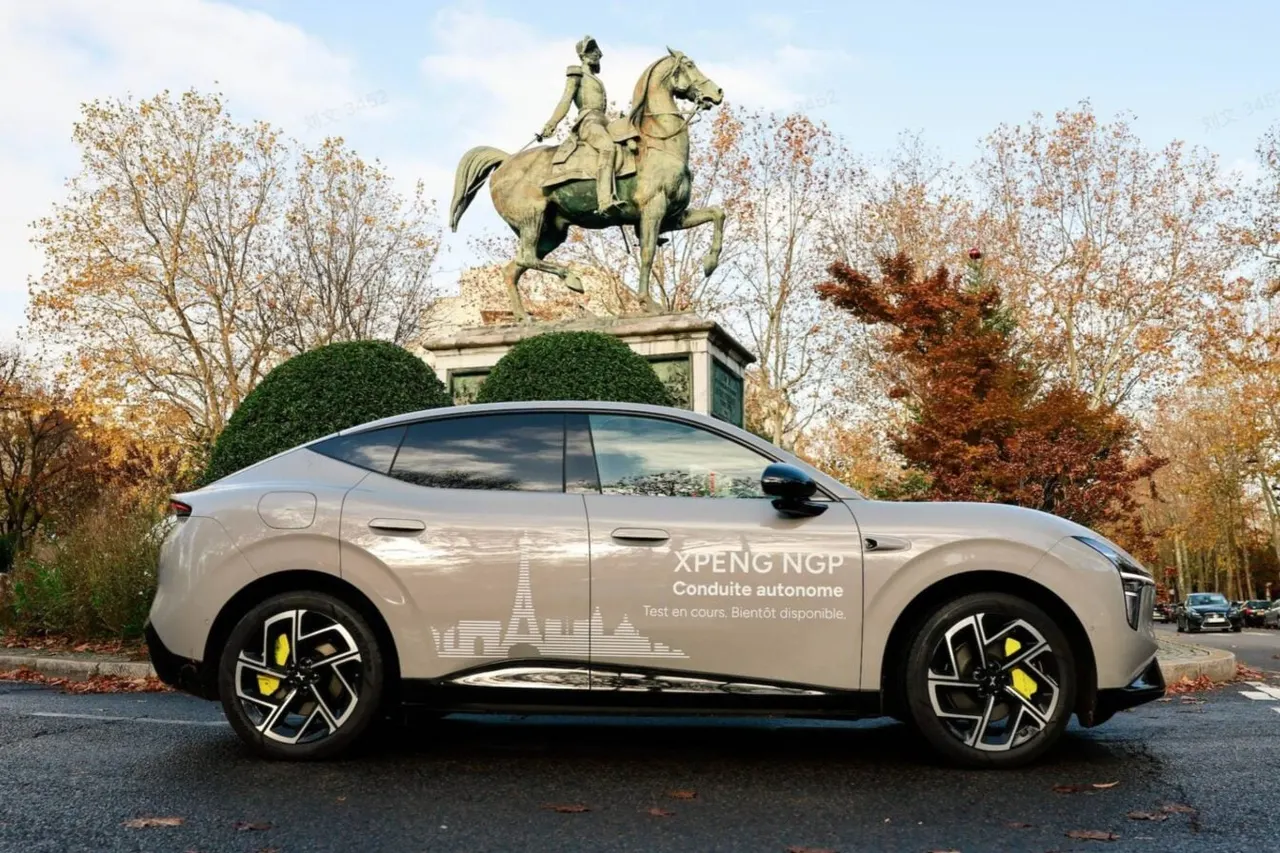
Xpeng NGP test drive in Paris: 30 minutes of self-driving, free
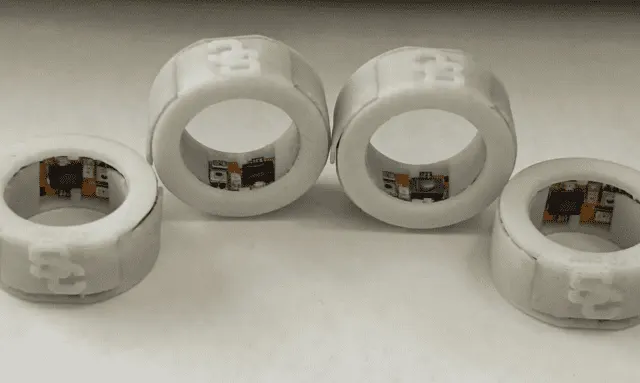
Smart ring measures stress with infrared light, not electrodes

Apple Intelligence ad case: Korea's FTC weighs fine over Siri
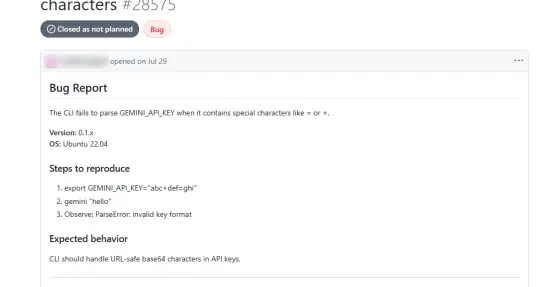
Hidden text on GitHub is aimed at AI coding agents, study finds
More in: AI
See all →
Suno lawsuit: Elvis and Eminem rights holders sue over 1,128 songs

Polaris: the AI an engineer built to research her own cancer
Nvidia sells top AI chips to US firms with Chinese owners