Riemann Hypothesis proof in Lean: is it really solved yet?
Lean's backers say the Claude-assisted Riemann Hypothesis proof checks out. Mathematicians still argue over whether verified means solved.
 SUMO· the number puzzle
 Dialo· learn languages by speaking
 ediviewer· read EDI files like documents
 giftdetect· the right gift in minutes
A proof of the Riemann Hypothesis has passed machine checking, and the people behind the checker say it is correct. So is the Riemann Hypothesis solved? Plenty of mathematicians are not ready to say so.
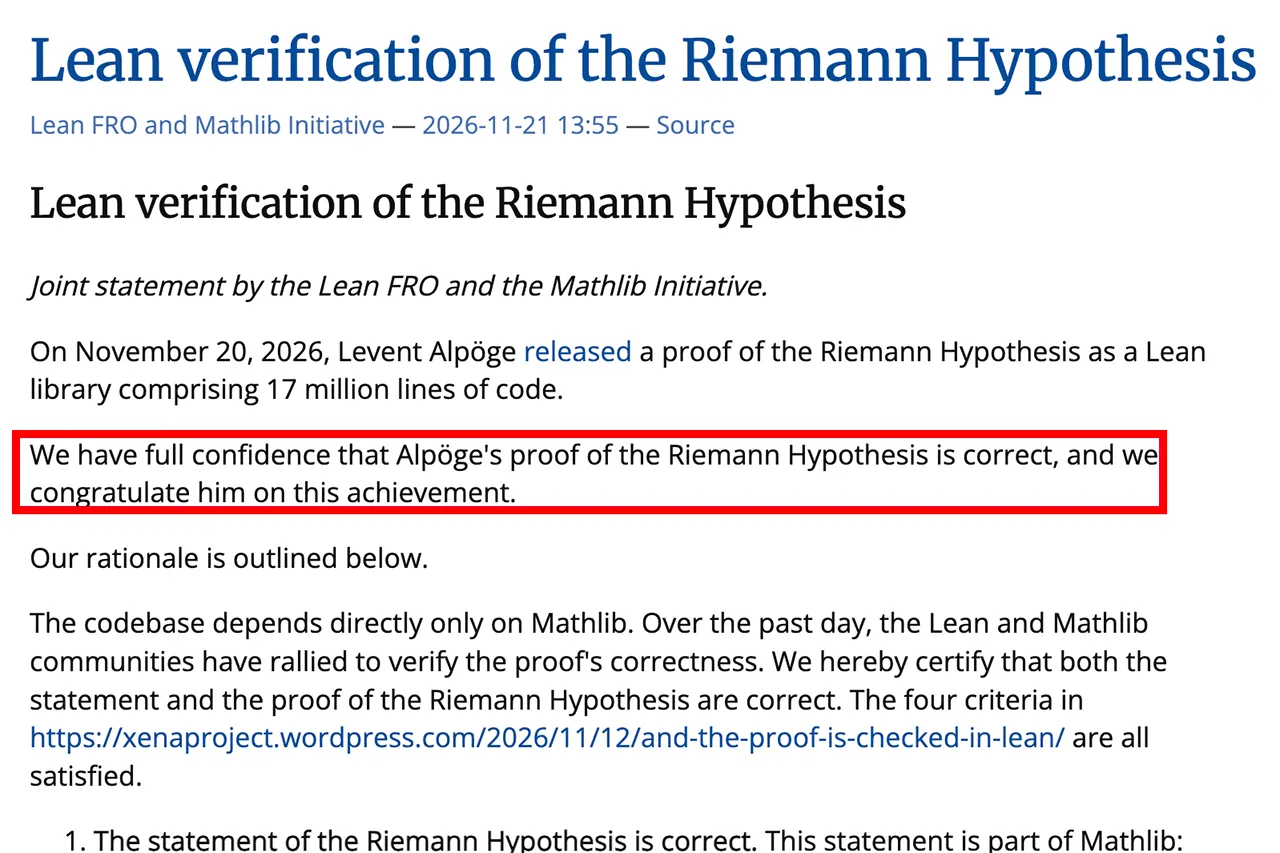
On 21 November, Lean FRO and the Mathlib Initiative issued a joint statement on the proof that mathematician Levent Alpöge says he found together with Claude. Both the statement and the proof are correct, they say. The Riemann Hypothesis is one of mathematics' hardest open problems, and it carries a $1 million prize.
Lean is a programming language for writing proofs in a form a computer can verify. The proof in question is written in Lean, and the statement comes from the two groups that support its development, so it works as something like Lean's official position. According to the statement, the claim proved by the published code matches the Riemann Hypothesis that was already in Mathlib, Lean's mathematics library. The proof also passed several independently built checking programs.
Why not everyone says the Riemann Hypothesis is solved
Objections have appeared. Jenny Lorraine Nielsen published a paper arguing the proof is invalid, and a rebuttal to that paper has since appeared. The back and forth may continue.
The Association for Human Mathematics, a group of more than 1,000 mathematicians that wants to limit AI in research and stay independent of AI companies, takes a different line. It says someone must take responsibility for a proof and other mathematicians must be able to read and understand it. Its criticism is that machine verification has come first and human understanding second. Michael Rubinstein has published a draft explanation in ordinary mathematical language, but it still leans on Lean for several key premises.
What about the Clay prize?
The Clay Mathematics Institute requires a solution to be published in a designated outlet, wait at least two years, and be widely accepted by the global mathematical community. The proof, which was uploaded to Alpöge's personal domain, does not appear to meet that bar yet.
Mathematician Frank Calegari offers a useful picture. Alpöge, he suggests, is like someone who found a book with a new proof on a shelf, and now everyone gets to read it. Alpöge himself says he and Claude "found" the proof.
The proof has been verified. Why it works is something humans are still explaining. Until those two catch up with each other, "solved" is a hard word to use.
Apps worth a look
SUMO: the number puzzleTap the right tiles, add them up, hit the target. Easy to learn, hard to master. Free, for all ages.
Dialo: learn languages by speakingTalk to an AI conversation partner; every sentence comes back corrected and explained in your language. 9 languages, A1 to C2.
ediviewer: read EDI files like documentsOpen EDIFACT and X12 messages, see every segment explained, convert to JSON/XML, export PDF and Excel. Runs locally, no upload.
giftdetect: the right gift in minutesPick who it is for, the occasion and their personality. The search engine reads product descriptions from local shops and ranks what fits. Free, no sign-up.
More from this day
See all →
KICC data breach: Korean payment firm leaks merchant data

Neuralink is hiring a vet tech for sheep, pigs and monkeys

TikTok parental controls now show parents what teens watch
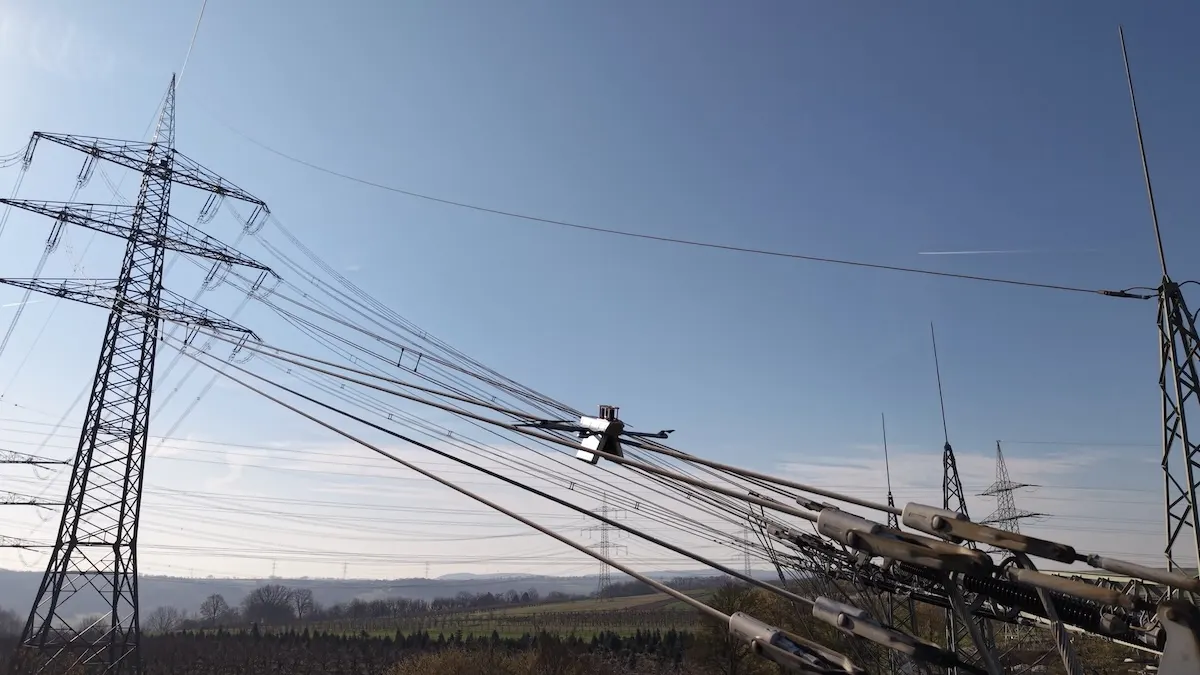
Nomadic Nomad drone charges from power lines and scans 25 km
More in: AI
See all →
Sarvam Token Factory: why it hosts DeepSeek and Kimi in India

Alexandr Wang, Meta's AI chief, doubts we can control superintelligence

Anthropic and OpenAI both present VP ≠ VNP proofs within days